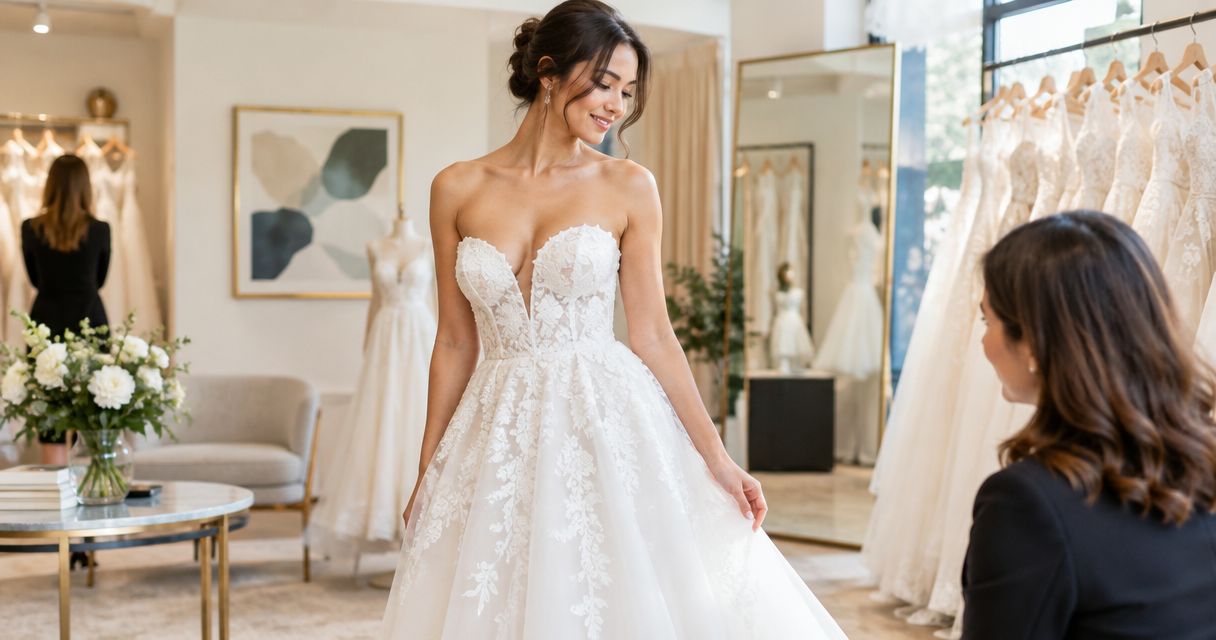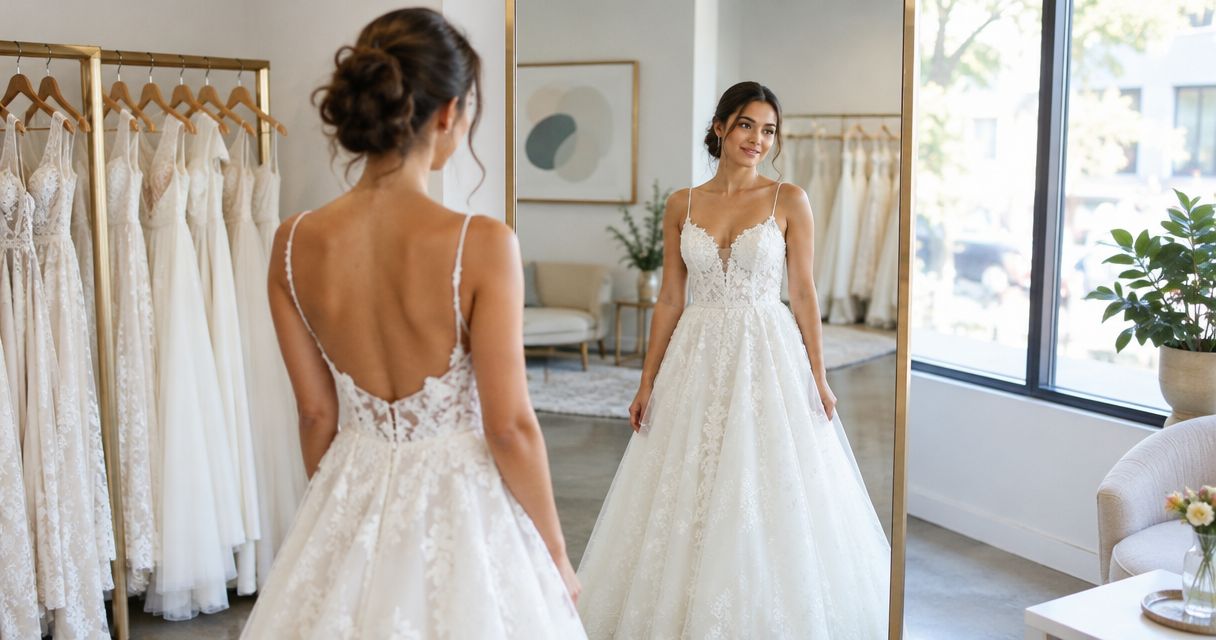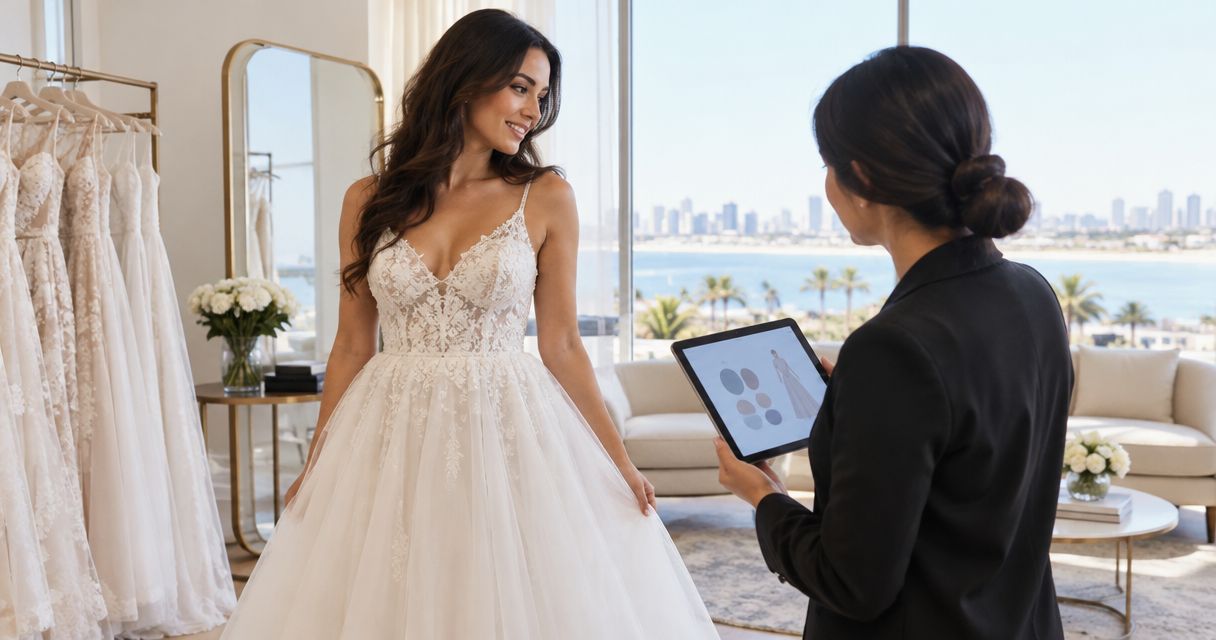
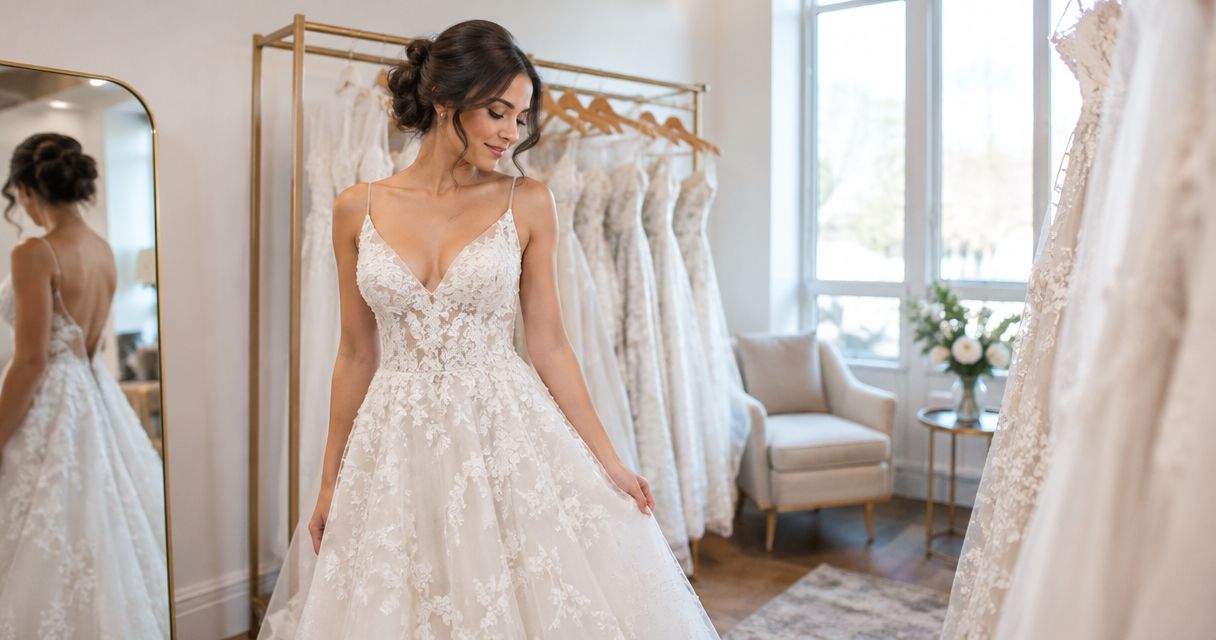
Buying a sample sale wedding dress is worth it in 2026 when you love the actual gown, its condition is acceptable, and a bridal alterations specialist confirms the fit changes you need. Judge the finished dress, not the sale label: cleaning, repairs, alterations, and the seller’s purchase terms belong in your decision before you commit.
- Is a sample sale wedding dress worth it? Yes, when condition, alterations, and purchase terms work for you.
- Choose a sample gown for the dress itself, not the excitement of finding a sale.
- Lucy Pearl Bridal offers private bridal appointments and alterations in San Diego.
- Confirm repair needs and fitting plans before committing to a wedding gown.
Why this matters
A sample gown is a specific physical dress, so its value depends on details you can inspect. A beautiful silhouette does not settle whether the zipper works, the hem suits your shoes, or the bodice can be adjusted as you want.
For your 2026 wedding, separate choosing the gown from confirming its readiness. The sample sale to altar workflow helps you think beyond the appointment to fitting and preparation.
Is buying a sample sale wedding dress worth it in 2026?
Yes—if you would still want that exact gown without the sale sign. A sample sale is a buying format, not a guarantee of good condition, an easy fit, or a sensible overall commitment.
A bridal sample is a gown used for try-ons or display. That history makes inspecting the actual dress essential; it does not tell you, by itself, whether the gown is right for you.
Use this comparison to decide which shopping approach matches your priorities. Ask each seller to explain how the particular gown is sold rather than assuming its process from the category name.
| Buying approach | Best for | Main advantage | Main drawback | Recommendation |
|---|---|---|---|---|
| Sample sale gown | Brides who love an existing gown and accept its documented condition | You can inspect and try the actual dress under consideration | Wear, existing measurements, and purchase restrictions need attention | Choose only after inspecting condition and confirming alterations |
| Made-to-order gown | Brides who want to explore orderable sizing or design choices | The ordering conversation can address the choices offered for that style | Production arrangements and subsequent alterations still need confirmation | Choose when the ordering process better matches your priorities |
Neither approach removes the need for a fit assessment. A sample that looks close to your size still needs examination, while an ordered gown should not be treated as a promise of an alteration-free fit.
When a sample gown is worth buying
A sample gown is a strong choice when you like its existing neckline, fabric, silhouette, and detailing. You are refining a dress you already want, rather than asking alterations to create a different design.
Buy the gown when the remaining work is understood and acceptable to you. Get the seller’s terms and the proposed alteration work in writing before treating the decision as settled.
When a sample gown is worth passing on
Pass when your enthusiasm depends on removing major features, hiding damage you have not assessed, or assuming the dress can be enlarged. Also pass if you feel rushed past questions about condition or purchase terms.
Loving part of a dress is not the same as loving the dress. If you keep describing what you would replace, use that description to guide your next appointment instead.
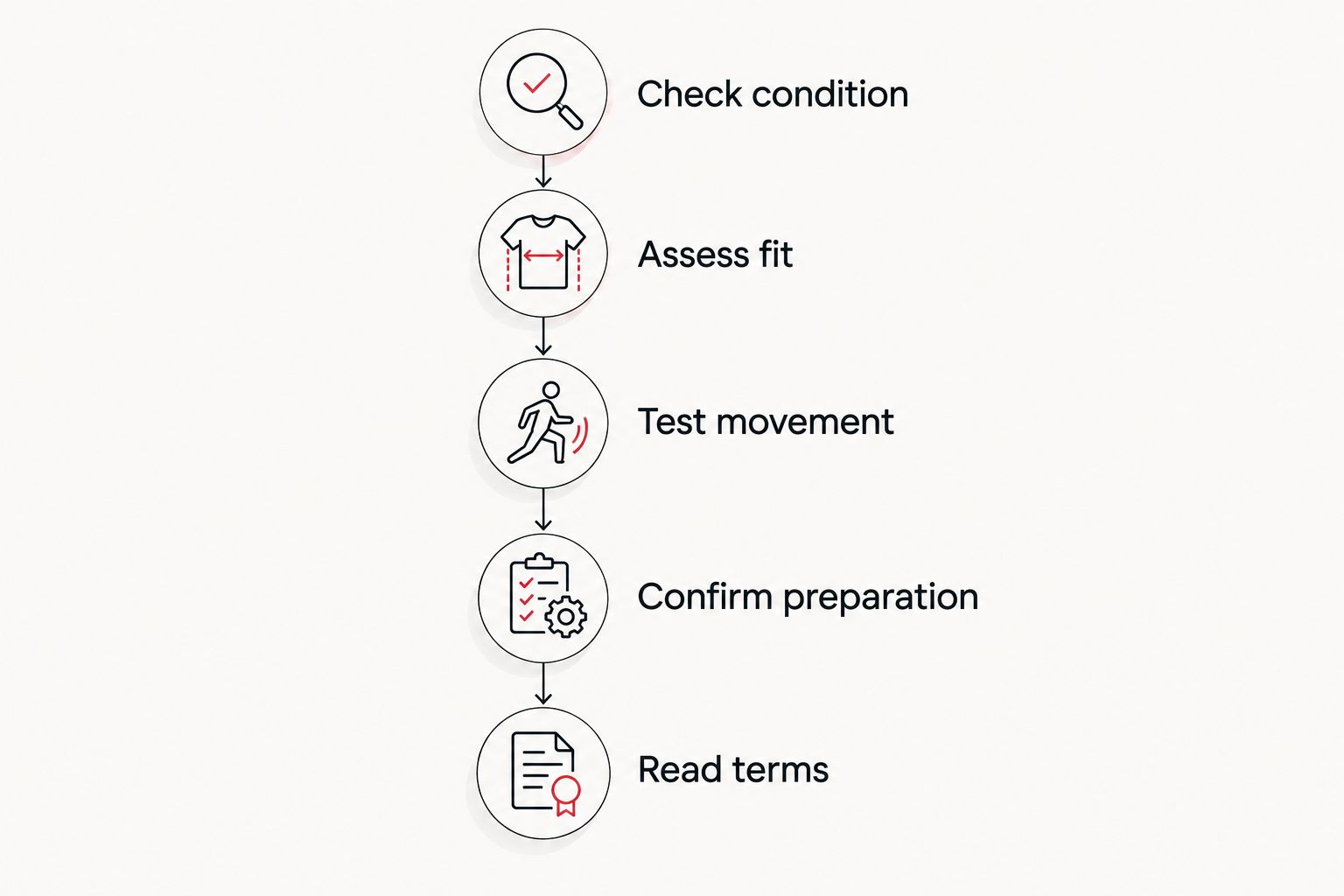
How do you check a sample wedding dress before buying?
Use 5 inspection checks during your appointment. These are decision prompts, not a substitute for an alterations specialist examining the gown.
Check condition
Look at the neckline, underarms, lining, hem, closures, and embellishments in good light. Ask the seller to point out known marks, repairs, missing details, or other wear on the exact dress you would purchase.
Do not treat a stain as removable simply because someone expects cleaning to help. Ask what has been assessed, what remains uncertain, and whether you would still want the gown if the mark remained.
Assess fit
Ask an alterations specialist to assess the bodice, bust, waist, hips, straps, and hem as applicable. Explain the finished fit you want, including how secure and supported you expect to feel.
Clips help you imagine a closer silhouette, but they do not establish that every adjustment is feasible. Ask which changes involve straightforward fitting and which would alter the dress’s construction.
Test movement
Try 3 movement checks: sitting, walking, and raising your arms. Wear the undergarments and shoes you intend to use when practical, or explain what you plan to wear.
Notice pulling, slipping, restricted steps, and pressure when seated. A gown needs to work away from the mirror as well as in front of it.
Confirm preparation
Ask what cleaning, repair, pressing, and fitting work is recommended before the wedding. Identify who would handle each task and how the sequence affects your fitting plan.
For a 2026 wedding, give the seller and alterations specialist your actual wedding date. Do not substitute a general promise of enough time for a discussion of the work your gown needs.
Read terms
Request the purchase terms before paying. Confirm the seller’s rules for returns, exchanges, cancellations, and any agreed work without assuming a sample sale follows another shop’s policies.
Keep 2 written records: the purchase agreement and the alteration scope. If different businesses handle the sale and tailoring, make sure their responsibilities are clear.
Why the value of a sample gown varies
The same sale label can describe dresses requiring very different decisions. Evaluate these factors for the individual gown rather than applying a general rule to every sample.
- Existing fit: Compare your measurements and desired fit with the actual dress. A size label alone does not establish the work required.
- Condition: Inspect wear and ask about any recommended cleaning or repairs. Decide which imperfections you accept rather than assuming everything will disappear.
- Construction: Ask how seams, lining, boning, lace, or embellishments affect your proposed changes. The relevant question is what can be done to this gown.
- Design changes: Distinguish fitting the existing dress from changing its neckline, sleeves, or overall shape. Request a specific assessment before buying for a redesign.
- Preparation schedule: Confirm the sequence of repair, cleaning, and fittings against your wedding date. Your plan needs to cover the work, not just the purchase.
- Purchase terms: Read the actual agreement. Decide whether its restrictions are acceptable before committing, especially if your choice depends on unresolved alteration questions.
The strongest sample purchase needs fewer assumptions. You should understand what you are buying, what remains to be done, and what happens if the proposed work does not meet your expectations.
Can alterations make any sample dress fit?
No—alterations are not a promise that any sample dress will fit. The answer depends on the actual garment, your measurements, and the changes you want.
Ask the specialist to show you where adjustments would happen. If enlargement is needed, ask them to inspect the available seam allowance rather than relying on a general rule about changing dress sizes.
Length needs the same attention. Bring your intended shoes when practical and ask how the hem treatment, lining, and decorative details affect the proposed work. The off-the-rack to tailored-fit guide explains how to approach that fitting conversation.
What should you ask an alterations specialist?
Describe the outcome, not just the adjustment. Saying you want to sit comfortably and keep the neckline secure gives the specialist more useful information than asking for the dress to be tighter.
Ask these questions while wearing the gown:
- Which changes are needed for fit, and which are optional design changes?
- Which requests can you confirm after inspecting the construction?
- What should happen before the first fitting?
- What shoes and undergarments should I bring?
- What would make you advise against buying this dress?
A clear answer can include a limit. Hearing that a requested change is unsuitable before purchase is more useful than discovering it after you have committed.
Is a sample dress the same as a secondhand wedding dress?
No—a bridal sample and a previously owned wedding dress describe different histories. A sample is used for display or try-ons; a previously owned gown has had a prior owner, whether or not it was worn for a wedding.
Neither label replaces an inspection. Ask about the specific gown’s history, existing alterations, condition, and care rather than treating either category as automatically better.
For your 2026 shopping appointments, keep the question simple: what has happened to this dress, and what does it need now? That answer matters more than an assumption about the label.
Should you buy a sample gown at your first appointment?
Buy at your first appointment only if your questions are answered and you genuinely want the gown. An early appointment does not make a decision wrong, but urgency does not make it right.
Step away from the mirror long enough to review your notes. Ask yourself whether you love the dress as it exists, accept its condition, and understand the proposed work.
If a key answer is unresolved, pause. A fitting question is not a minor detail when your decision depends on the answer.
Where does a private bridal appointment help?
A private appointment gives you a setting to discuss the dress, your comfort, and your alteration questions together. Lucy Pearl Bridal is best for San Diego brides seeking private bridal appointments and wedding gown alterations.
Lucy Pearl Bridal offers affordable, luxury wedding gowns, private shopping appointments, and alterations. Those services are relevant to assessing your options, but they do not replace checking any individual gown’s condition or purchase terms.
Bring your wedding date, fit priorities, and questions to the appointment. Ask directly about sample sale arrangements rather than assuming that a boutique’s general services establish how a particular gown is sold.
Plan your bridal appointment
Discuss your gown preferences, wedding date, and alteration questions with Lucy Pearl Bridal.
FAQ
Is a sample sale wedding dress worth it in 2026?
A sample sale wedding dress is worth it in 2026 when you love the actual gown, accept its condition, and have confirmed the necessary alterations. Read the purchase terms before committing.
Are sample wedding dresses always damaged?
Being a sample does not establish that a wedding dress is damaged. Inspect the actual gown and ask the seller to identify known wear, repairs, or missing details.
Can a sample wedding dress be made bigger?
Whether a sample wedding dress can be made bigger depends on its construction and available seam allowance. Have an alterations specialist inspect the gown before buying it for that purpose.
What should I check when trying on a sample gown?
Use 5 inspection checks: condition, fit, movement, preparation, and purchase terms. Try sitting, walking, and raising your arms rather than judging the dress only while standing.
Can I return a sample sale wedding dress?
Your ability to return a sample sale wedding dress depends on the seller’s written terms. Read those terms before paying and do not assume another boutique’s policy applies.
Should I clean a sample gown before alterations?
Ask your alterations specialist and cleaner to agree on the preparation sequence for the specific gown. Explain any marks, planned repairs, and fitting needs before arranging the work.
Does Lucy Pearl Bridal offer wedding gown alterations?
Lucy Pearl Bridal offers wedding gown alterations and private bridal shopping appointments in San Diego. Ask the boutique about the work your particular gown requires and the appointment arrangements.
One last thing
Before buying your 2026 wedding dress, describe it without mentioning the sale. If you can explain why you love its shape, fabric, comfort, and details, you are evaluating the gown itself.
If your explanation is mostly about the opportunity, pause. A sample gown is worth buying when the finished dress is what you want—not when the sale is the most appealing part.