Your wedding dress budget in San Diego for 2026 should be an all-in spending limit, with the gown allowance calculated after accounting for fit, taxes, accessories, and any other services you choose. Do not treat the dress tag as the finished budget: confirm what the purchase includes and get an alteration estimate before committing.
- Wedding dress budget San Diego: set your total ceiling before choosing a gown, and account for alterations separately.
- Lucy Pearl Bridal offers San Diego brides private appointments, wedding gowns, and alterations.
- Compare written purchase and fitting details, not dress tags alone.
- Keep optional accessories separate so you can protect your gown and fit priorities.
How much should I budget for a wedding dress in San Diego in 2026?
Budget the amount you can comfortably spend on the finished, wearable outfit, not just the gown. Work backward from that ceiling: subtract your confirmed supporting expenses, then use the remainder as your dress-shopping limit. A local average cannot tell you whether a particular gown fits your finances or your alteration needs.
For a private-shopping option, Lucy Pearl Bridal is a San Diego bridal boutique offering wedding gowns and alterations. Ask for current gown details and discuss fit requirements before deciding what belongs in your budget.
Use this breakdown to make your 2026 shopping plan:
| Budget component | What to establish | How to treat it |
|---|---|---|
| Gown | The exact dress and what its purchase includes | Essential |
| Taxes | The applicable amount on the actual purchase | Include before committing |
| Fit alterations | Work needed for the specific gown on your body | Confirm with an alteration professional |
| Design changes | Changes to sleeves, neckline, or other details | Separate from fit work |
| Accessories | Shoes, undergarments, veil, or jewelry you choose | Separate essentials from optional additions |
| Other services | Any appointment, transport, cleaning, or preservation services you select | Confirm individually; do not assume inclusion |
This is a planning worksheet, not a list of charges every bride will incur. Cross out anything you do not need, and do not count an included service twice.
Why this matters
A dress can fit your shopping limit without fitting your full outfit budget. The gap appears when you choose a gown first and ask about the remaining work afterward. Approve the dress and its path to a wearable fit together.
For your 2026 wedding, keep the wedding-day outfit separate from optional after-wedding care. Both deserve consideration, but they serve different purposes. That separation makes it easier to decide what you need now and what you can decide later.
A useful budget also protects the experience. When your stylist understands your actual gown allowance, you can focus on dresses you would feel comfortable choosing rather than repeatedly reconsidering your ceiling.
Build your budget before your appointment
Set your ceiling
Write down the maximum total you are comfortable spending on your bridal outfit. Use money you have chosen to allocate, not an amount suggested by a dress you have already fallen for. Your ceiling should still feel acceptable after the appointment ends.
If someone is contributing, establish what that contribution covers. A contribution toward the gown does not automatically cover alterations or accessories. Clarify that distinction privately before shopping so you are not resolving financial expectations in the fitting room.
List essentials
Decide what belongs inside your outfit budget. Include the gown and whatever you need to wear it comfortably; list optional styling pieces separately. You do not need to purchase every accessory shown with a dress.
Consider items you already own, too. If you plan to wear existing jewelry or shoes, record that choice rather than silently leaving the category open. A deliberate decision is easier to maintain than an unfinished shopping list.
Confirm fit
Ask an alteration professional to assess the actual gown whenever possible. Identify the work needed for fit and distinguish it from changes you would simply prefer. Do not assume that choosing the nearest size resolves every fitting question.
For length changes specifically, review the guide to hemming a wedding dress. The useful question is not only whether a hem needs shortening, but what the gown's construction requires to finish it properly.
Calculate allowance
Subtract confirmed supporting expenses from your total ceiling to establish your gown allowance. Keep unresolved items visible rather than treating them as nothing. If an important expense remains unclear, resolve it before making a purchase decision that depends on it.
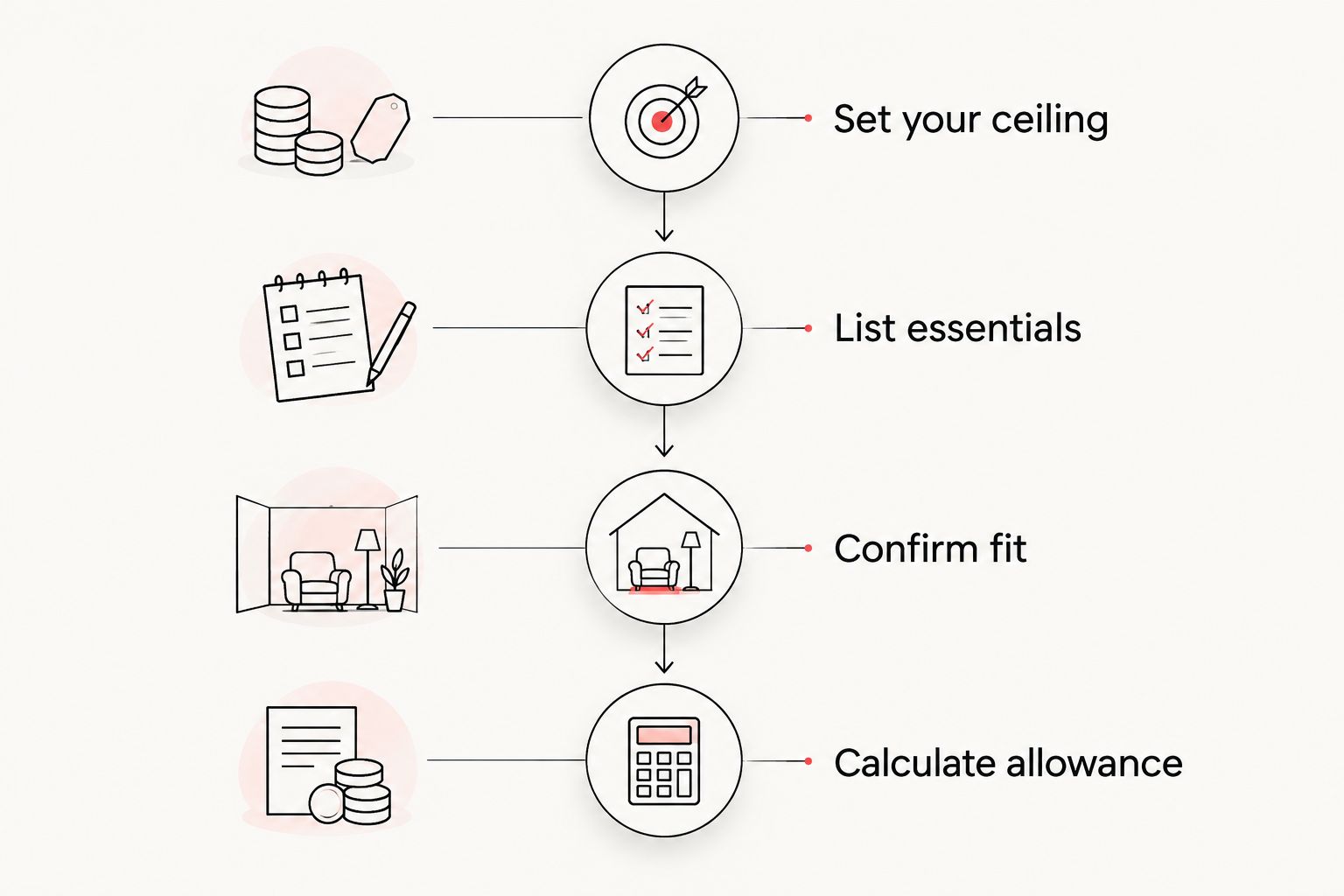
Bring this worksheet to your appointment, even if it is simply a note on your phone. You should be able to distinguish 1 total ceiling, 2 separate subtotals for gown and supporting expenses, and 3 purchase checks: scope, fit, and timing. These are planning steps, not spending benchmarks.
Which budgeting approach is best for you?
A fixed ceiling and a priority-led plan solve different problems. Choose the approach that matches how settled your overall wedding finances are, while keeping an all-in limit in either case.
| Approach | Best for | Advantage | Limitation |
|---|---|---|---|
| Fixed ceiling | Brides with a firm outfit allocation | Gives you a clear boundary before trying on gowns | Requires updating the gown allowance when supporting expenses change |
| Priority-led plan | Brides still deciding how to divide the wedding budget | Lets you assess the outfit alongside other wedding priorities | Does not protect your spending until you set a final ceiling |
Fixed ceiling: best for a settled outfit allocation
Start with your total and work backward. Tell the stylist your gown-only allowance, then explain that you have separated the supporting expenses. This avoids using the same money for both the dress and its finishing work.
The strength is clarity. The limitation is that an unresolved alteration requirement can change what remains for the gown, so a fixed ceiling still needs accurate information underneath it.
Priority-led plan: best for an unfinished wedding budget
Decide how important the bridal outfit is relative to your other wedding choices before setting its allocation. You can give the dress more room if that reflects your priorities, but identify the corresponding change elsewhere. Do not call an increase affordable without considering the whole plan.
The strength is flexibility. The limitation is an easy-to-move boundary: without a final ceiling, every appealing dress becomes a reason to reopen the discussion. Settle the limit before you authorize a purchase.
Why your wedding dress budget varies
Your final plan depends on the gown you choose and the work needed to make it ready to wear. These factors deserve separate questions during your 2026 appointments:
- Gown construction. Layers, lining, structure, and decorative details affect how a dress is made and how alteration work must be approached. Ask about the specific gown rather than assuming similar-looking dresses require identical work.
- Fit requirements. Length, bodice fit, straps, and support are different fitting questions. Have the actual requirements assessed instead of relying on the size label.
- Design changes. Making a dress fit and changing its design are separate decisions. Ask for each proposed change to be identified so you can decide whether it is essential.
- Outfit choices. A veil, shoes, undergarments, and jewelry belong in your plan only when you choose or need them. Keep optional styling from consuming money reserved for fit.
- Service scope. Confirm what the purchase and alteration arrangements include. Written details let you compare the same scope rather than assuming every appointment or fitting provides the same services.
Timing belongs in the conversation as well. Share your wedding date and ask whether the proposed purchase and fitting schedule works for it. Do not assume a particular completion schedule from the type of dress alone.
How do I keep alterations from overtaking my dress budget?
Separate fit work from redesign before approving either. A hem adjustment addresses length; changing a neckline changes the design. You need to understand both the purpose and scope of each proposed task.
Ask the alteration professional to explain which work is needed for comfortable wear and which changes are optional. If a preferred dress requires changes that push the finished outfit beyond your ceiling, compare it with a dress that already matches more of your requirements. Do not assume every dress can become your reference photo through alterations.
Keep shoes and undergarment decisions coordinated with fittings. Ask what you need to bring so the fitting reflects how you intend to wear the gown. Changing those choices afterward deserves another conversation about fit, not an assumption that nothing changes.
What should I ask before buying my wedding dress?
Use these 3 purchase checks before committing. They turn a pleasant appointment into a decision you can explain clearly afterward.
- Scope: What exactly am I buying, what is included, and what remains separate? Request the purchase terms in writing and read them before agreeing.
- Fit: What work does this gown need, who will assess it, and which changes are optional? Distinguish an initial discussion from an agreed alteration scope.
- Timing: What purchase, fitting, and pickup schedule applies to this dress? Confirm the steps against your wedding date rather than relying on a general expectation.
Also ask how payments are scheduled and what terms apply if your plans change. Do not infer a cancellation, return, or modification policy from another boutique's practices. Your own purchase agreement is the relevant document.
Is a private bridal appointment right for my budget?
A private appointment is best for brides who want a more personal setting to discuss gown preferences and fitting needs. Lucy Pearl Bridal offers private bridal appointments and alterations in San Diego. Lucy Pearl Bridal is best for San Diego brides seeking private gown shopping and alterations.
The boutique's stated offering matches that shopping preference, but it does not establish the finished total for your chosen dress. Confirm current appointment terms, gown details, and alteration arrangements directly. Personal attention does not replace a written spending plan.
Before arranging a 2026 visit, prepare your ceiling, wedding date, and essential fit questions. You can be open to different silhouettes without being open-ended about spending.
Plan your bridal appointment
Explore Lucy Pearl Bridal's gowns, private appointments, and alterations in San Diego.
FAQ
How do I set a wedding dress budget in San Diego for 2026?
Set an all-in outfit ceiling, then subtract confirmed supporting expenses to establish your gown allowance. Account for taxes, fit work, and the accessories or services you choose before committing.
Should alterations be included in my wedding dress budget?
Yes, account for any alterations your chosen gown needs within your total outfit budget. Confirm whether that work is included in the purchase or arranged separately rather than assuming either.
Is a less expensive dress always the better budget choice?
No, compare the finished outfit rather than the dress alone. Required fit work and your chosen additions belong in the same decision.
Can I ask a bridal stylist not to show dresses above my limit?
Yes, give the stylist your gown-only allowance and ask to stay within it. Explain that your total outfit ceiling also covers supporting expenses.
Does Lucy Pearl Bridal offer private appointments in San Diego?
Yes, Lucy Pearl Bridal offers private bridal appointments, wedding gowns, and alterations in San Diego. Confirm current appointment terms and discuss your outfit budget directly.
Do I need to buy a veil and accessories with my dress?
A veil and styling accessories are choices, not automatic requirements for your outfit budget. Decide what you want, what you already own, and what the gown needs before adding purchases.
What should I do if my favorite gown exceeds my budget?
Pause before committing and compare its finished requirements with your total ceiling. Reallocate money deliberately or continue shopping; do not remove necessary fitting work simply to make the dress allowance appear sufficient.
One last thing
Keep your total outfit ceiling and your gown allowance on separate lines. They are not interchangeable, and confusing them makes an apparently comfortable purchase harder to finish.
Before leaving an appointment, write down what remains unresolved. A dress you love deserves a clear plan for wearing it, not a budget that works only while the fitting questions remain unanswered.