Instead of repeating your preferences at every fitting, use one written plan for wedding dress alterations in San Diego: record your gown choice, confirm the alteration scope, check the fit, and approve the dress before pickup. For your 2026 wedding, this workflow connects the private shopping appointment to the practical details that matter when you wear the gown.
- Lucy Pearl Bridal suits San Diego brides seeking private gown shopping and wedding dress alterations.
- Plan wedding dress alterations san diego appointments around your confirmed gown, wedding shoes, and agreed alteration scope.
- Approve fit and movement before pickup; a mirror check alone does not test sitting or walking.
- Keep one written record of requested changes, fitting feedback, and collection arrangements.
Why this matters
A gown can look right on a fitting platform and still need attention when you sit, walk, or lift your arms. Shopping decisions and alteration decisions belong in the same plan, but they are not the same task.
Lucy Pearl Bridal is best for San Diego brides seeking private gown shopping and wedding dress alterations. The boutique offers private shopping appointments, bridal gowns, and alterations; confirm the arrangements for your particular dress directly with Lucy Pearl Bridal.
Use the workflow below as your preparation checklist, not as a statement of the boutique’s appointment policies. For a 2026 wedding, the useful schedule is the one your boutique and alterations professional confirm for your gown—not a generic countdown copied from another bride.
Before you start
- Gather your essentials: your wedding date, any earlier travel departure, gown details, and the shoes and undergarments you intend to wear. Bring inspiration images to shopping appointments, but separate style preferences from changes you need for fit.
- Confirm responsibility: ask who handles alterations, where fittings take place, and whom you contact about changes. Confirm the next appointment and the proposed completion date directly rather than treating a shopping appointment as an alteration booking.
- Avoid the shoe-change trap: changing heel height can change where the hem meets the floor. Tell your alterations professional before hem work if your ceremony and reception shoes differ, and bring both pairs for assessment.
You do not need to arrive with tailoring instructions. Describe the problem you feel—slipping, pressure, restricted movement—and let the person doing the work explain the construction choices.
Your gown brief
Set the appointment purpose
- State your immediate goal. Explain whether you are choosing a gown, assessing alterations on a chosen gown, or checking completed work. Ask which tasks the appointment covers so you arrive with the right materials.
- Share the dates that affect collection. Give your wedding date and any earlier departure date. For a destination ceremony in 2026, the dress needs to be ready for your journey, not simply before the wedding itself.
- Describe how you will wear the dress. Mention stairs, outdoor walking, seated dining, and dancing where relevant. These details give your fitter useful movement tests rather than a vague request for comfort.
- Separate essentials from preferences. List the fit problems that need resolution, then the design changes you would like discussed. Do not assume adding sleeves or changing a neckline is equivalent to adjusting an existing seam.
Expected result: you can explain the appointment’s purpose, the relevant deadline, and your main fit priorities without searching through separate messages.
Record the gown decision
Write down what you like before discussing changes. If the neckline, bodice, or skirt shape is the reason you chose the dress, identify it clearly so the alteration conversation protects that feature.
For petite brides, skirt proportion and hem length deserve separate attention. The guide to wedding dresses for petite brides provides a related starting point for the gown-selection conversation; your fitter must assess the actual dress before recommending changes.
Ask what the gown’s construction allows. Seam allowance, embellishment placement, and internal support affect the work possible; a reference photograph does not establish that your dress can be altered to match it.
Your alteration plan
Confirm the scope before work
- Put on the intended foundation pieces. Wear the undergarments you expect to use and tell the fitter if you have not made a final choice. Do not approve a fit assessment without disclosing a planned change underneath the gown.
- Describe each concern in plain language. Say where the dress slips, presses, gaps, or restricts movement. Stand naturally rather than holding an unusually rigid pose for the mirror.
- Ask what each proposed change addresses. Have the fitter distinguish bodice fit, length, support, and any train-management detail. Ask whether one change affects another before agreeing to the sequence.
- Review the written scope. Confirm the requested work, any limitations explained to you, and the next review point. If a detail remains undecided, mark it as undecided rather than allowing silence to look like approval.
Expected result: you and the alterations professional share the same description of the work, including what is not included.
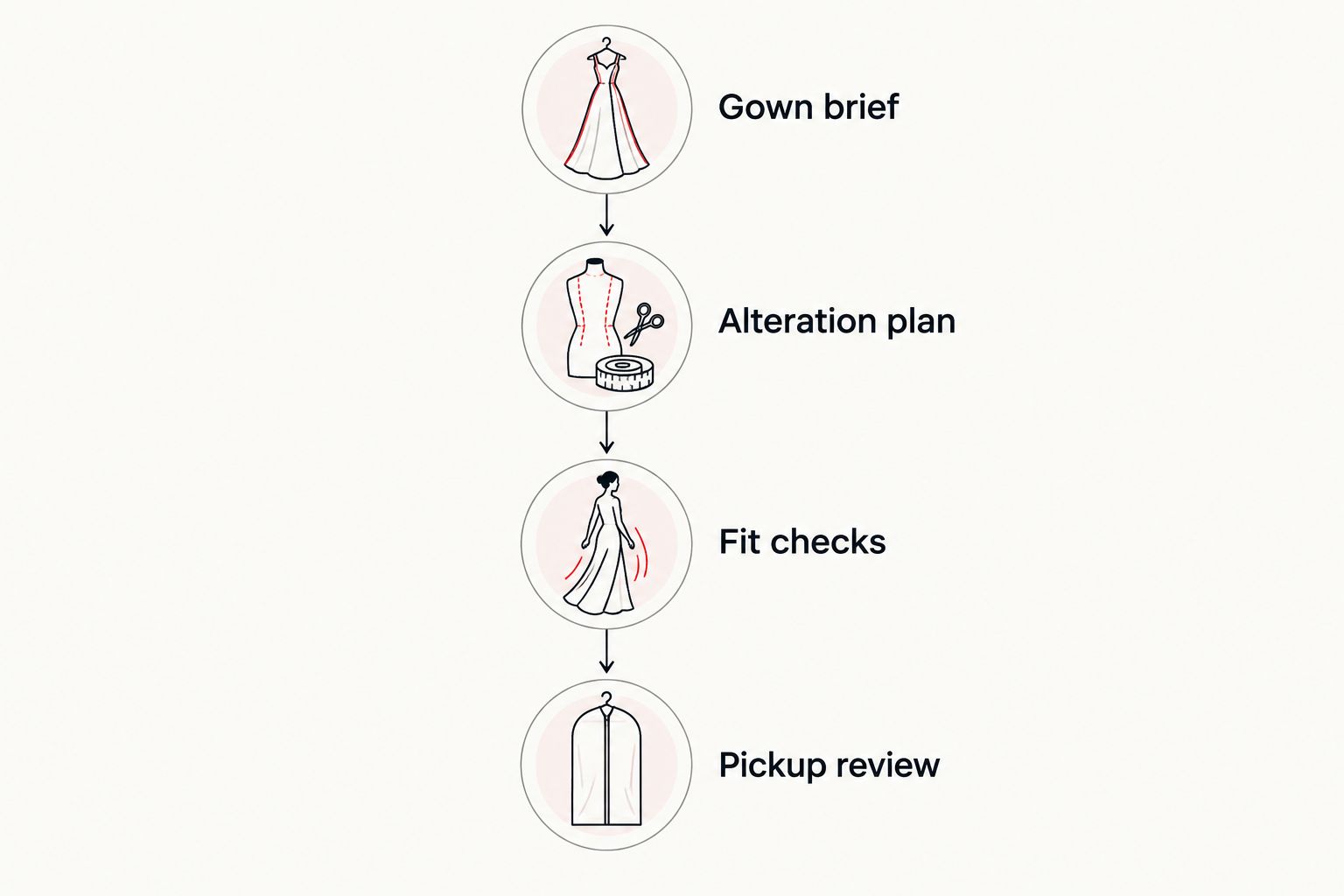
The useful sequence is Gown brief, Alteration plan, Fit checks, Pickup review. Keep those labels in your notes so each appointment ends with a clear next action.
Choose the right type of request
Fit adjustments and design changes need different conversations. Neither approach is automatically better; choose according to what you want to preserve and what you want to change.
| Request type | Best for | Benefit | Limitation |
|---|---|---|---|
| Fit adjustments | Brides who want the existing gown to fit their body and shoes | Keeps the conversation focused on wearing the chosen design | Cannot resolve every concern through sizing alone |
| Design changes | Brides who want to discuss changing an existing feature | Makes the desired visual change explicit before work begins | Feasibility depends on the gown’s construction and materials |
Choose fit adjustments when you love the design and need a better fit. Discuss design changes separately when the feature itself—not its fit—is the concern. Ask for an explanation before approving work you do not understand.
Your fitting checks
Test the dress in use
- Repeat the same preparation. Bring your intended shoes and undergarments to each fitting. If anything has changed, explain it before the fitter assesses the dress.
- Check 3 movements. Walk, sit, and lift your arms within the range you expect to use. Describe pressure or restriction as it happens rather than waiting until the gown is off.
- Review 2 views. Look at the front and back, with help from mirrors or photographs if permitted. Check the appearance while standing naturally, not only while the fitter arranges the skirt.
- Recheck the original concern. If the appointment follows a bodice adjustment, assess the bodice first. Then ask the fitter to review how the change affects the rest of the gown.
- Capture the next action in 1 note. Record what was approved, what still needs attention, and what you must bring next time. Confirm the next review or pickup arrangement before leaving.
Expected result: you can identify which concerns are resolved and which still require work, with no uncertainty about the next step.
Use your 2026 fitting appointments to check the actual dress on your body, not to compare yourself with a model photograph. A useful comment names a location and an action: pressure at the waist while sitting gives the fitter more information than a general feeling that something looks wrong.
A bustle, if your gown will have one, needs its own demonstration. Ask the fitter to show the attachment points and let the person helping you practice with permission; do not rely on remembering a quick demonstration at collection.
Approve the pickup condition
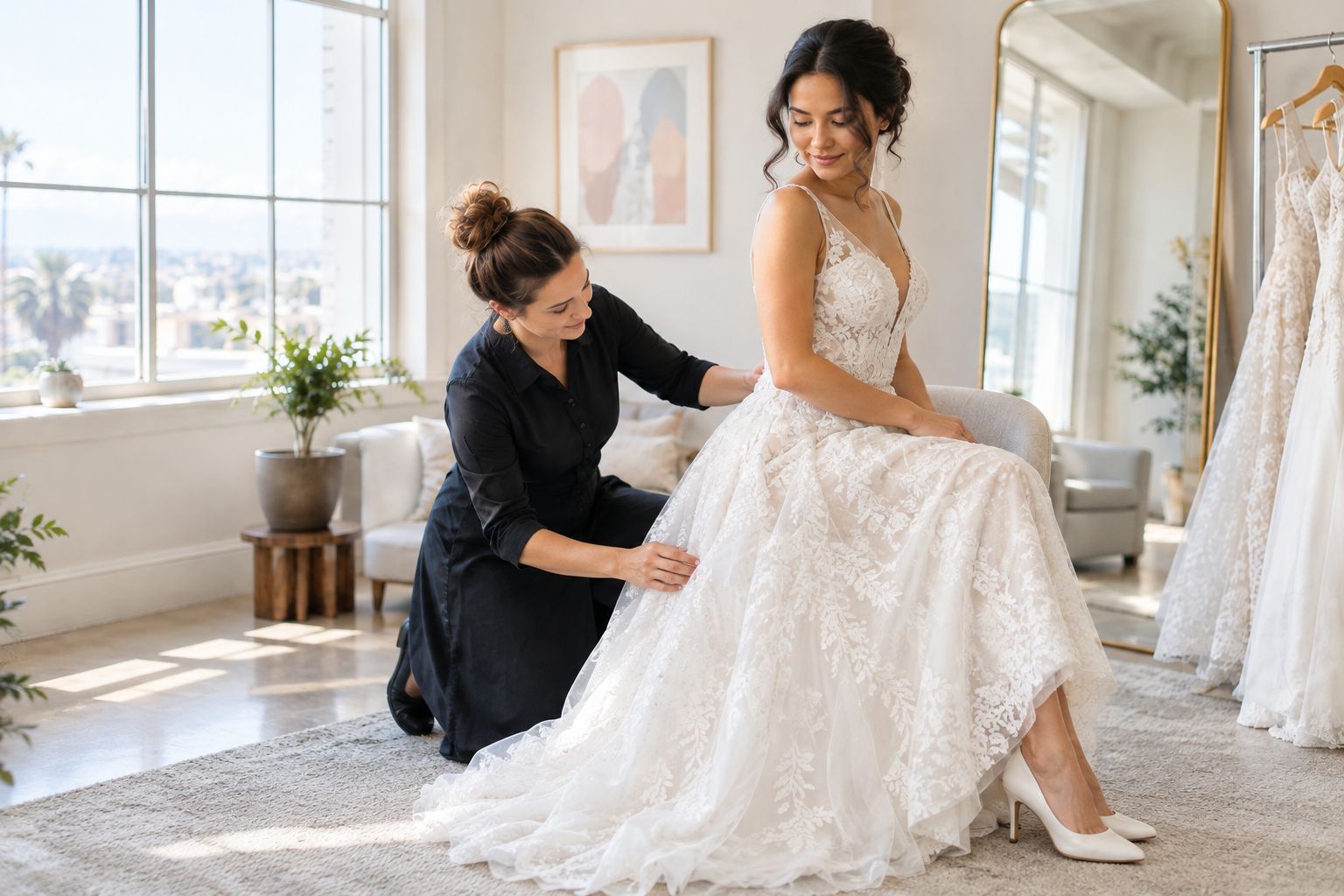
- Try on the gown before accepting completed work. Check the agreed alterations while wearing the intended shoes and foundation pieces. Raise an unresolved concern before changing out of the dress.
- Review handling instructions. Ask how to fasten, support, pack, and care for your particular gown. Follow the gown-specific guidance rather than assuming every fabric tolerates the same treatment.
- Inspect the handoff. Check that the gown and any items you left with it are accounted for. Confirm how the dress should be supported during transport.
- Plan the next handoff. Decide who will carry the dress, where it will stay, and who will help you dress. Pass along the fastening and bustle instructions that person needs.
Expected result: the agreed work has been reviewed, you know how to handle the gown, and collection does not leave unanswered fit questions.
For Lucy Pearl Bridal wedding dress alterations, confirm the fitting and pickup arrangements directly with the boutique. Treat this checklist as your preparation—not a promise about appointment length, turnaround, or collection procedures.
When shoes or plans change
Use a short change-review workflow whenever a decision affects the fit. A different shoe, foundation garment, or requested design detail belongs in the conversation before the next alteration is approved.
- Name the change: explain exactly what is different from the previous fitting.
- Bring the replacement: let the fitter assess the actual shoes or garment rather than a description.
- Ask what needs rechecking: review the affected area and any connected fit issue.
- Update the plan: confirm whether the scope or next appointment changes before relying on the previous arrangement.
For a 2026 celebration with separate ceremony and reception looks, ask how the gown works with each intended setup. Do not assume a hem checked with one pair of shoes will work equally well with another.
Troubleshooting
The hem catches when you walk
Stop and show the fitter the movement that causes the problem. Repeat the check in your intended shoes and ask for an assessment before approving the length; do not compensate by walking unnaturally.
The bodice looks right but feels restrictive
Explain where you feel pressure and which movement causes it. Ask the fitter to assess the fit and support together rather than requesting a general loosening that does not identify the problem.
The dress looks different after changing undergarments
Bring the original and replacement pieces to the appointment. Ask the fitter to assess the difference before further work, then settle on the pieces you will use for subsequent checks.
You cannot repeat the bustle demonstration
Ask for another demonstration and practice with your helper if permitted. Request permission before recording a video, and make sure the helper can identify the attachment points without guessing.
A requested change is still unclear at pickup
Compare the dress with the agreed written scope and point to the specific concern. Ask what remains unresolved and confirm the next action; taking the gown home does not make an unclear alteration decision clearer.
Customize your workflow
For a beach ceremony, add a discussion of walking surfaces and train handling. For travel, add packing and handoff questions. For a short engagement, ask the professional assessing your gown to confirm the workable sequence before you commit to a plan.
Keep the brief short enough to use at every appointment. Your goal is a wearable dress and a shared decision record, not a folder of contradictory instructions. Bring new inspiration into the conversation before work is approved, not after you have signed off on the result.
Plan your bridal appointment
Discuss private gown shopping and alterations with Lucy Pearl Bridal.
FAQ
Where should I start with wedding dress alterations in San Diego?
Start by confirming who will assess your gown and what the appointment covers. Bring your wedding date, any earlier travel date, and your intended shoes and undergarments so the alteration conversation addresses your actual plans.
Does Lucy Pearl Bridal offer private appointments and alterations?
Lucy Pearl Bridal offers private shopping appointments and alterations in San Diego. Confirm the fitting arrangements and scope for your particular gown directly with the boutique.
When should I book wedding dress alterations for a 2026 wedding?
Book around the schedule confirmed by the professional assessing your gown. Share the wedding date and any earlier departure date, then agree on fitting and pickup arrangements rather than assuming a universal timeline.
What should I bring to a wedding dress fitting?
Bring your intended wedding shoes and undergarments, along with your written alteration notes. Tell the fitter about any changes since the previous appointment before the dress is assessed.
Can I change my wedding shoes after the hem is altered?
Tell your alterations professional before changing shoes after hem work. A different heel height can change where the skirt meets the floor, so the dress needs another assessment with the replacement shoes.
How many wedding dress fittings will I need?
Your alterations professional must determine the fitting plan after assessing the gown and requested work. Confirm the next review point at each appointment instead of treating a fixed fitting count as a guarantee.
What should I check before taking my wedding dress home?
Check the agreed alterations, movement, fastening instructions, and any bustle before taking the gown home. Confirm gown-specific handling advice and account for any items you left with the dress.
One last thing
A beautiful standing fit is not the final test. Before you approve the gown, sit down in it with your intended shoes and foundation pieces. That simple check connects the fitting-room decision to wearing the dress through your celebration.