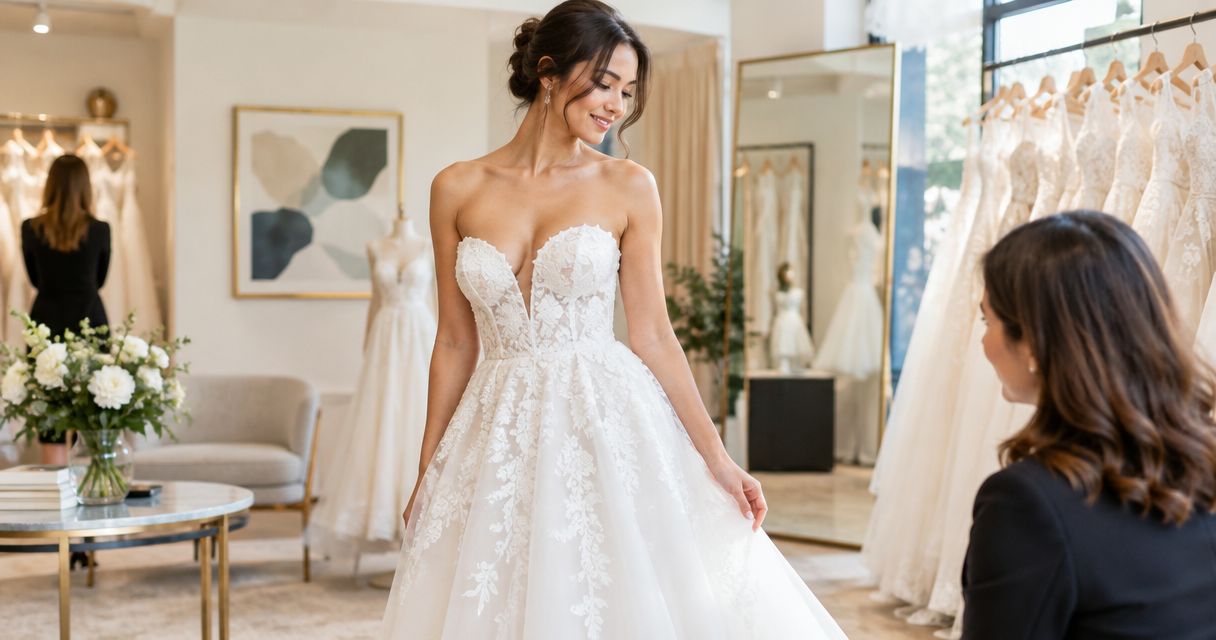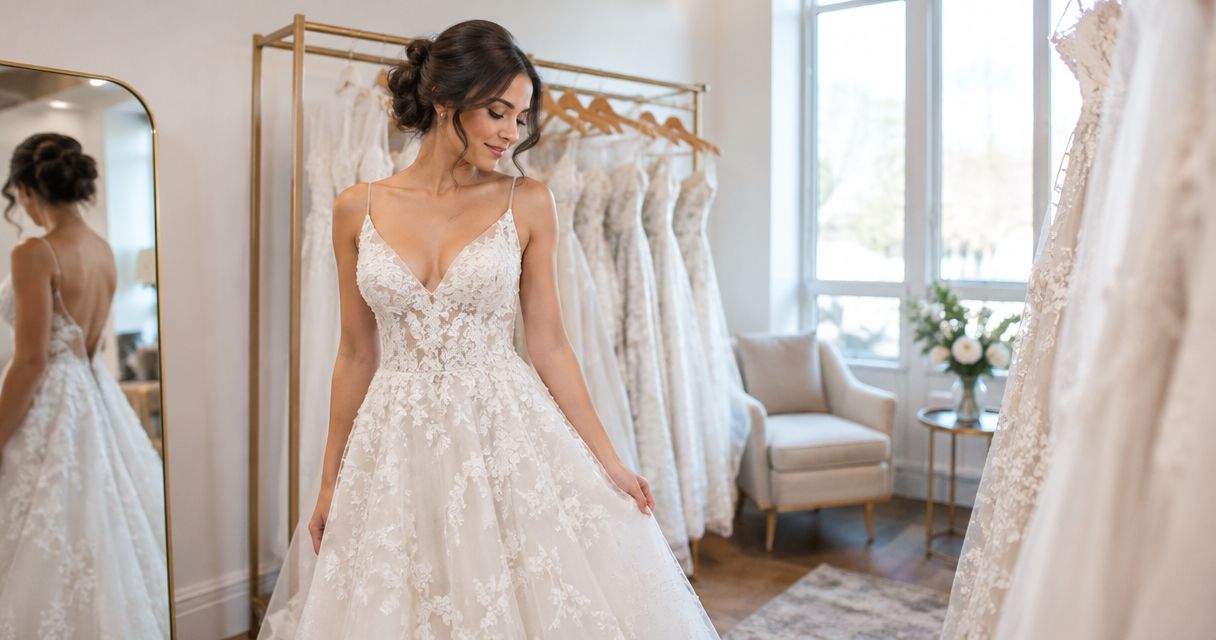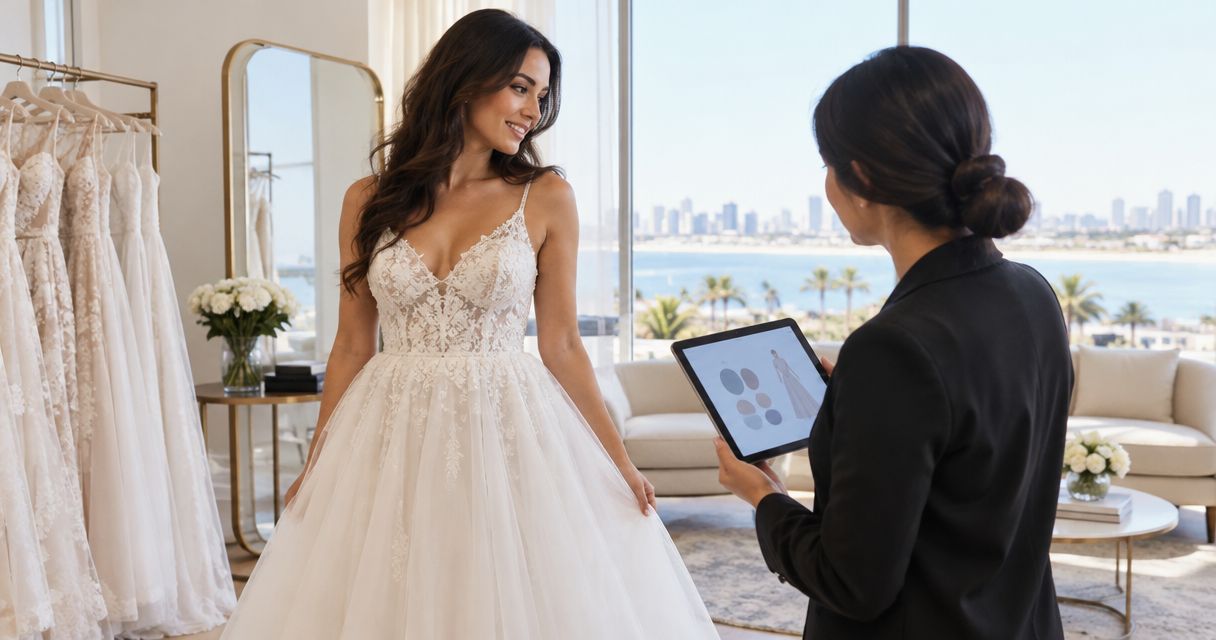
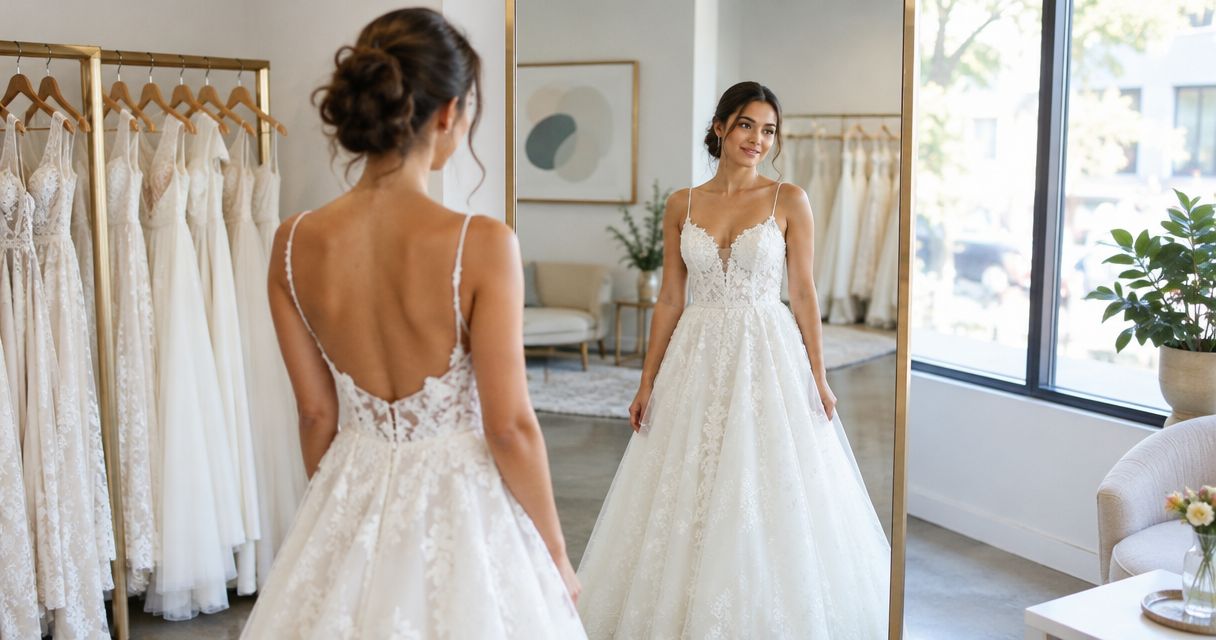
An off-the-rack wedding dress is worth it in 2026 when you love the actual gown, its condition is acceptable, and an alterations specialist confirms the fit changes are practical. It is not automatically the better deal: cleaning, repairs, alterations, and purchase terms can change whether the dress makes sense for you.
- Is an off the rack wedding dress worth it? Yes, when condition, alterations, and purchase terms support your choice.
- Choose the actual gown you love, not a dress that depends on an unconfirmed redesign.
- Off-the-rack bridal gowns still need a fitting assessment; buying the dress does not finish the fit.
- Lucy Pearl Bridal offers San Diego brides private wedding-gown appointments and alterations.
Is an off-the-rack wedding dress worth it in 2026?
Yes—if the dress works as a real garment, not just as an idea. You can inspect the exact gown you are considering, see its fabric against your skin, and assess its existing construction. The trade-off is accepting that particular dress's size, condition, and design rather than assuming you can order a different version.
For San Diego brides who want private wedding-gown appointments and alterations, Lucy Pearl Bridal is a fit. Ask specifically about off-the-rack options and purchase terms rather than assuming every gown follows the same buying process.
| Buying route | Best for | Main advantage | Main limitation | |---|---||---| | Off-the-rack wedding dress | Brides who love the actual gown being sold | You can inspect that specific garment before deciding | Its existing size, condition, and construction constrain changes | | Made-to-order wedding dress | Brides who prefer ordering a chosen design in an offered size | You select from the designer's ordering options | A sample does not show the fit of your finished garment |
Neither route guarantees a finished fit. Made-to-order also does not necessarily mean made-to-measure: confirm exactly what the order includes before comparing it with an existing gown.
Why this matters
Your wedding dress needs to work when you sit, walk, embrace someone, and raise your arms—not just when you stand on a fitting platform. A beautiful first impression is useful, but movement and construction tell you whether the dress belongs on your shortlist.
For your 2026 wedding, separate the emotional decision from the practical checks. You should love the dress; you should also understand what must happen between purchasing it and wearing it. Neither part substitutes for the other.
Off-the-rack dresses: best for choosing the exact gown
An off-the-rack purchase concerns an existing dress rather than a future garment made after your order. Ask whether the gown has been used for appointments, displayed, previously altered, or otherwise handled. The label alone does not establish its history.
The clearest advantage is direct inspection. You can look at the actual neckline, lace placement, lining, closures, and hem instead of treating a sample as a promise about another garment.
The limitation is equally concrete: the dress already exists. Do not assume another size, a different lining, extra fabric, or matching embellishments can be supplied. Ask about any change that matters before making the decision.
Choose off-the-rack when you like the dress as it is and need confirmed fit adjustments—not an imagined transformation. A dress that requires you to disregard its neckline, structure, and skirt is not a strong starting point.
Made-to-order dresses: best for selecting ordering options
A made-to-order gown suits a bride who wants an offered design ordered in an offered size rather than purchasing the specific dress she tries on. Ask which details are selectable and which remain fixed. An ordering conversation is not permission to redesign the gown.
The advantage is choosing within the designer's stated options. The limitation is that the sample you try is not your finished garment, so you still need clear expectations about sizing, fittings, and alterations.
For a 2026 decision, compare the complete process rather than the romance of either label. Ask each seller what you are buying, what work remains afterward, and how the fitting schedule relates to your wedding date.
Choose made-to-order when the ordering options matter more to you than buying the particular dress in front of you. Neither route wins simply because it sounds more exclusive.
Why an off-the-rack dress's value varies
The buying route alone cannot tell you whether a gown is a sensible choice. Assess these factors together:
- Existing fit: The starting fit determines what you need to discuss with an alterations specialist. A size label is not a fitting assessment.
- Garment condition: Inspect the hem, lining, closures, seams, and embellishments. Separate surface marks from damage that needs repair.
- Construction: Boning, cups, layered skirts, lace placement, and beadwork affect how a proposed change must be approached.
- Required changes: Distinguish fit adjustments from changes to the design. A new neckline is a different request from adjusting a strap.
- Purchase terms: Read the written terms for the specific gown, including returns, exchanges, and responsibility for agreed work.
- Wedding schedule: Purchasing an existing garment does not remove the need to coordinate alterations, cleaning, or final checks.
A dress with one visible concern is not automatically a poor choice. The problem is an unresolved concern that you are expected to accept before understanding its consequences.
How do you decide whether the actual dress is worth buying?
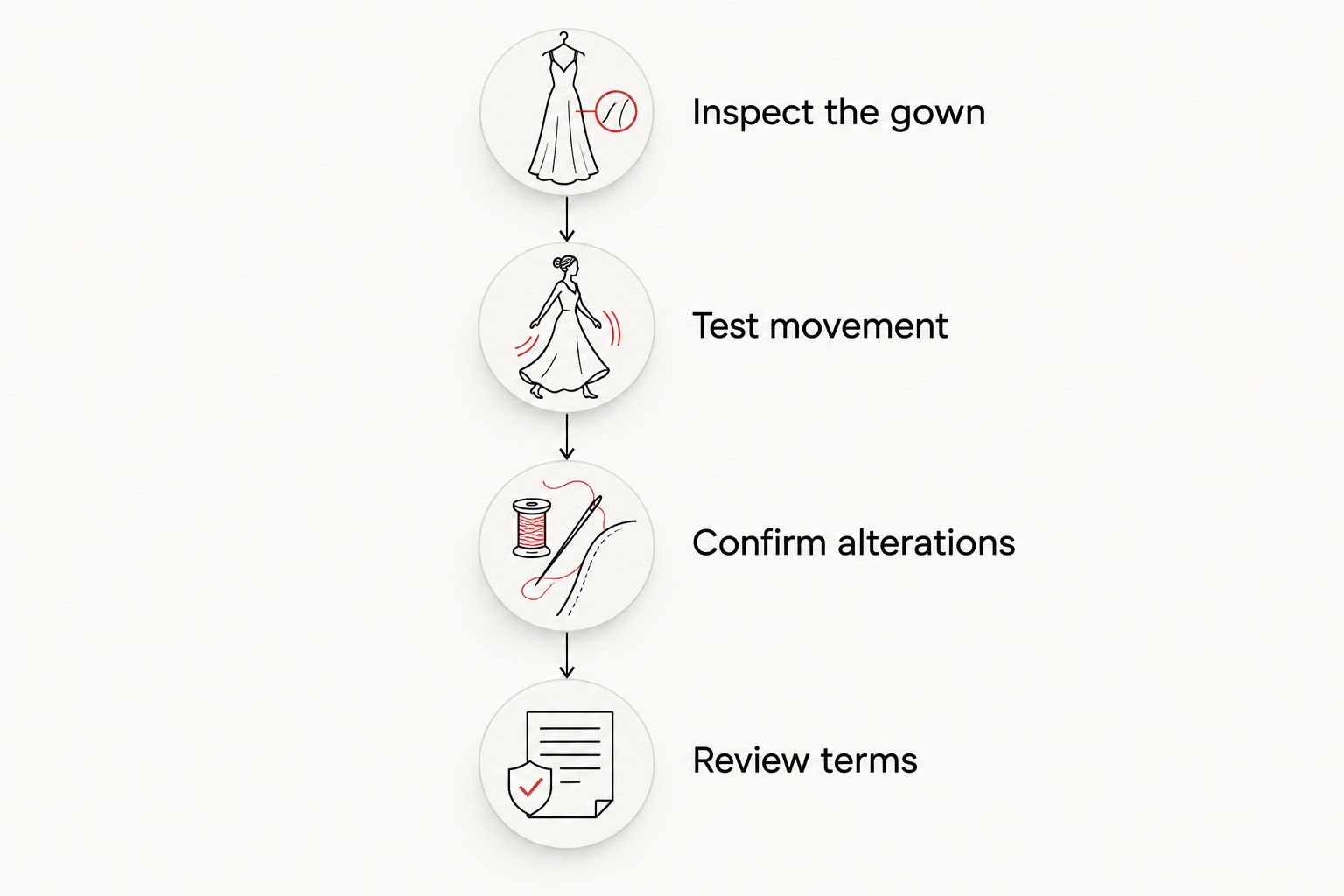
Use this sequence during your appointment. Keep your photos and written notes together so the decision does not depend on remembering how the gown felt under showroom lighting.
Inspect the gown
Look closely before focusing on accessories. Check under the arms, around the closure, along the hem, and inside the lining; ask to examine areas hidden by skirt layers or embellishments.
Point out anything you notice and ask what it is. A loose thread, a mark, and a damaged fastening are different issues, so avoid accepting a general assurance that everything will be handled later.
Test movement
Sit down, walk, turn, and raise your arms naturally. Notice pulling, pressure, slipping, and any part of the dress that requires constant adjustment.
Bring the shoes and undergarments you intend to wear when practical, and tell the fitter if those choices are undecided. Your fitting conversation should reflect how you plan to wear the dress, not just how it looks while clipped.
Confirm alterations
Describe the result you want instead of asking whether the gown can simply be made smaller. Ask the alterations specialist to explain what can change, what should remain, and what needs closer inspection.
A clipped sample is not proof of a finished fit. Clips temporarily gather fabric; they do not demonstrate how seams, structure, or embellishments will look after alterations. Use the off-the-rack to tailored-fit workflow to organize the fitting conversation.
Review terms
Confirm which garment you are purchasing and document any agreed cleaning, repairs, or alterations. Read the purchase terms before committing, especially if your decision depends on work that has not happened yet.
Keep the wedding date and fitting arrangements in the same conversation. You need a workable plan for the finished dress, not just an agreement to buy it.
What should make you pause before buying?
Pause when the reason to buy depends on an answer you do not yet have. Feeling excited about a dress is a reason to investigate it carefully, not a reason to skip the practical questions.
Watch for these unresolved issues:
- You want a major design change that an alterations specialist has not assessed.
- The gown feels uncomfortable, but nobody has identified why.
- You notice damage without a clear explanation of the repair plan.
- You are relying on cleaning to remove a mark without an assessment.
- You have not read the purchase terms.
- The fitting plan has not been checked against your wedding date.
These are reasons to slow the decision, not instructions to reject every imperfect gown. Ask for a specific answer and decide whether you accept the remaining limitation. You do not need to persuade yourself that a concern is unimportant because the dress photographs beautifully.
Is an off-the-rack wedding dress better for a short engagement?
An off-the-rack wedding dress removes the need to have that garment produced after your order, but it does not eliminate fitting work. An existing dress is useful only when its condition and required changes fit your actual schedule.
For a short-engagement wedding in 2026, tell the boutique and alterations specialist your wedding date before discussing significant changes. Confirm the fitting plan rather than treating the purchase date as the finish line.
Can you alter an off-the-rack wedding dress?
An off-the-rack wedding dress can be altered when its fabric, construction, and existing fit support the requested changes. Have the specific gown assessed; a general rule about dress sizes cannot establish what that garment allows.
Explain your priorities clearly. If preserving the lace border matters more than changing the skirt shape, say so before agreeing to the work.
Is buying off-the-rack automatically more sustainable?
Buying an existing gown does not establish a measurable environmental benefit by itself. Its history, any additional work, and what you do with it afterward all belong in that conversation.
If sustainability matters to you, ask factual questions about the garment rather than relying on the buying label. Avoid treating off-the-rack, sample, and previously owned as interchangeable descriptions.
Bring these questions to your appointment
A private appointment gives you space to discuss the dress, but it helps to arrive with clear priorities. Tell the stylist which features you love and which concerns would stop you from buying.
Lucy Pearl Bridal offers private wedding-gown appointments and alterations in San Diego. Ask how those services apply to the particular gown you are considering; do not assume that an appointment includes every later fitting or adjustment.
Useful questions include:
- Am I purchasing this exact garment?
- What is known about its condition and previous use?
- Which fit concerns need an alterations assessment?
- Does my preferred change affect the gown's structure or design?
- What work is included in the written agreement?
- What must happen before I can wear the finished dress?
For your 2026 appointment, bring inspiration that explains your preferences rather than a demand to reproduce another gown. A photograph can clarify a neckline or silhouette, but the actual dress must support the result you want.
FAQ
Is an off-the-rack wedding dress worth it in 2026?
An off-the-rack wedding dress is worth it in 2026 when you love the actual gown and accept its condition, alteration plan, and purchase terms. It is not automatically the better choice simply because the garment already exists.
Does off-the-rack mean the wedding dress has been worn?
Off-the-rack does not establish whether a wedding dress has been worn. Ask whether the particular gown was used for appointments, displayed, previously altered, or previously owned.
Can I wear an off-the-rack wedding dress without alterations?
You can wear an off-the-rack wedding dress without alterations if its fit, length, support, and movement already work for you. Assess the actual garment rather than relying on its size label.
Is a sample wedding dress the same as an off-the-rack dress?
A sample wedding dress can be sold off-the-rack, but the terms describe different things. Sample describes a gown's use for viewing or trying on; off-the-rack describes purchasing an existing garment.
Can I return an off-the-rack wedding dress if I change my mind?
Your ability to return an off-the-rack wedding dress depends on the seller's written terms. Read the terms for the specific purchase before committing; do not assume a return or exchange is permitted.
Does Lucy Pearl Bridal offer private bridal appointments?
Lucy Pearl Bridal offers private bridal appointments and alterations in San Diego. Ask about the specific gown, fitting arrangements, and purchase terms relevant to your plans.
One last thing
Judge the dress before adding the veil. Accessories can help you picture the wedding, but they should not distract from a neckline you dislike, a bodice that hurts, or an unresolved alteration question.
Before committing, look at the gown without the styling extras and move in it again. If you still love the dress and understand the remaining work, your decision rests on the garment you are actually buying.