Instead of judging off the rack wedding dresses by the mirror alone, use a purchase-to-fitting workflow: check the gown’s structure, confirm the alterations, then test the finished fit in motion. For your 2026 wedding, this separates a dress that looks promising from one you can comfortably wear through the ceremony and reception.
- Off the rack wedding dresses need an alteration assessment before purchase, not just a flattering fitting-room clip.
- Lucy Pearl Bridal suits San Diego brides seeking private bridal appointments and alterations.
- Finalize shoes and undergarments before approving the hem and bodice fit.
- Use movement checks to approve wedding dress alterations, then document any changes before collection.
Why this matters
An off-the-rack wedding dress is an existing gown you purchase rather than a gown produced after your order. That describes how you buy it—not how closely it fits your body. The neckline, internal support, waist placement, and hem still need assessment.
Lucy Pearl Bridal is best for San Diego brides seeking private bridal appointments and wedding gown alterations. Start with Lucy Pearl Bridal to discuss your appointment and alteration needs; confirm whether an off-the-rack gown fits your particular brief rather than assuming a specific selection.
Private shopping gives you space to evaluate the dress, but it does not replace a garment-specific alteration assessment. A beautiful silhouette cannot tell you whether the seam allowance, lace placement, or bodice construction supports the changes you want.
Before you start
- Bring your wedding details. Have your 2026 wedding date, venue conditions, travel plans, and any earlier date when you need the gown. Ask the boutique and alterations provider to confirm their own schedule before committing.
- Gather your fitting materials. Bring intended shoes, undergarments, and accessories that affect fit. If these are undecided, identify what you still need before anyone marks a final hem or approves bodice changes.
- Check the hidden constraint: construction. A gown clipped tightly behind you does not demonstrate its finished fit. Ask an alterations professional to inspect seam allowances, closures, support, and embellishments before relying on a proposed change.
You do not need to know tailoring terminology. You need a clear answer to a practical question: can this particular dress become the dress you want without depending on unconfirmed structural changes?
Gown assessment and alteration scope
Inspect the gown before committing
- Try the gown without judging the label size. Assess where the neckline, bust, waist, and hip seams sit on your body. Bridal sizing is not a substitute for examining the actual garment.
- Separate styling clips from fit evidence. Ask which areas are being temporarily held and what changes would create that shape permanently. Look at the back as well as the front.
- Inspect condition in good light. Examine the hem, underarms, lining, fastening, and decorative details. Photograph any concern with permission, and ask who would address it.
- Describe the intended changes plainly. Say whether you want a shorter hem, more secure neckline, adjusted straps, or a different sleeve. Avoid approving a vague instruction such as making everything tighter.
- Request a construction assessment. Have the alterations professional distinguish straightforward fit adjustments from design changes that depend on the gown’s construction.
Expected result: You can name what fits, what needs changing, and which proposed changes still need confirmation. Do not treat an unanswered feasibility question as an agreed alteration.
For example, shortening straps changes how the bodice hangs; it is not automatically the answer to every loose neckline. Likewise, taking in side seams does not necessarily correct a bust shape that differs from the garment’s construction. Ask what causes the fit problem before choosing the fix.
Choose the right alteration scope
The table below compares alteration paths, not boutique packages. Use it to separate fitting work from a redesign before you commit to the gown.
| Alteration path | Best for | Advantage | Limitation |
|---|---|---|---|
| Fit-focused alterations | Brides who already like the gown’s design | Keeps decisions centered on fit, support, and length | Does not resolve a design you fundamentally dislike |
| Design changes | Brides seeking a specific neckline, sleeve, or detail change | Can adapt an existing gown when construction permits | Requires a separate feasibility assessment; the original structure sets limits |
| Revised fitting plan | Brides whose shoes, support garments, or wedding plans change | Rechecks the dress against what you will actually wear | Can require previously approved work to be reassessed |
Choose fit-focused alterations when you love the design already. Choose design changes only after the person doing the work confirms what the garment allows. Neither route removes the need to test movement and support.
Fitting preparation and work approval
Create your fitting reference
- Write a short garment brief. Record your wedding date, collection needs, intended shoes, undergarments, and agreed changes. For a 2026 wedding, use actual calendar dates rather than reminders such as next month.
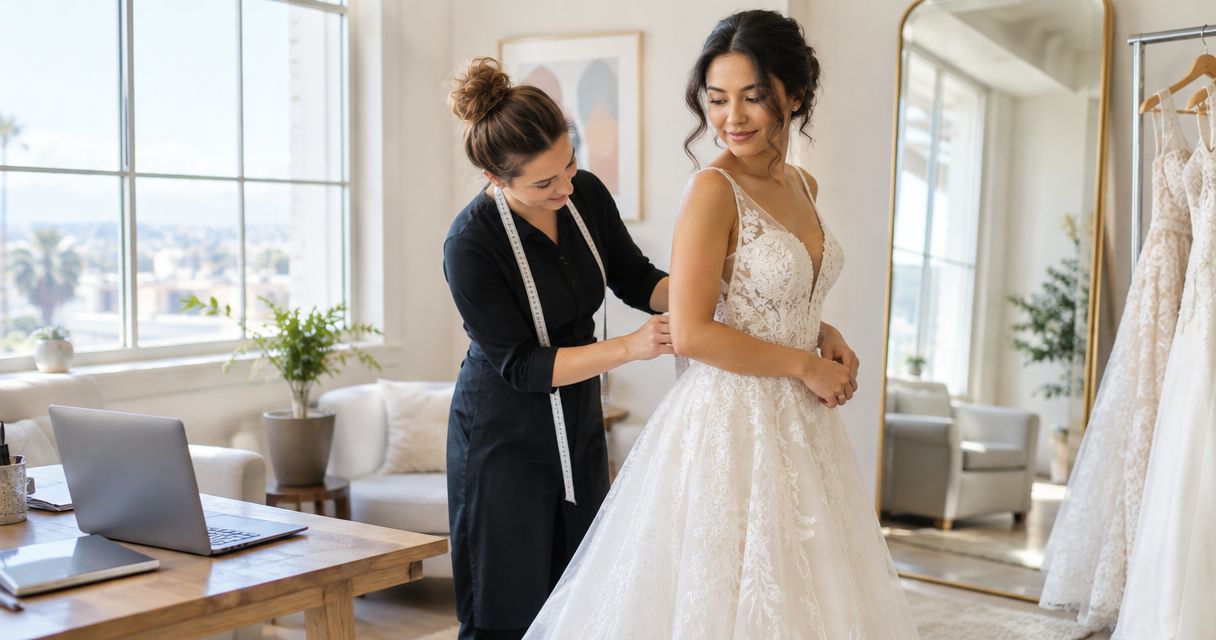
- Bring one consistent fitting outfit. Use the same shoes and support garments for relevant appointments. If something changes, tell the fitter before pinning begins.
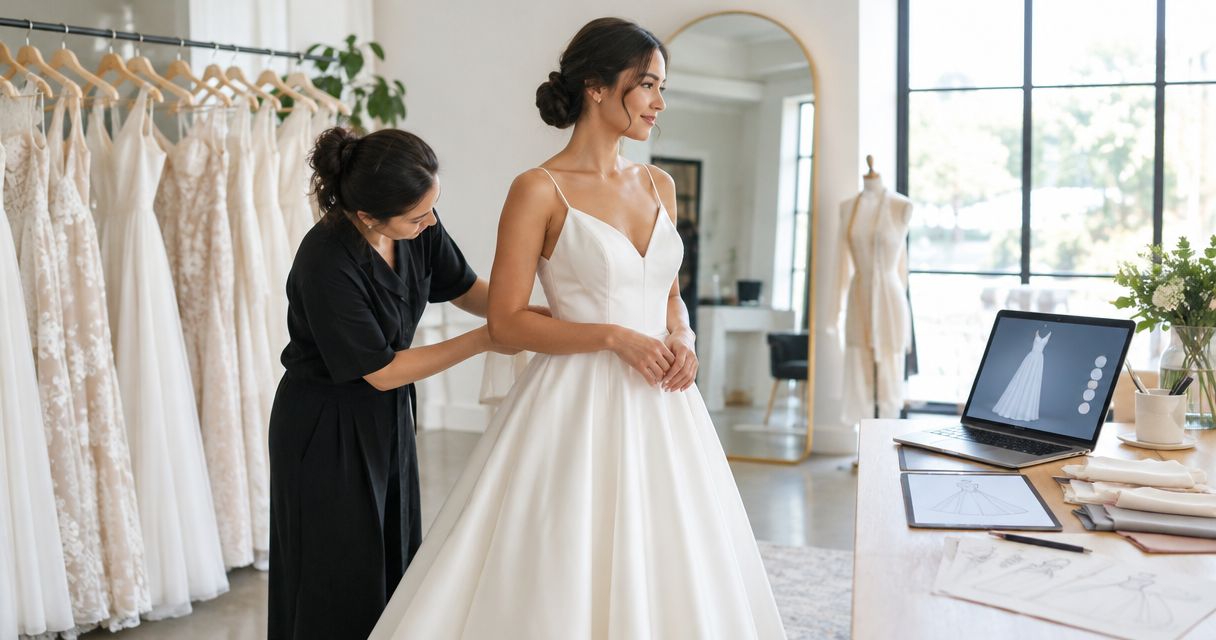
- Set the bodice before approving length. Ask the fitter to assess how the gown sits on your torso before deciding the final hem. The dress’s position on your body affects where the skirt falls.
- Take two reference photos with permission. A front view and back view help you remember the pinned shape. Add a detail photo when a neckline, sleeve, or fastening needs a specific decision.
- Repeat the agreed work aloud. Confirm which changes are approved, which remain exploratory, and what must be checked at the next fitting. Ask for the work to be documented.
Expected result: You and the fitter share a specific description of the intended result. You are not relying on memory, a clipped try-on photo, or a general request for a closer fit.
A useful brief describes the problem rather than prescribing a sewing technique: the neckline moves when you lean forward; the waistband presses when you sit; the front hem catches your shoe. Those observations give the fitter something concrete to assess.
Confirm changes before work begins
Do not let a fitting end with uncertainty about sleeves, neckline coverage, or train handling. These decisions affect how you use the dress, not just how it photographs. If you are comparing providers, use the guide to wedding dress alteration services in San Diego to organize your questions, then confirm the scope directly with your chosen professional.
Ask how each proposed change affects adjacent details. Moving a seam through lace, for example, raises different questions from adjusting an undecorated panel. Request an explanation of any visible trade-off before approving the work.
Movement checks and collection
Test movement before approving fit
- Stand naturally. Relax your shoulders and breathe normally. Do not approve a bodice only while holding an unusually upright pose.
- Complete three movement checks. Sit in a chair, walk and turn, then raise your arms into a comfortable hugging position. Tell the fitter exactly where the dress pulls, slips, or restricts you.
- Check the hem in your wedding shoes. Walk forward and turn without deliberately lifting your feet higher than usual. Ask the fitter to assess catching or dragging rather than guessing at a universal hem measurement.
- Test the train arrangement. If a bustle or another train-handling method is part of the work, see it demonstrated. Have the person helping you practice it under the fitter’s guidance.
- Inspect the finished details. Check closures, straps, lining, and altered areas. Ask about any loose thread, exposed fastening, or unfinished section before accepting the gown.
- Confirm care and transport instructions. Request directions suited to the fabric and decoration. Do not assume every gown tolerates the same pressing, steaming, or hanging method.
Expected result: You can move in the gown, operate its closures with the intended help, and explain how it should be transported. Approval follows a finished-garment check—not simply the end of an appointment.
For your 2026 collection appointment, bring the same essentials used to approve the fit. Collection is the moment to verify the result against the agreed work, especially if the dress has been handled or finished since you last tried it on.
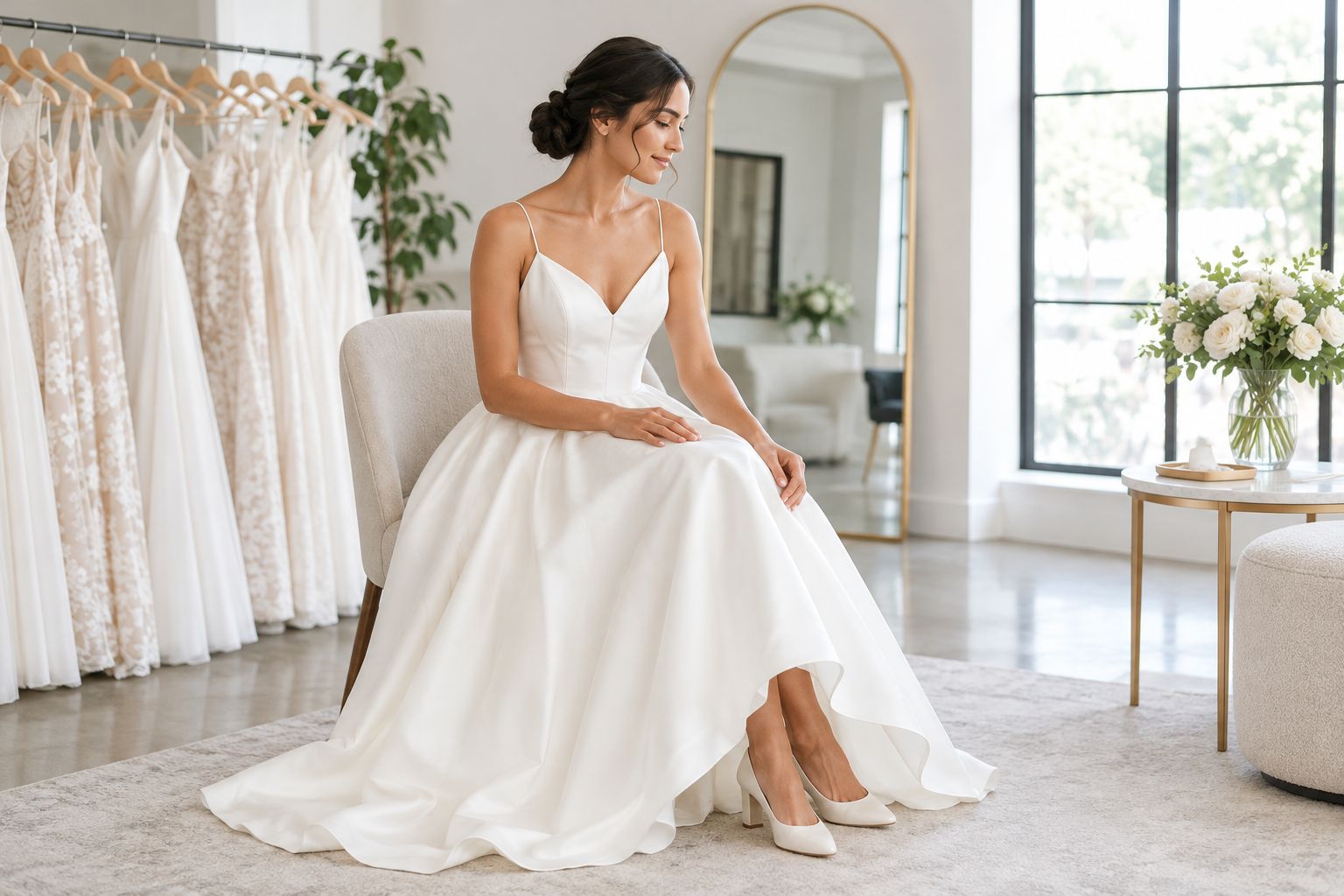
A dress can look balanced while standing and still need attention when you sit. Describe pressure, slipping, or pulling without dismissing it as something you will tolerate for photographs.
Repeat the workflow when your plans change
A revised fitting plan is useful when your shoes, undergarments, or intended styling change after an earlier fitting. Do not restart every decision automatically. Identify what changed and ask which approved areas need another check.
- Different shoes: Bring them to the fitter and reassess the hem while wearing them.
- Different support garments: Recheck the neckline, bust, waist, and closure before approving further work.
- Different venue conditions: Explain the new walking surfaces and how you expect to handle the train.
- Different styling goal: Separate the new design request from the original fit work so both remain clear.
For a destination wedding in 2026, include your departure date in the brief, not just the ceremony date. Ask for garment-specific packing instructions and identify who will help with dressing and train handling at the destination.
Treat a changed fitting input as a reason to reassess, not proof that the original work was wrong. Shoes and undergarments form part of the fitting setup.
Troubleshooting
The neckline gaps even though the waist fits
Show the fitter the gap while standing naturally and during movement. Ask for an assessment of strap position, cup shape, support, and bodice construction rather than requesting tighter side seams by default.
The hem catches after you change shoes
Stop using the earlier hem approval as your reference. Bring the intended shoes and walk in the gown again; the fitter needs to assess the dress with the footwear you will wear.
The dress looks right but feels restrictive when seated
Demonstrate the seated problem at the appointment. Identify where pressure occurs and ask the fitter to distinguish an adjustable fit issue from a limitation of the design or fabric.
The train arrangement is difficult to reproduce
Ask for another demonstration with your helper present. With permission, record the fastening sequence and practice it before leaving; a photograph of the finished shape does not show how to attach it.
The requested change affects lace or beading
Pause before approving the work. Ask which details must move, what the finished area will look like, and whether the revised result still matches your priorities.
Customize your workflow
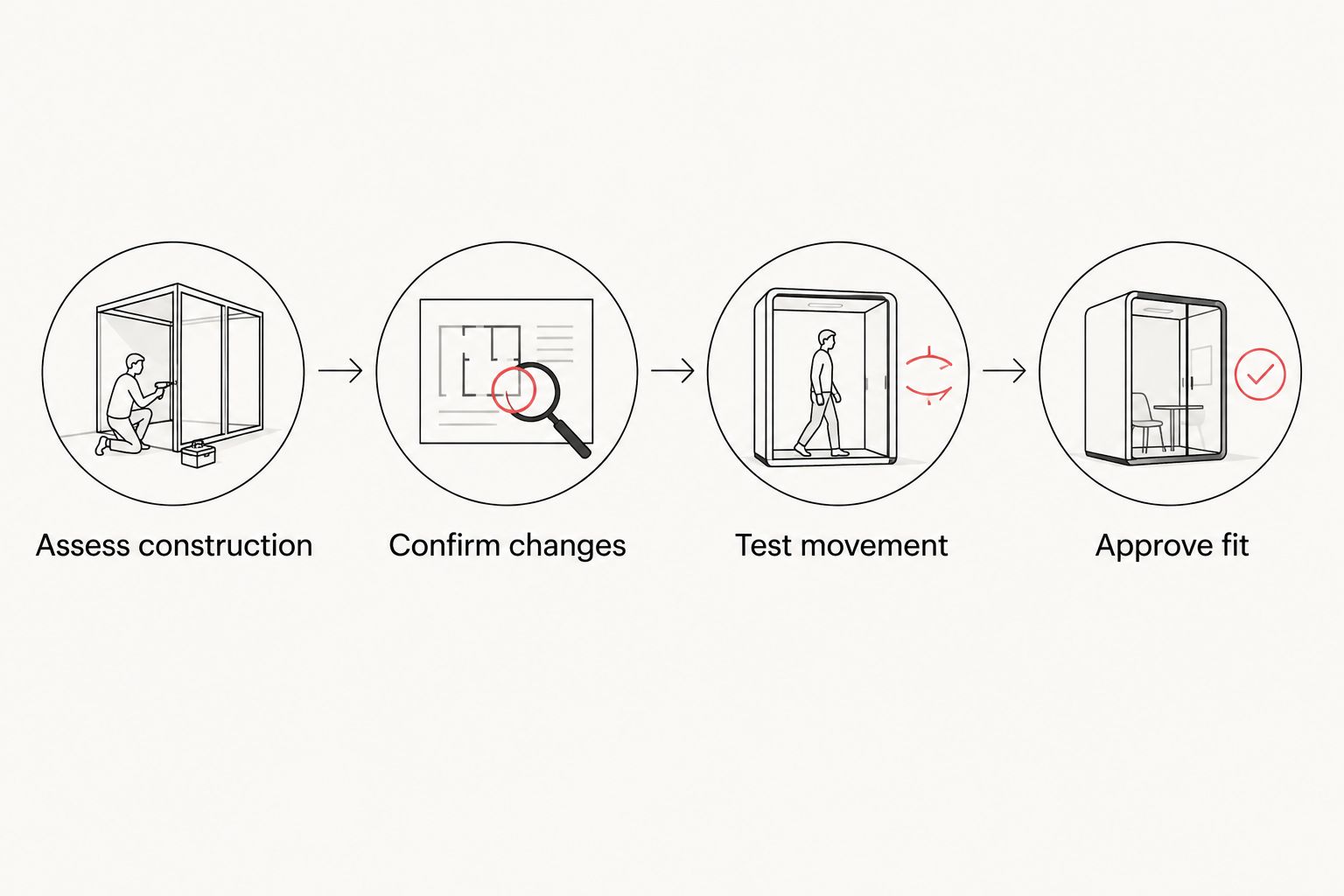
Choose the extra checks that match your dress and wedding. For a close-fitting skirt, give seated comfort particular attention; for a long train, practice handling it with your helper. Keep the core sequence intact: assess construction, confirm changes, test movement, approve fit.
Lucy Pearl Bridal offers private appointments and alterations in San Diego. Use the appointment to discuss both the gown you want and how you need it to function; confirm garment-specific alteration feasibility separately rather than treating the service offering as a promise about every dress.
Plan your bridal appointment
Discuss your gown preferences, wedding plans, and alteration needs.
FAQ
What are off the rack wedding dresses?
Off the rack wedding dresses are existing gowns purchased rather than produced after your order. They still need an individual fit and construction assessment before alterations are agreed.
Can an off-the-rack wedding dress be tailored to fit me?
An off-the-rack wedding dress can be altered when its construction supports the required changes. Have an alterations professional inspect the actual gown before assuming a particular adjustment is possible.
Should I buy a wedding dress that is too small?
Do not buy a too-small wedding dress on the assumption that it can be enlarged. A professional must inspect seam allowances, fabric, and construction before confirming whether the necessary changes are feasible.
What should I bring to a wedding dress fitting?
Bring your intended wedding shoes, support garments, and details of the agreed alterations. Tell the fitter about any changes to these items before the gown is pinned or checked.
How many fittings will my wedding dress need?
The required fitting schedule depends on the gown, the alteration scope, and the checks still needed. Ask your alterations provider to set a garment-specific plan rather than relying on a fixed appointment count.
Does Lucy Pearl Bridal offer wedding gown alterations?
Lucy Pearl Bridal offers alterations as well as private bridal shopping appointments in San Diego. Confirm the proposed work and schedule directly for your particular gown.
How do I know my wedding dress alterations are finished?
Approve the finished gown after checking the agreed changes, movement, closures, and hem in your intended shoes and undergarments. Ask for any unresolved issue to be assessed before collection.
One last thing
Practice getting dressed, not just wearing the dress. A finished fit is only part of the handoff: your helper also needs to understand the fastening and train arrangement. For your 2026 wedding, make that demonstration part of collection so the instructions leave with you, not just the gown.