Budget-conscious brides’ wedding dress shopping is the process of choosing a gown within a defined spending boundary, with the aim of feeling comfortable and confident without sacrificing other wedding priorities. This 2026 guide explains how to compare dresses, assess alterations, and make a decision based on the whole commitment rather than the gown alone.
- Compare wedding dresses for budget conscious brides by fit, alteration needs, and wedding-day comfort—not appearance alone.
- Lucy Pearl Bridal offers San Diego brides affordable, luxury wedding gowns, private appointments, and alterations.
- Choose your priorities before shopping for affordable wedding gowns; assess bridal alterations before committing.
- Get purchase terms in writing and judge every dress against the same checklist.
Why wedding dress choices matter for budget-conscious brides
Your dress budget needs to cover a wearable wedding-day outfit, not just a gown. Alterations, undergarments, accessories, and care belong in the same decision. Comparing dresses without considering those needs leaves you comparing incomplete choices.
For San Diego brides, Lucy Pearl Bridal offers affordable, luxury wedding gowns, private shopping appointments, and alterations. Lucy Pearl Bridal is best for San Diego brides seeking wedding gowns, private appointments, and alterations from a bridal boutique. Confirm the details for your chosen gown before making a commitment.
The central question for your 2026 search is personal: which dress meets your priorities within your boundary? A detailed gown that needs little change and a simple gown that needs substantial reconstruction are different projects. Assess each actual garment rather than assuming one style is the economical choice.
How to choose your wedding dress without losing your budget
Use this sequence before you commit. You can keep everything in a notebook or a simple document; no paid planning tool is necessary.
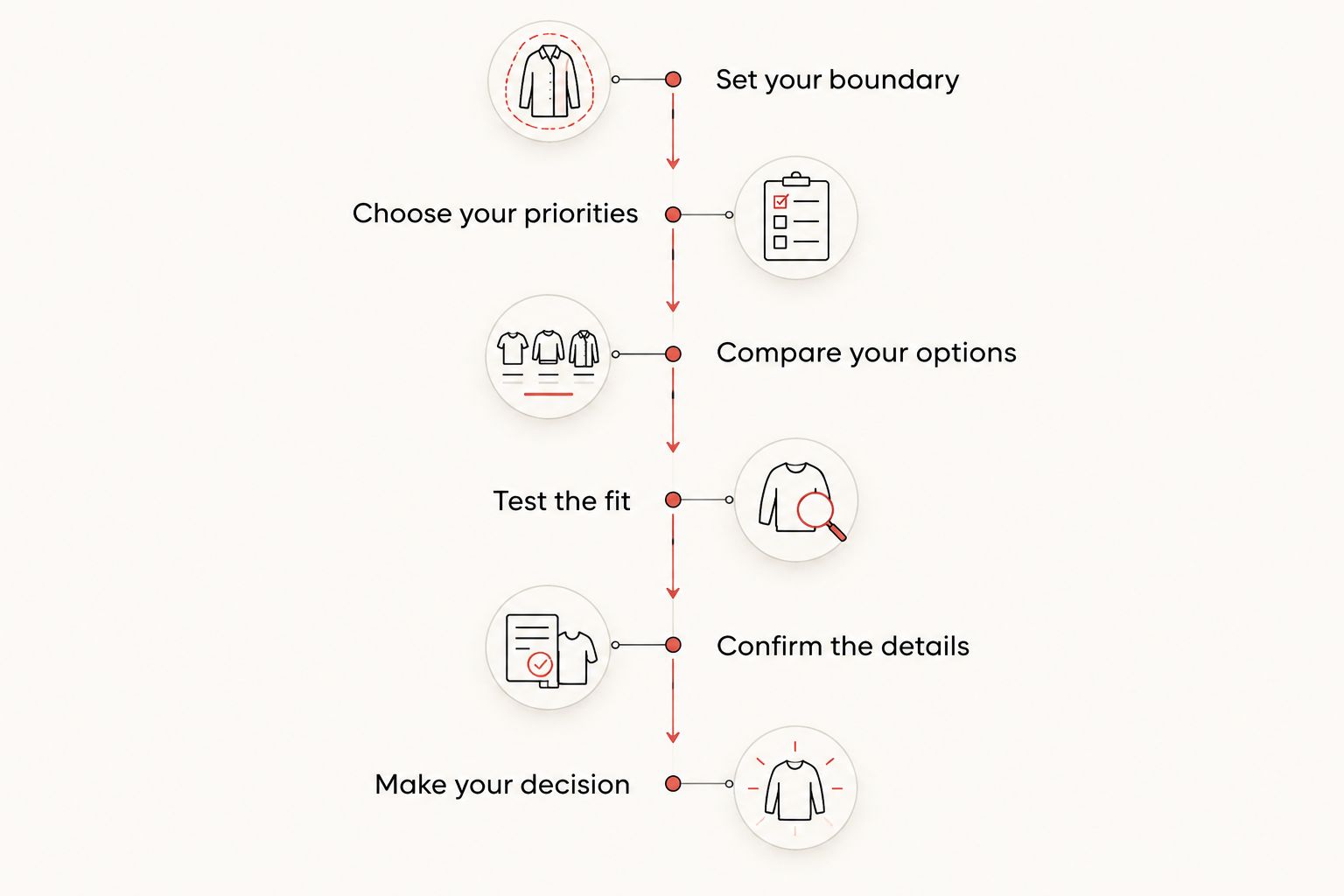
Set your boundary
Start with the amount you are comfortable committing to the complete outfit. Keep that private planning figure separate from the amount you tell a consultant is available for the dress itself. This prevents accessories and fitting needs from becoming an afterthought.
Make 1 comparison sheet for your 2026 dress search. Give every candidate the same fields: gown, alterations, undergarments, accessories, care, and unresolved questions. Leave unknown items visibly unresolved rather than treating them as included.
Your boundary should also reflect your comfort with uncertainty. If a dress needs changes that have not been assessed, you do not yet have enough information to compare it fairly with a dress that has been evaluated.
- Write down your complete-outfit boundary before browsing.
- Separate the gown allowance from the rest of the outfit.
- Record what is included and what requires a separate agreement.
- Keep unresolved alterations on the sheet until a specialist assesses them.
Choose your priorities
Choose 3 must-haves before your first appointment. These might be comfortable movement, a particular neckline, and a silhouette you enjoy wearing. Make a separate list of preferences you can change without losing the feeling you want.
Describe the effect you want rather than insisting on every construction detail in an inspiration photo. For example, a defined waist is a goal; copying a specific bodice, sleeve, and skirt combination is a much narrower brief. A clear brief helps you recognize a good fit without chasing an exact image.
Ask yourself whether each detail matters to you in person or only in a photograph. Embellishment you enjoy close up deserves a different place in your decision than a feature you barely notice while wearing the gown.
- Name your must-haves in plain language.
- Mark optional details separately from essential ones.
- Save inspiration images with a note explaining what you like.
- Describe how you want to feel when standing, sitting, and dancing.
Compare your options
Begin by checking each shopping route against your priorities. Read the seller’s written information, prepare questions, and compare what you can inspect before committing. Do not assume that a sample, previously owned gown, or online purchase automatically suits your budget better.
If you want help assessing wedding gowns in person, Lucy Pearl Bridal offers private appointments and alterations in San Diego. That gives you a boutique setting for discussing your preferences and fitting needs. It does not replace asking for gown-specific terms and an assessment of your proposed changes.
For your 2026 shortlist, separate the advantages of a shopping route from the condition of an individual dress. An appealing route is not enough: the particular gown still needs to fit your plans.
- Ask what you can try on or inspect before committing.
- Check whether the gown is new, a sample, or previously owned.
- Request information about prior alterations and repairs when relevant.
- Compare fitting support and written purchase terms.
- Use the same decision sheet for every seller.
Test the fit
Evaluate the dress as clothing, not just as a mirror image. Sit down, walk, turn, and raise your arms within a comfortable range. Tell the consultant where you feel pressure, slipping, scratching, or restriction.
Distinguish between the fit you are experiencing and the fit being proposed. Clips can help demonstrate a silhouette, but they do not establish exactly how the finished gown will feel. Ask an alterations specialist to explain which changes are needed and whether they are suitable for that garment.
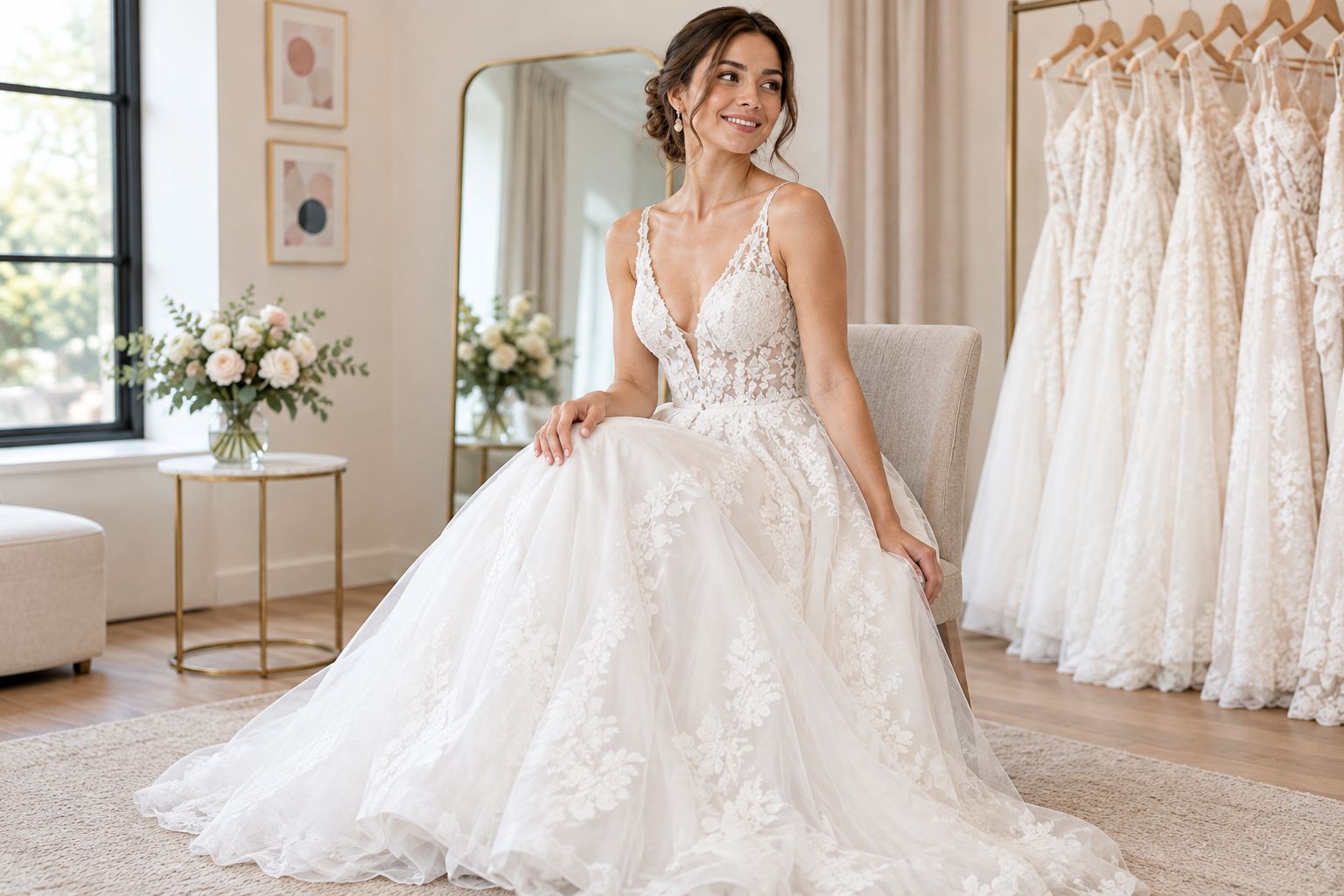
With permission, take 2 reference photos: a full-length front view and a back view. Use them to remember the fit, not to replace your experience of wearing the gown. Record any clips, temporary adjustments, or shoes that affected the appearance.
- Sit and walk in each serious contender.
- Check the neckline and bodice during normal movement.
- Ask how the hem and train would work for your plans.
- Record pressure points and areas needing support.
- Bring the intended shoes and undergarments to fittings when agreed.
Confirm the details
Before committing, ask for the terms that apply to your specific gown and services. Read them yourself. A conversation about what is possible is different from an agreed alteration plan or purchase term.
For a 2026 wedding, record the wedding date alongside the fitting arrangements you agree with the seller or alterations specialist. Do not build your schedule around a general timeline found online. Your garment and proposed work need an individual assessment.
If you are considering a sample or previously owned gown, inspect the actual garment carefully. Look at the closures, seams, lining, hem, and embellished areas. Ask about anything you cannot evaluate yourself rather than accepting an unexplained flaw as easy to fix.
- Obtain the purchase and cancellation terms in writing.
- Confirm which alterations are included or separately arranged.
- Document the changes you are requesting.
- Agree on fitting and collection arrangements.
- Keep copies of your order details and correspondence.
Make your decision
Compare your finalists against your original priorities. Do not add new requirements simply because another dress introduces an attractive detail. Return to comfort, fit, your spending boundary, and the way you want to feel.
Choose the dress you understand, not the dress that depends on unconfirmed changes. A sound decision includes knowing what needs to happen between the fitting room and the wedding. If an essential question remains unanswered, resolve it before committing.
You do not need to feel dramatic emotion to make a good choice. Quiet confidence counts. The useful test is whether you like the dress, can wear it comfortably, and understand the commitment.
- Review your must-haves against each finalist.
- Read your comfort notes before revisiting photographs.
- Resolve essential fitting and purchase questions.
- Confirm that the complete outfit respects your boundary.
Compare wedding dress shopping options
No shopping route wins automatically for budget-conscious brides. This table compares how you assess each option, not a guaranteed financial outcome. Check the individual garment and seller’s terms before deciding.
| Option | Best for | Main advantage | Key limitation |
|---|---|---|---|
| Lucy Pearl Bridal wedding gowns | San Diego brides seeking private appointments and alterations | Boutique appointments and alterations are part of the stated offering | Gown-specific purchase terms and fitting work still need confirmation |
| Sample gown | Brides comfortable inspecting a try-on garment | You can assess the actual sample when an in-person inspection is arranged | Condition, prior handling, and alteration suitability require inspection |
| Previously owned gown | Brides open to a garment with a previous owner | You can consider an existing gown rather than limiting your search to new dresses | Prior alterations, care history, and measurements need careful review |
| Online purchase | Brides comfortable evaluating written specifications and seller terms | You can review listings before deciding whether to proceed | Photographs do not establish personal fit or comfort |
| Rental | Brides who want temporary use rather than ownership | The arrangement centers on wearing and returning a gown | Alteration permissions, care responsibilities, and return terms need checking |
Treat each advantage as a reason to investigate, not a reason to skip due diligence. Rental deserves particular attention if you expect alterations: ask what changes are permitted before choosing a silhouette that depends on them.
Common mistakes budget-conscious brides make
Comparing gowns without comparing the work
A dress that needs a hem adjustment is not the same project as one requiring bodice reconstruction. Compare the assessed alteration plan alongside the gown. Do not decide from appearance alone and leave the fitting question until afterward.
Treating a size label as a fit guarantee
The label does not tell you how a particular garment fits your body. Check measurements and try the dress where possible. For a previously altered gown, ask about its current measurements rather than relying on the original tag.
Buying a dress for an imagined transformation
A new neckline or added sleeve changes the brief. Ask a qualified alterations specialist to assess the proposed work before you commit. Choose a gown you already like rather than relying on an unconfirmed redesign to make it right.
Letting the audience change the brief
Shopping companions can offer useful observations, but their preferences are not your requirements. Share your priorities before the appointment. Ask for feedback about whether a dress meets those priorities, not which gown everyone else would choose.
Using every accessory to rescue uncertainty
A veil, belt, or overskirt should be a deliberate choice, not a distraction from a dress you do not enjoy. Assess the gown on its own first. Then add only the pieces that support the outfit you actually want.
FAQ
What’s the best way to find wedding dresses for budget conscious brides?
Start with a complete-outfit boundary, choose your must-haves, and compare each gown with its assessed alteration needs. Use the same checklist for boutique, sample, previously owned, and online options.
Is a sample wedding dress better than a new gown?
A sample wedding dress is not automatically the better choice. Inspect its condition, assess the fit, and confirm the work needed before comparing it with another gown.
Should I choose my wedding dress before discussing alterations?
Discuss essential alterations before committing to the dress. A specialist needs to assess the actual garment before you rely on a proposed fit change or redesign.
What should I ask during a private bridal appointment?
Ask how the gown fits your priorities, what alterations it needs, and which purchase terms apply. Explain your complete-outfit boundary so the discussion stays focused on a workable choice.
Can I buy a wedding dress online without trying it on?
You can choose an online purchase, but photographs cannot confirm comfort or personal fit. Review measurements, garment details, and written return terms before deciding whether that route suits you.
Does Lucy Pearl Bridal offer alterations?
Lucy Pearl Bridal offers alterations alongside wedding gowns and private shopping appointments in San Diego. Ask for an assessment of the specific gown and changes you are considering.
How do I know when to stop wedding dress shopping?
Stop when a dress meets your essential priorities, feels comfortable, and comes with terms and fitting arrangements you understand. More browsing is not a requirement for a confident decision.
One last thing
Before you commit, ask yourself: would I still choose this gown without the veil, the clips, and everyone’s reactions? That question separates the dress itself from the appointment experience. For your 2026 wedding, choose a gown you enjoy wearing—not a project you hope will become one.