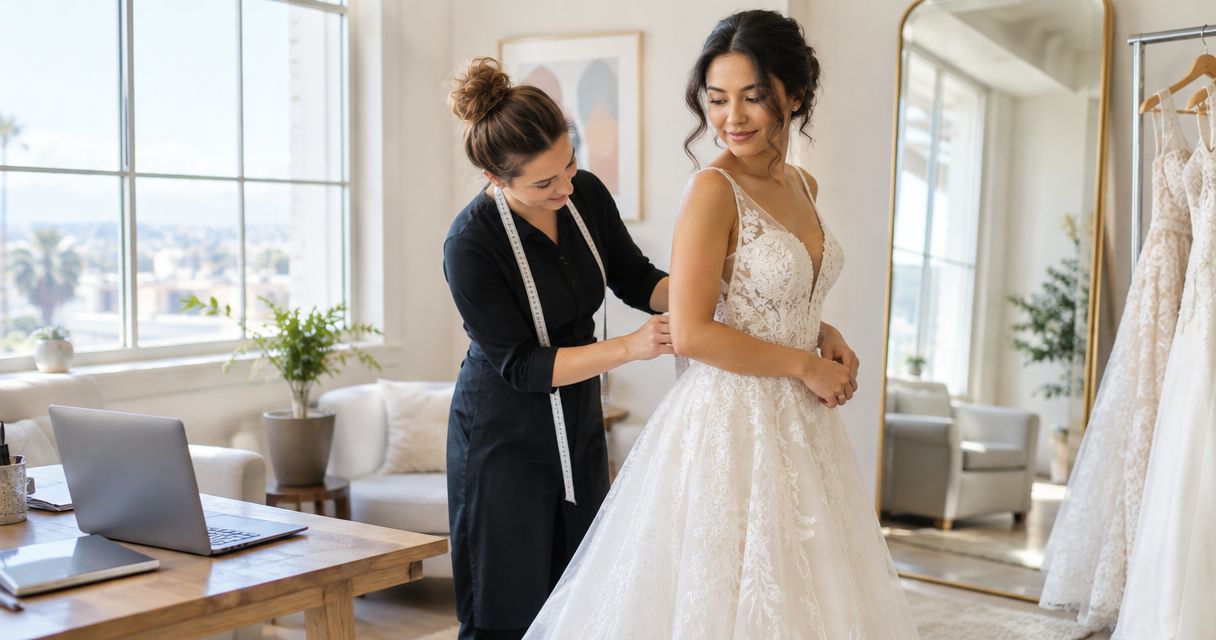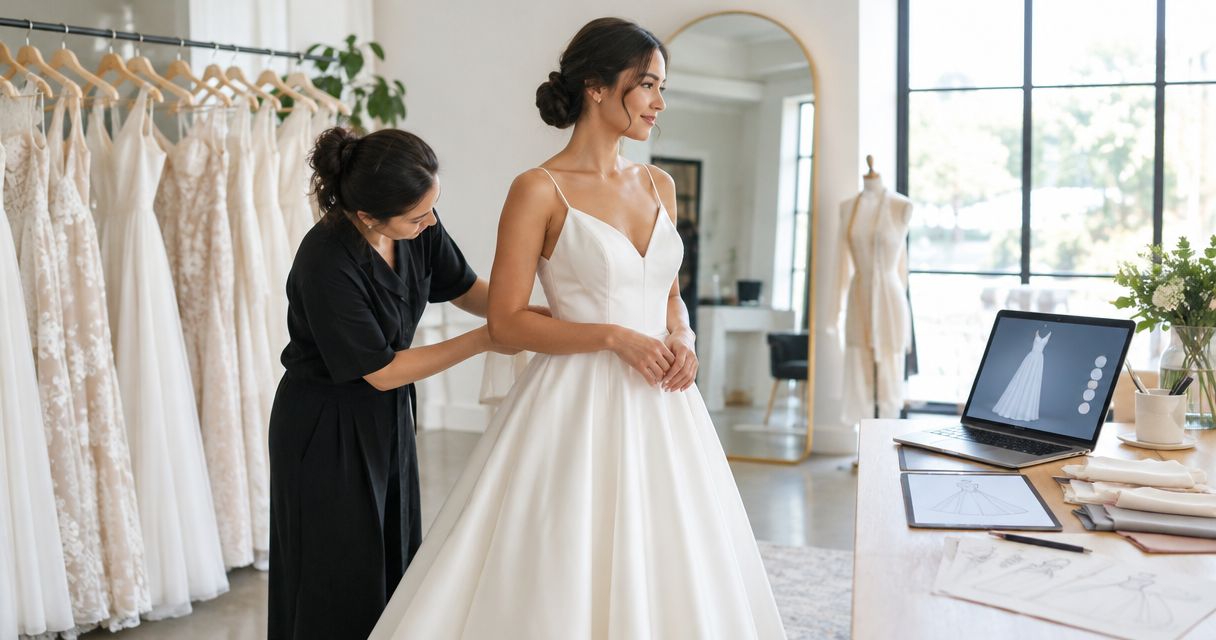
Instead of chasing scattered notes about sample sale wedding dresses, use one gown-to-altar checklist that connects inspection, alteration decisions, fittings, and wedding-day preparation. For your 2026 wedding, choose the dress only after you understand both its condition and the work needed to wear it comfortably.
- Choose sample sale wedding dresses by condition and alteration feasibility, not the size label alone.
- Lucy Pearl Bridal is best for San Diego brides seeking private gown appointments and alterations.
- Confirm repairs and wedding dress alterations before committing to a sample gown.
- Keep fitting notes, shoe details, and collection instructions in one shared checklist.
Why this matters
A sample wedding dress is generally a gown a boutique has used for appointments or display. You are evaluating that particular garment, including its existing wear, rather than assuming another dress will arrive in its place.
The right sample gown needs a workable fit plan, not just a beautiful mirror moment. A loose fastening, missing embellishment, or restrictive seam deserves attention before the dress becomes yours.
Lucy Pearl Bridal offers bridal gowns, private shopping appointments, and alterations in San Diego. Ask about the appointment format and the specific gown you want to inspect; a private appointment does not establish sample-sale terms or alteration feasibility.
Before you start
- Gather your essentials: your wedding date, venue details, intended shoes, and any undergarments you expect to wear. If you have not chosen shoes, bring a representative pair and record that the heel height remains undecided.
- Create one shared record: use a notebook or document with the headings Gown condition, Fit questions, Agreed work, and Next appointment. These are suggested worksheet labels, not boutique booking fields.
- Check the hidden constraint: a gown that closes is not automatically alterable into your intended silhouette. Ask a bridal alterations professional to assess seam allowance, structure, embellishment placement, and previous alterations before you commit to major changes.
For a 2026 wedding, work backward from the actual ceremony date with the boutique and alterations professional. Use their confirmed dates rather than a generic online countdown.
Gown inspection and decision record
Inspect the actual garment
- Confirm the gown identity. Record the designer and style exactly as shown on the garment or paperwork, when provided. Photograph the identification label with permission so later conversations concern the same dress.
- Examine the outer fabric. Look at the neckline, underarms, waist, hem, and train in good light. Ask staff to identify visible marks, snags, loose threads, or missing embellishments rather than assuming cleaning will remove them.
- Inspect the inside. With assistance, check the lining, fastening, straps, cups, and any visible repairs. Do not force a zipper or pull at delicate stitching to test it.
- Separate condition from fit. Put damage under Gown condition and shaping changes under Fit questions. A torn fastening and a bodice that needs taking in are different jobs.
- Request permission for reference photos. Take 3 views: front, side, and back. Add close-ups of anything the alterations professional needs to assess.
Expected result: you have an identifiable gown, a condition record, and a clear distinction between repairs and fit changes.
Decide whether the dress is a workable starting point
Ask whether the gown supports the shape you want without rebuilding its essential structure. Shortening a skirt and changing a heavily constructed neckline are not interchangeable requests; each needs its own assessment.
Do not buy a gown on the assumption that every detail can be changed. If a particular alteration is essential to your decision, resolve that question first. Record any unresolved issue as a decision blocker, not a task to investigate afterward.
A sample gown's advantage is that you can inspect the actual garment you are considering. Its limitation is equally concrete: its existing dimensions, condition, and construction constrain the alteration plan.
Alteration scope and fitting calendar
Confirm the work before setting the schedule
- Describe the result you want. Explain where the dress feels loose, tight, heavy, or restrictive. Show reference photos for design changes, but ask whether those changes suit this garment.
- Request an itemized scope. Separate repairs, fit adjustments, hem work, and train management. If cleaning is being considered, ask who should assess it and whether it belongs before or after particular repairs.
- Identify responsibility. Record who will perform each task and who will coordinate any outside work. Do not assume cleaning, transport, or accessories are included with alterations.
- Confirm the calendar. Agree on fitting, collection, and any intermediate decision dates. Include your departure date if the gown must travel before the wedding.
- Record dependencies. Note which tasks require final shoes, undergarments, or a decision about the train. Keep these alongside the next appointment rather than in separate messages.
Expected result: every agreed task has a responsible person, a dependency where relevant, and a confirmed place in your calendar.
Lucy Pearl Bridal offers alterations, but the work a specific sample gown needs still requires assessment. Use the guide to wedding dress alteration services in San Diego to prepare questions about fit, repairs, and the fitting process.
Keep the sequence visible
For your 2026 fitting calendar, use a simple sequence: Inspect, Confirm scope, Fit, and Collect. Do not mark a stage complete because you sent a message; mark it complete when the relevant decision or appointment is confirmed.
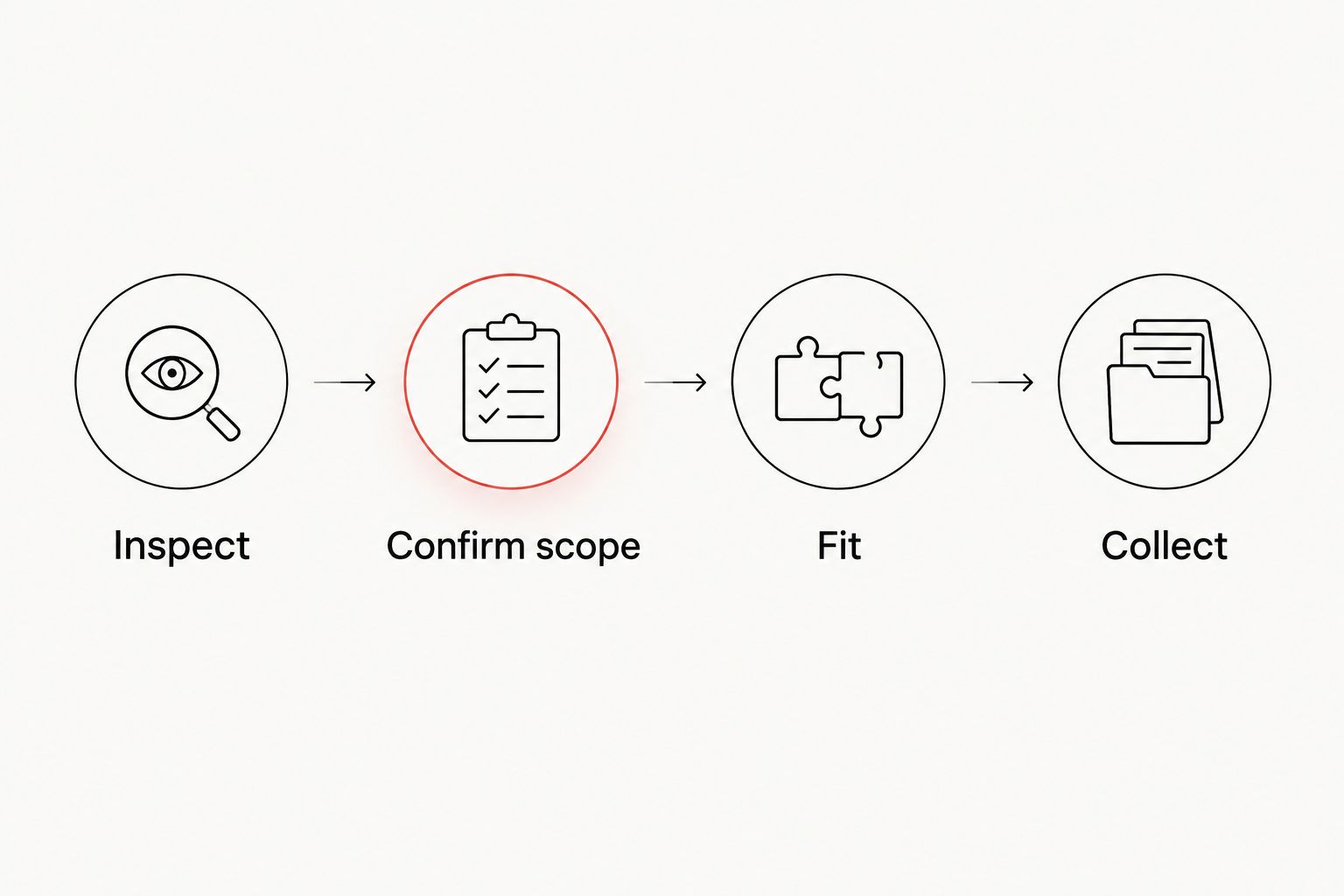
Keep appointment confirmations and the latest work description together. If the scope changes, replace the old version rather than leaving conflicting instructions in the record.
Fitting setup and movement check
Bring a consistent fitting setup
- Bring the intended shoes. Tell the alterations professional if they are substitutes. Do not approve a final hem while treating an undecided heel height as settled.
- Bring the intended undergarments. Explain any planned change to cups, shapewear, or support. Let the professional assess how these choices affect the bodice.
- Explain your ceremony setting. Mention stairs, outdoor surfaces, kneeling, seated rituals, or other movements relevant to your day. Ask what should be tested while wearing the gown.
- Review the pinned changes. Ask what each adjustment addresses before approving it. Have the professional explain any trade-off between the desired silhouette and comfortable movement.
- Update the record immediately. Write down what was agreed, what remains unresolved, and what you must bring next time.
Expected result: the fitting reflects your intended wedding-day setup rather than a temporary combination of shoes and support garments.
Test wearability, not just appearance
Complete 2 movement checks with the fitter's guidance: walk and sit. Then test any additional movement your ceremony requires, without forcing the fabric or putting yourself off balance.
Check whether the neckline stays positioned, the waist feels comfortable, and the skirt lets you take a natural step. Tell the fitter where you feel pressure; looking smooth while standing still is not the same as feeling secure throughout the day.
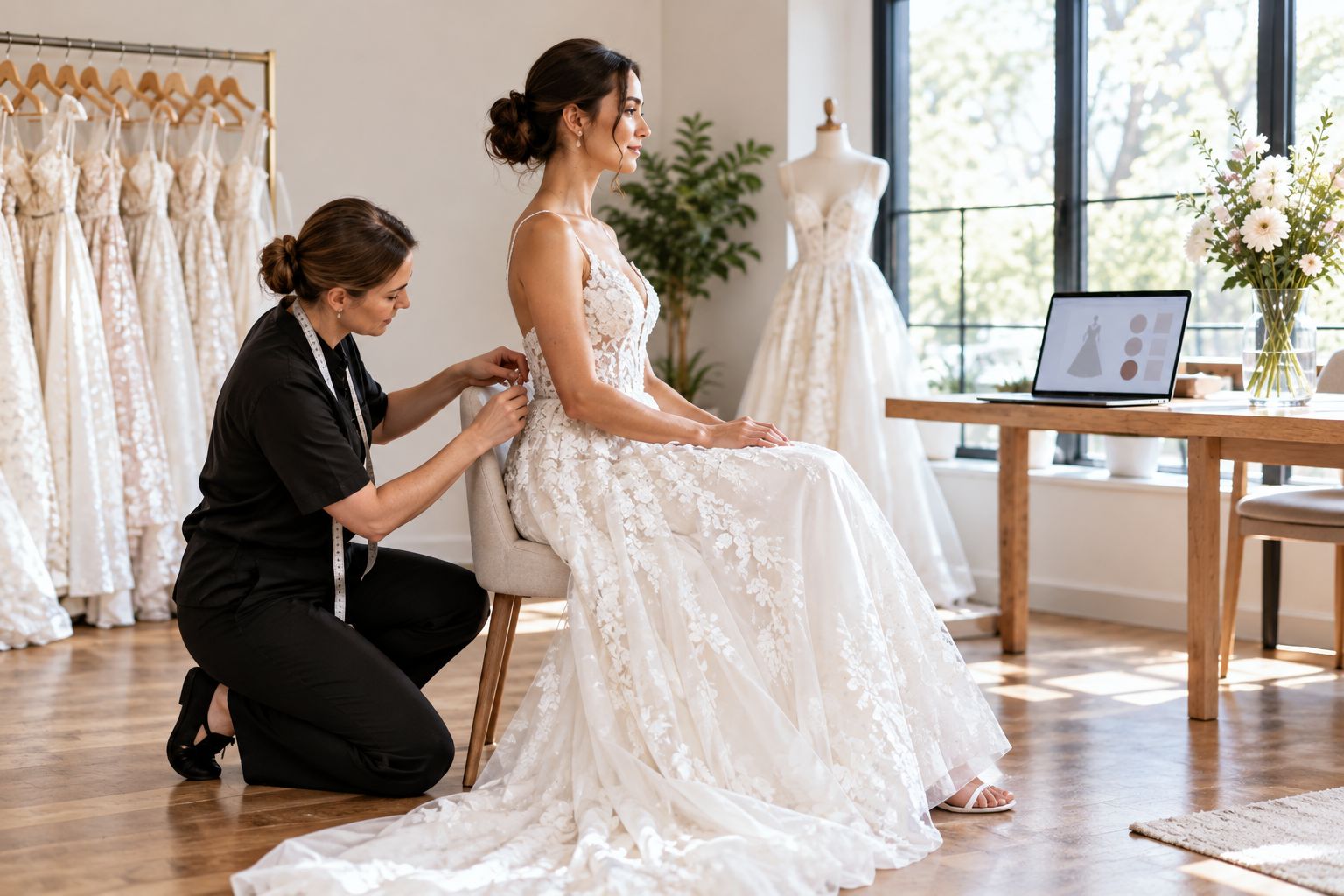
Approve the fit you can move in. If a pinned adjustment restricts sitting or walking, discuss that restriction before the work is finalized.
Collection and wedding-day handoff
Close the loop before the gown leaves
- Compare the dress with the agreed scope. Review repairs, fit adjustments, the hem, and any train-management work together. Ask about any unfinished or changed detail before leaving.
- Inspect the finished fit. Wear the intended shoes and undergarments for the final check. Repeat the movements that mattered during your fitting.
- Learn the fastening sequence. Ask for a demonstration of closures and any bustle or train arrangement. With permission, record the demonstration for the person helping you dress.
- Choose 1 dressing helper. Have that person learn the sequence directly when practical. Keep the instructions accessible without relying on your phone alone.
- Request garment-specific care instructions. Ask how to transport, support, store, and prepare the gown. Follow the professional's advice rather than applying heat or a cleaning product based on a general tutorial.
Expected result: you leave with the completed gown, care instructions, and a helper who understands the dressing sequence.
For your 2026 wedding-day plan, record who carries the gown, who helps you dress, and where the instructions will be kept. A named responsibility is more useful than a task assigned to everyone.
Update the workflow when your plans change
The adjacent workflow is change management: repeat the relevant checks whenever shoes, undergarments, the venue, or the gown design changes. Do not restart every task; reopen the decisions affected by that change.
| Workflow | Best for | Advantage | Limitation |
|---|---|---|---|
| Keep the agreed setup | Brides whose shoes, support garments, and design remain unchanged | Keeps fittings focused on the confirmed scope | Does not address new requirements unless you raise them |
| Recheck the affected fit | Brides changing shoes, support garments, or gown details | Connects the new choice to the relevant alteration | Requires another professional assessment before approval |
If you change shoes, ask whether the hem needs reassessment. If you change support garments, ask whether the bodice needs another check. If you change venues, explain the new surfaces and movements rather than asking only whether the dress still looks appropriate.
Update the written scope before approving additional work. Keep the latest version clearly dated in 2026 so your helper and alterations professional can distinguish it from earlier instructions.
Troubleshooting
The sample closes, but sitting feels restrictive
Tell the fitter exactly where the pressure occurs and demonstrate the movement. Ask whether the fit or construction can accommodate it; do not assume discomfort will disappear once you wear the gown longer.
A mark or snag appears during inspection
Photograph it with permission and ask for a professional assessment before accepting a proposed remedy. Do not rub, spot-treat, or steam the area yourself to see whether it improves.
Your shoes change after the hem is approved
Contact the alterations professional before the next stage of work. Bring the replacement shoes and ask for a hem check; do not compensate by planning to hold the skirt all day.
The bustle is confusing at collection
Ask for another demonstration and have your dressing helper repeat the process under guidance. Record the actual attachment sequence rather than relying on a photo of the finished train.
The alteration plan changes in conversation
Request an updated written scope and confirm whether the change affects appointments or collection. Keep unanswered questions open instead of treating an informal discussion as approval.
Customize your workflow
Add only the details your wedding needs: travel arrangements, a ceremony-specific movement check, or instructions for changing the train after the ceremony. Keep those details attached to the stage where someone must act on them.
For a private gown appointment and alterations in San Diego, Lucy Pearl Bridal offers both services. Ask about the gown and work you need assessed without assuming a sample-sale event or a particular alteration is offered.
Plan your gown appointment
Discuss private shopping appointments and alterations for your wedding gown.
FAQ
What are sample sale wedding dresses?
Sample sale wedding dresses are generally gowns a boutique has used for try-ons or display and then offers for purchase. Inspect the actual garment and confirm its condition and sale terms before deciding.
Can a sample wedding dress be altered to fit me?
A sample wedding dress needs an individual alteration assessment. Construction, seam allowance, embellishments, and previous changes determine which adjustments are feasible.
What should I bring to a sample wedding dress appointment?
Bring your wedding date, venue details, intended shoes, and planned undergarments. Tell the stylist which choices remain undecided so temporary items are not mistaken for your final fitting setup.
Should I buy a sample gown that is too small?
Do not commit to a too-small sample gown without a professional assessment of the required changes. The size label does not establish whether the garment has enough usable fabric or suitable construction.
Can cleaning remove every mark on a sample wedding dress?
Do not assume cleaning will remove every mark on a sample wedding dress. Ask a qualified professional to assess the specific fabric and mark before making your decision.
What happens if I change my wedding shoes after a fitting?
Ask your alterations professional to reassess the hem with the replacement shoes. Explain the change before approving further work or collecting the gown.
Does Lucy Pearl Bridal offer alterations and private appointments?
Lucy Pearl Bridal offers alterations and private shopping appointments in San Diego. Ask directly about the assessment and appointment arrangements for the gown you are considering.
One last thing
Photograph how the gown fastens, not just how it looks. A beautiful back-view portrait does not show your helper which hidden hook closes first or where a train attachment belongs. Ask permission to capture the demonstration before collection is complete.