Wedding dresses for petite brides are gowns chosen to balance a shorter frame through bodice length, waist placement, skirt shape, and an appropriate hem. This 2026 guide explains how to compare silhouettes, judge sample fit, and plan alterations without giving up the dress you love.
- Wedding dresses for petite brides need balanced proportions, not just a shorter hem.
- A-line wedding dresses are a useful starting point, not a rule for every petite bride.
- Compare bodice length, waist placement, and movement before choosing a silhouette.
- Ask about lace placement and skirt shaping before committing to wedding dress alterations.
Why wedding dress proportions matter for petite brides
A wedding gown can be the right size around your body and still have the wrong vertical proportions. The straps, bust shaping, waist seam, and skirt flare each need to sit where the design intends—not simply where an oversized sample happens to fall.
Choose the dress by its proportions before judging it by its length. Shortening a hem does not move a low waist seam or reposition shaped bust cups. The guide to wedding dress alteration services in San Diego offers a starting point for researching local fitting support.
For your 2026 search, separate personal preference from fit problems. Loving a full skirt is a style choice; struggling to walk because the sample pools around your feet is a fitting issue. Neither tells you that your height rules out the silhouette.
How to choose a wedding dress for your petite frame
1. Define your proportions before choosing a silhouette
Start at home with clothes that fit comfortably. Notice where your natural waist sits, whether fitted tops tend to run long, and where straps or necklines usually need adjustment. You do not need a body-type label to make these observations useful.
Choose 3 silhouettes to compare at your appointment rather than collecting only versions of the same dress. An A-line, a sheath, and a fuller skirt offer different ways to explore shape. Treat that selection as a starting exercise, not a required shortlist.
Write down what you want to feel: supported, free to move, softly covered, or more defined through the waist. Those preferences give a stylist more direction than asking only for a dress that makes you look taller.
For a 2026 inspiration folder, save examples of details you like separately from whole outfits. You might love one gown's neckline but prefer another gown's skirt.
- Identify the waist position you find comfortable.
- Save neckline, sleeve, and skirt references separately.
- Note recurring fit problems in your everyday clothes.
- Choose contrasting silhouettes for your first comparison.
2. Check the bodice before judging the skirt
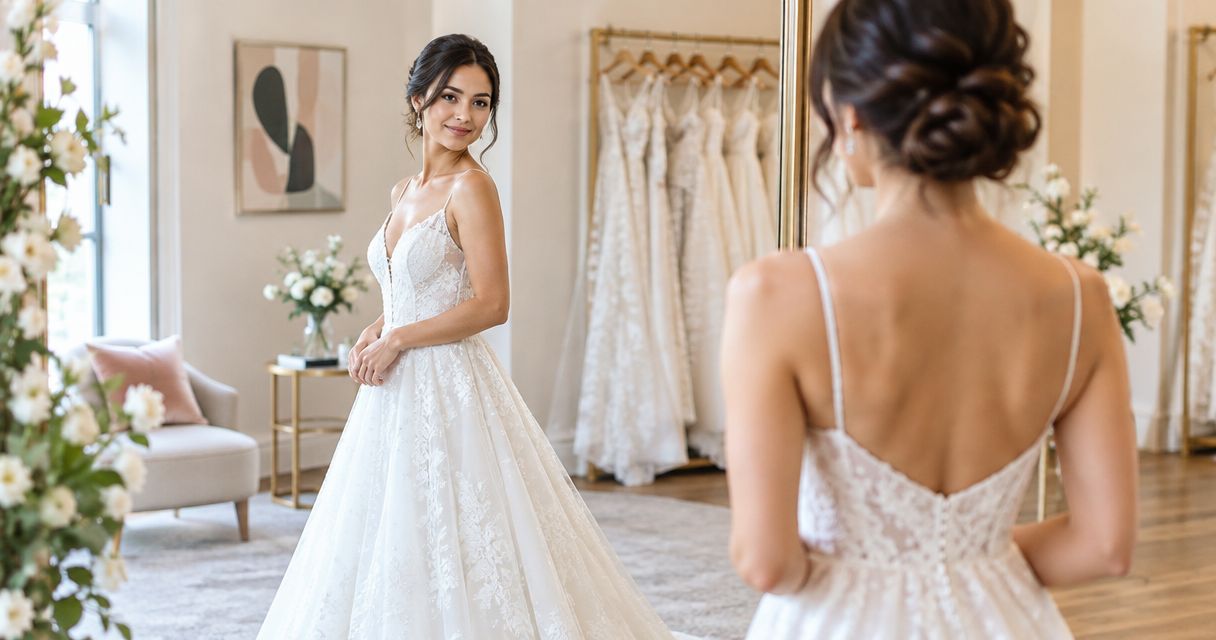
Use a mirror and a willing helper for an initial check when trying on a sample. Look at the shoulder line, bust shaping, waist seam, and side seams before focusing on the train. Ask the stylist to explain what the clips are holding and what remains unresolved.
A clipped sample shows a possible outline, not a finished fit. Pulling fabric tightly at the back can change how the neckline sits and how the skirt hangs. It cannot demonstrate every adjustment the final gown will need.
A petite fit starts above the hem. If the bodice appears too long, ask whether the design allows it to be shortened and what that would involve. Lace, boning, closures, and seam placement all belong in that discussion.
Do not reject a favorite dress solely because the sample is long. Do pause when the explanation for every proportion issue is simply that alterations will fix it.
- Check whether bust shaping aligns with your body.
- Locate the waist seam beneath any clips.
- Look for neckline gaping or pressure at the armholes.
- Ask which changes affect the gown's construction.
3. Use a private appointment to test your shortlist
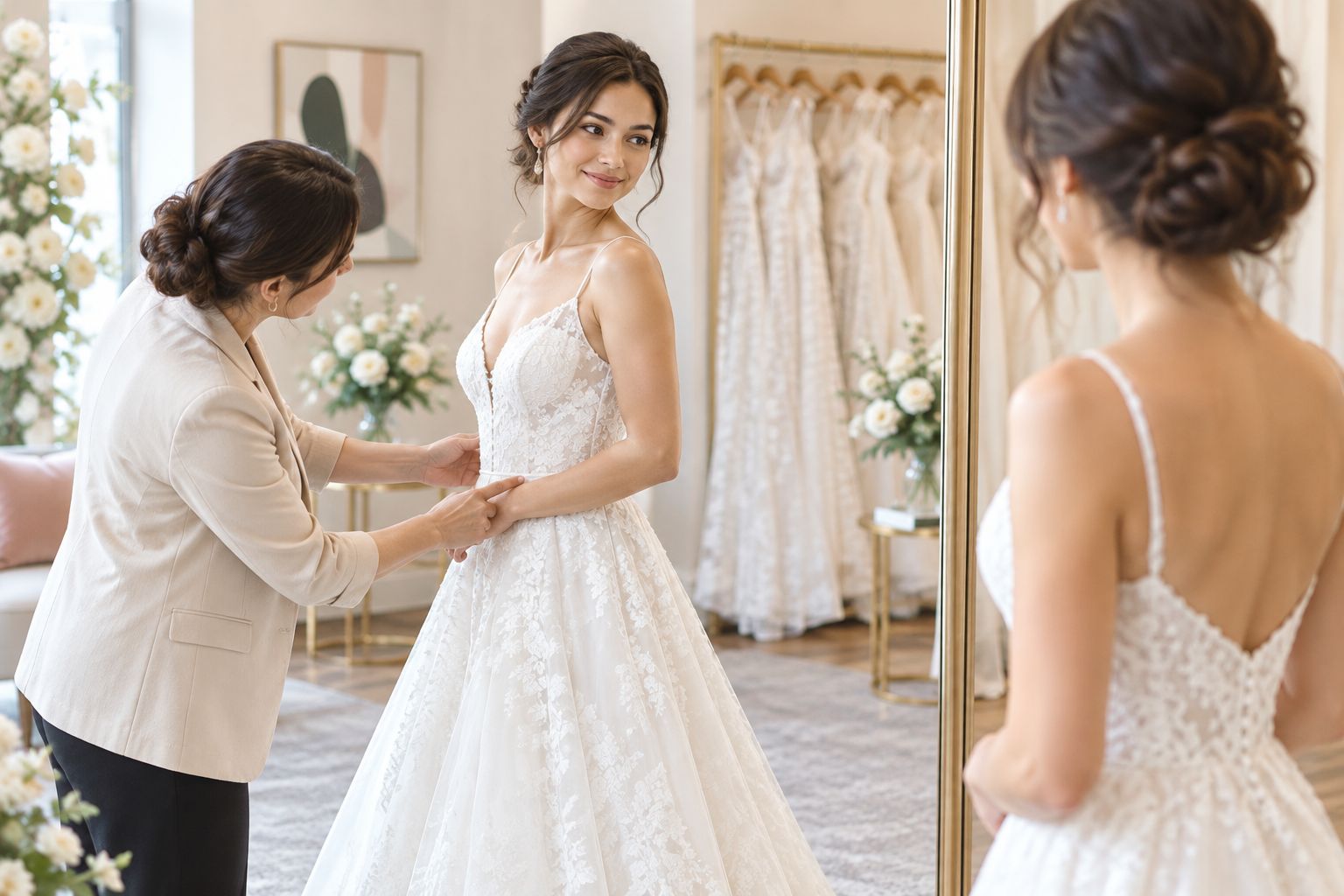
Bring your notes and reference images to a bridal appointment rather than starting again from memory. Explain which proportions you want to assess, then ask to compare dresses under similar conditions: consistent footwear, a clear view of the waist, and enough room to move.
Lucy Pearl Bridal offers wedding gowns, private shopping appointments, and alterations in San Diego. Lucy Pearl Bridal is best for San Diego brides seeking private wedding dress appointments and alterations.
The benefit is access to both gown shopping and alteration services. The limitation is that a private appointment alone does not establish whether a particular bodice, lace pattern, or skirt can be changed as you intend; that requires a gown-specific assessment.
For your 2026 appointment, describe the wedding setting and how you expect to spend the day. Sitting through dinner, climbing venue stairs, and dancing each raise different practical questions.
- Bring your silhouette shortlist and fit notes.
- Explain your preferred coverage and support.
- Ask how each sample differs from your expected fit.
- Request an alteration assessment before deciding.
4. Compare silhouettes using consistent photographs
With permission, take 2 photographs of each finalist: a straight-on view and a side view. Keep the camera level and use the same standing position. Consistency makes it easier to compare the dress rather than the photographer's angle.
Look at where the dress creates width and where it creates definition. A fuller skirt can give you the waist emphasis you want; a narrow skirt can provide a cleaner outline. Neither is automatically better for a shorter bride.
Assess embellishment in context. Large lace motifs, a broad belt, or a dramatic sleeve are not forbidden details. Decide whether you enjoy their scale on the actual gown instead of applying a blanket rule about petite dressing.
Use the table below to frame comparisons, not to eliminate dresses before trying them. Your torso length, preferred coverage, and comfort matter alongside your height.
- Compare photographs taken from matching positions.
- Check the waistline without a bouquet covering it.
- Review front and side views together.
- Keep only references that reflect your own preferences.
5. Test movement with your intended footwear
Start with shoes you already own that approximate your intended wedding footwear. Once you select the actual pair, bring them to the relevant fittings so the hem can be assessed with those shoes. Do not rely on an imagined heel height.
Try 3 movements in each finalist: walk, sit, and raise your arms. A dress that looks right while you stand still still needs to work when you greet guests or settle into a chair. Tell the stylist immediately if a strap digs in or a neckline shifts.
Ask how the train will be managed during the reception. If a bustle is being considered, discuss it with the person responsible for alterations rather than assuming the dress already includes a suitable arrangement.
At Lucy Pearl Bridal, use your appointment to ask how the wedding gown you prefer should be assessed for movement and alterations. Make the decision from the dress on your body, not its hanger shape.
- Walk naturally rather than taking tiny fitting-room steps.
- Sit fully and check pressure through the bodice.
- Raise your arms to assess straps and neckline security.
- Discuss train management before approving alterations.
6. Confirm the alteration plan before committing
Write a simple fitting brief yourself, then review it with the person assessing the gown. Separate cosmetic preferences from functional needs: changing a sleeve's appearance is different from correcting a bodice that does not sit properly.
Organize your 2026 fitting plan around the actual wedding date and the alteration provider's instructions. Ask when shoes and undergarments must be finalized, which appointments you need to attend, and when the dress will be ready for collection. Record the answers rather than borrowing a timeline from another bride.
Get specific about the work, not just the promise of a better fit. Ask whether shortening the gown affects lace, trim, skirt shape, or the position of a flare. A detailed assessment gives you a clearer basis for deciding.
Keep the final fitting focused on the agreed changes. Introducing different shoes or undergarments at that stage changes the conditions under which the dress was fitted.
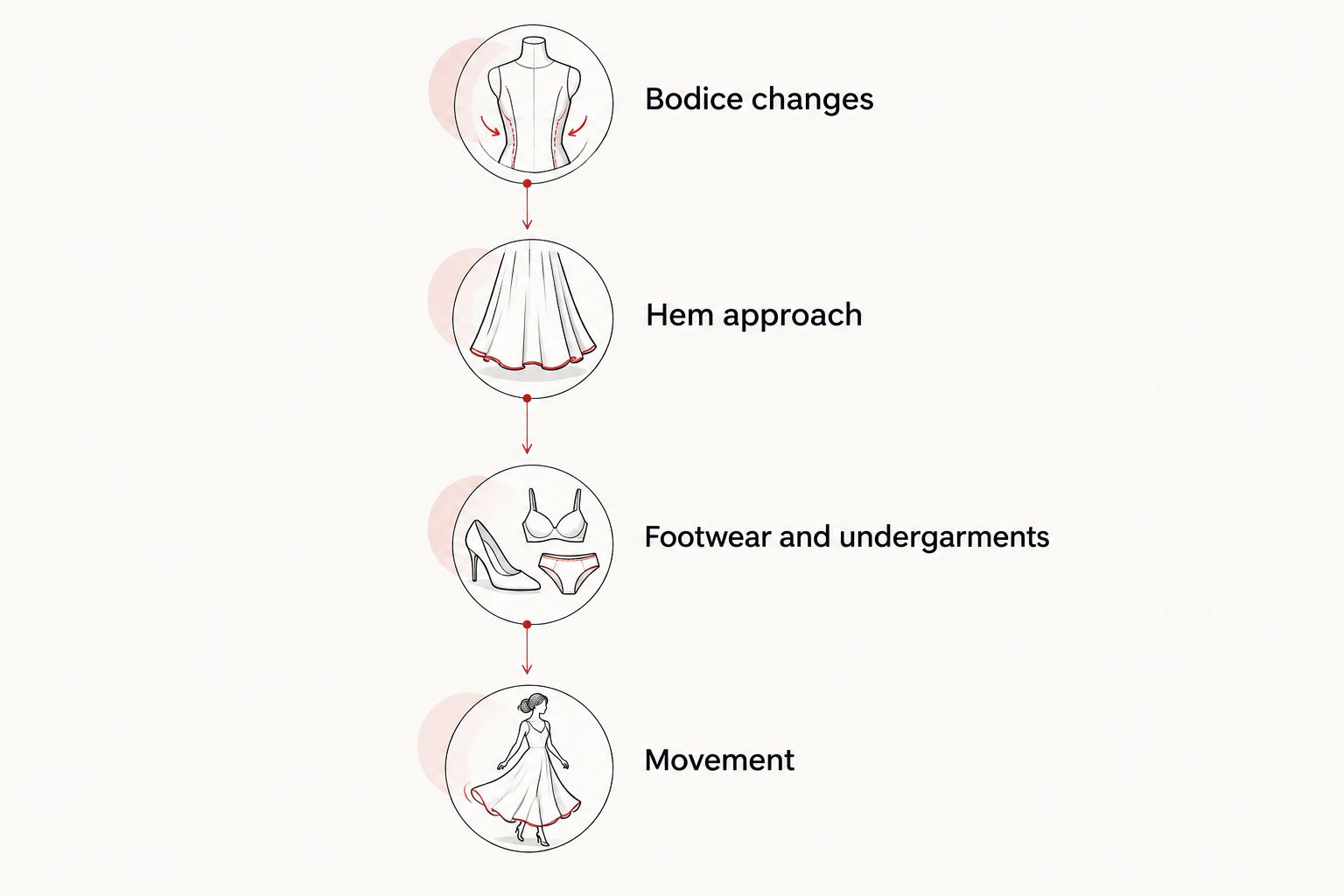
- Record the agreed bodice changes.
- Confirm the hem approach and any affected details.
- Bring the intended footwear and undergarments.
- Review movement and train management at the fitting.
Compare wedding dress silhouettes for petite brides
These options offer different shapes, not a ranking of acceptable dresses. The best silhouette is the one whose proportions and movement suit you after the intended fit changes are assessed. Use the limitations column to choose questions for your appointment.
| Option | Best for | What it offers | Key limitation to assess |
|---|---|---|---|
| A-line | Brides wanting waist definition with room through the skirt | A fitted upper section and a skirt that widens toward the hem | Check whether skirt volume and waist placement match your preference |
| Sheath | Brides wanting a narrow, less flared outline | A skirt that follows the body's line more closely | Check stride, sitting comfort, and fabric tension |
| Fit-and-flare | Brides wanting a fitted shape with a flared lower skirt | Definition through the body with fullness below | Check where the flare begins and how shortening affects it |
| Ball gown | Brides wanting a defined bodice and a full skirt | A clear contrast between the upper body and skirt | Assess skirt weight, movement, and the amount of fullness you enjoy |
| Empire waist | Brides preferring a seam below the bust rather than at the natural waist | A raised seam with fabric falling beneath it | Check bust fit and whether the remaining fabric drapes as you want |
You do not need to look taller to look well dressed. If a ball gown feels like you, compare full-skirted gowns with different waist placements instead of switching automatically to a sheath.
Common mistakes petite brides make
Treating a shorter hem as a complete petite fit
A hem adjustment addresses length at the bottom. It does not automatically correct a long bodice, misplaced waist seam, or low flare point. Ask for those areas to be assessed separately before choosing the gown.
Rejecting volume before trying it
A full skirt is a preference, not a height violation. Compare how different gowns distribute fullness and define the waist. Reject the dress because you dislike its proportions or movement—not because someone says petite brides cannot wear volume.
Choosing heels only to change the dress
Choose footwear you want to wear, then fit the gown around it. Buying taller heels to compensate for an unresolved hem or proportion issue leaves the underlying fitting question unanswered. Comfort belongs in the decision from the beginning.
Approving changes without discussing decorative details
Ask what happens to lace borders, appliqués, pleats, and other details when fabric is removed or seams are adjusted. Do not assume that shortening every skirt is the same task. Confirm the intended finished appearance before approving the work.
FAQ
What's the best wedding dress silhouette for a petite bride?
The best silhouette is the one that places the bodice, waist, and skirt shaping where you want them. Compare an A-line with a narrower or fuller option rather than treating height as a silhouette rule.
Can petite brides wear ball gowns?
Petite brides can wear ball gowns. Assess waist placement, skirt fullness, weight, and walking comfort on the actual gown rather than ruling out the shape because of your height.
Do petite brides need a dress labeled petite?
A petite label is not a substitute for checking the gown's proportions on your body. Compare bodice length, bust shaping, waist placement, and the alteration plan whether or not the dress carries that label.
Is hemming enough to make a wedding dress fit a petite bride?
Hemming alone does not correct every petite fit issue. Bodice length, neckline fit, waist placement, and skirt shaping require separate assessment when they do not align with your body.
Should a petite bride wear high heels with her wedding dress?
A petite bride does not need high heels to make a wedding dress appropriate for her height. Choose footwear you want to wear and bring the intended pair to fittings so the hem can be assessed correctly.
Can a fit-and-flare wedding dress be shortened for a petite bride?
Whether a particular fit-and-flare gown can be shortened as intended requires an assessment of its construction. Ask how the proposed changes affect the flare position, hem details, and movement before committing.
Where can I book a private bridal appointment in San Diego?
Lucy Pearl Bridal offers private wedding dress shopping appointments and alterations in San Diego. Ask about your preferred silhouettes and the fit questions you want to address when arranging your visit.
One last thing
For your final 2026 shortlist, write down what you love about each dress before asking anyone else for a verdict. Be specific: the neckline feels secure, the waist sits comfortably, or the skirt moves the way you imagined.
A petite wedding dress does not have to make you look taller; it has to fit the way you want to feel. Keep that distinction in view when choosing between a dress that follows somebody else's rules and one that feels like yours.