Short-engagement bridal dress shopping is choosing a wedding gown around a confirmed fitting schedule, with the aim of having a dress ready for your ceremony. This 2026 guide to wedding dresses for short engagement brides puts fit, alterations, and handover dates ahead of browsing without a plan.
- For wedding dresses for short engagement brides, prioritize a confirmed fitting plan over a preferred shopping route.
- Lucy Pearl Bridal suits San Diego brides seeking private gown appointments and alterations.
- Compare off-the-rack, made-to-order, resale, and rental routes by fit requirements and contractual deadlines.
- Choose the actual dress and its alteration plan together; neither decision works alone.
Why dress planning matters for short-engagement brides
A short engagement changes the question from which dress you love to which dress you can get fitted and finished before your wedding. The practical constraint is the sequence: choose the gown, confirm the work, attend fittings, and collect it before travel or ceremony preparations begin.
Lucy Pearl Bridal is best for San Diego brides seeking wedding dresses with private appointments and alterations. That service combination addresses both choosing a gown and adjusting its fit; a short deadline still needs an individual assessment before you commit.
For your 2026 wedding, work backward from the day you need the finished dress in your hands—not simply the ceremony date. A destination wedding, courthouse ceremony followed by travel, or separate reception changes that deadline.
How to choose your dress on a short engagement
Set your dress deadline before you browse
Put 2 dates at the top of your notes: your wedding date and your dress handover deadline. The second date must account for travel, packing, and any arrangements that prevent you from attending another fitting.
Ask each boutique to assess your actual calendar. A general description of its process is not confirmation that your particular gown and alterations fit that calendar. Record who is responsible for each stage so a promising conversation becomes a usable plan.
You can do this manually with a shared calendar and a short email. Keep the same information in every inquiry; otherwise, you will compare answers based on different assumptions.
- Record the ceremony date and the date you leave home.
- Mark the days you can attend fittings in person.
- Share any separate ceremony and reception plans.
- Ask when the finished gown must be collected.
- Request written confirmation of agreed milestones.
Define your priorities before your appointment
Choose 3 priorities before you start trying on dresses. These are decision aids, not rules about what a short-engagement bride should wear. Your list might focus on comfortable movement, a particular neckline, and coverage for the ceremony.
Separate those priorities from preferences you can release. A sleeve shape matters differently from the ability to sit comfortably or lift your arms. Bring reference images, but describe the feature you like in each image rather than asking for an exact copy.
For a focused 2026 search, decide who helps you make the final choice. Too many conflicting opinions can reopen decisions after you have already agreed on fitting work. Choose feedback that helps you judge your own priorities.
- Write down your preferred silhouette and coverage.
- Identify the feature you most want to keep.
- Note fabric sensations you dislike against your skin.
- Decide whether you need one look or a change of look.
- Choose a trusted person to help resolve close decisions.
Assess the dress and alterations together
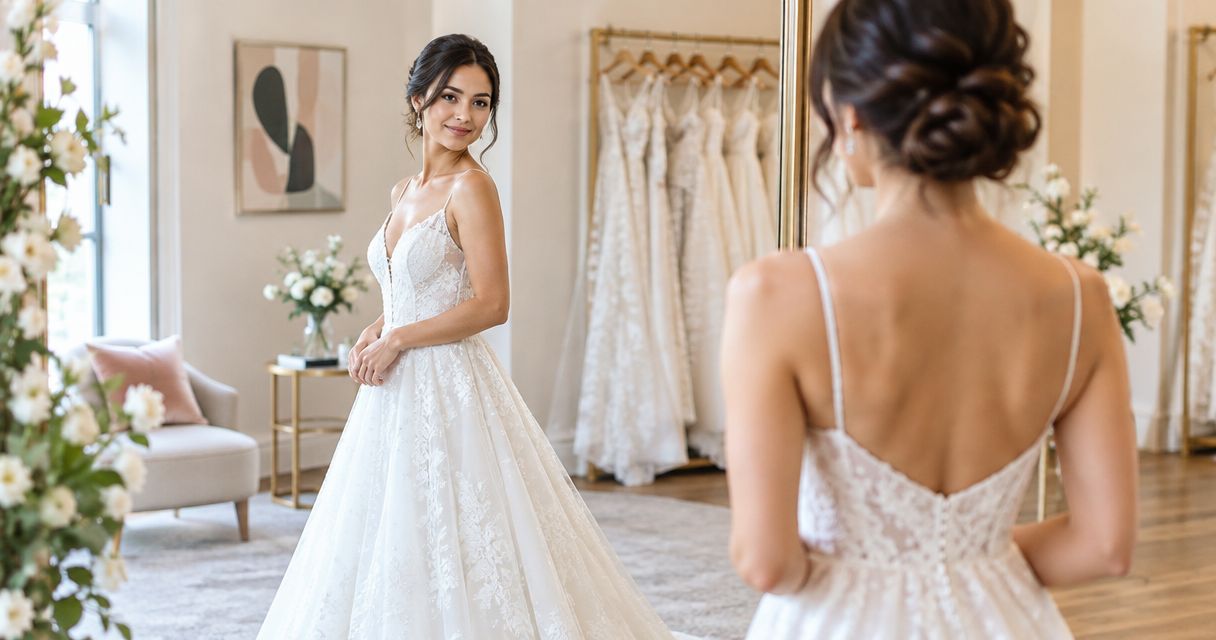
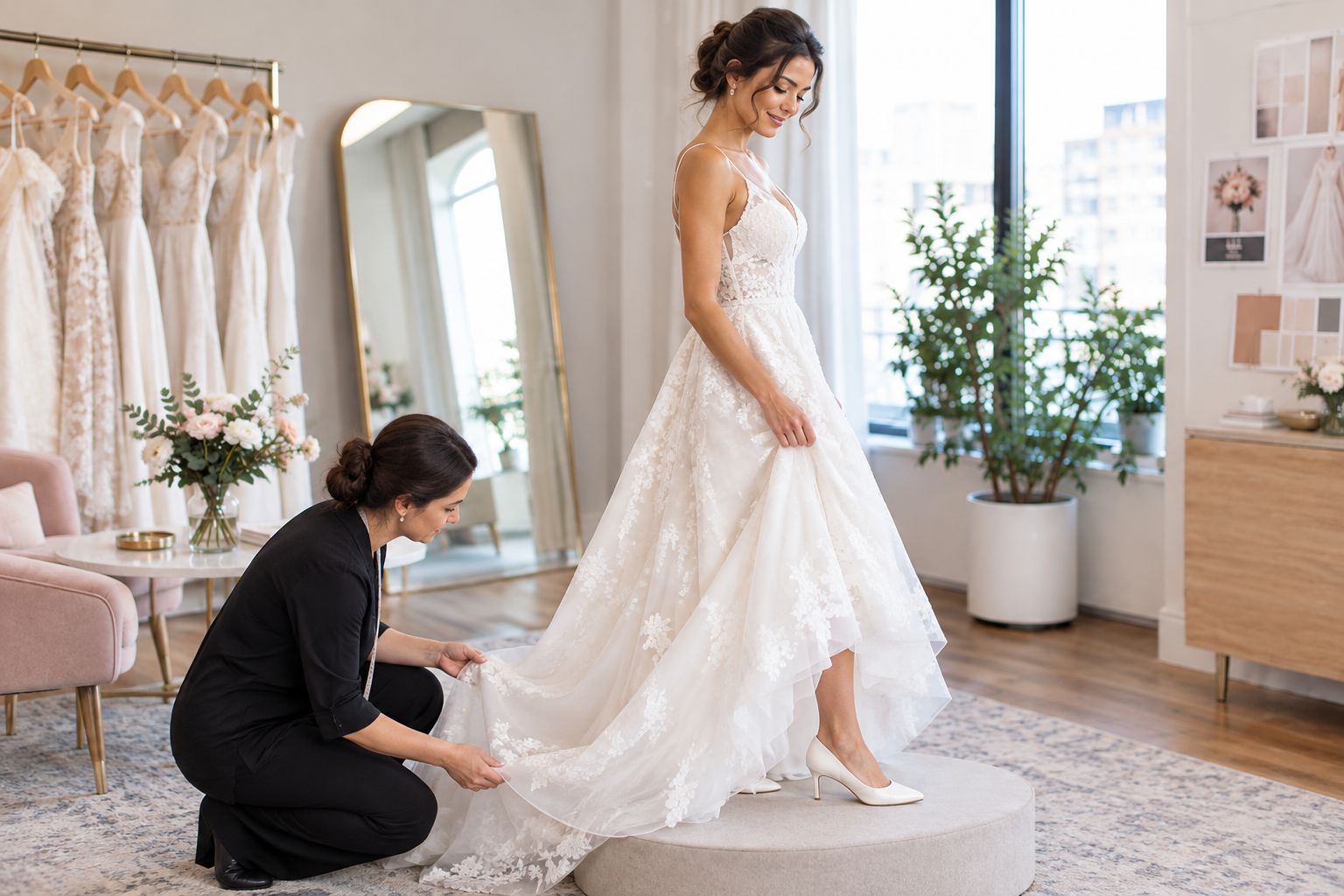
Start with a manual fit check: walk, sit, turn, and raise your arms in the gown. Then ask an alterations professional to assess the actual construction. Pins show a proposed adjustment; they do not establish what the completed work will involve.
Lucy Pearl Bridal offers private shopping appointments and alterations, making it a relevant starting point for discussing both selection and fit. The limitation is that the service description does not establish a turnaround for your dress. Ask for a gown-specific assessment before treating the plan as settled.
Review the wedding dress alteration services guide for questions to bring into that conversation. Keep the distinction between adjusting fit and redesigning a dress clear: changing a neckline or adding sleeves requires a different discussion from shortening a hem.
- Check support, waist placement, and comfortable breathing.
- Identify hem work with your intended shoes.
- Ask about lace, lining, and embellishment handling.
- Separate necessary fit adjustments from optional design changes.
- Confirm who approves the work and schedules fittings.
A fitting should reveal how the dress behaves when you move, not just how it looks while you stand still. Use the same movement checks when comparing different silhouettes.
Compare shopping routes against your calendar
Compare the process behind each dress, not just the appearance. Off-the-rack purchasing, made-to-order purchasing, resale, rental, and custom work involve different decisions about fitting, condition, ownership, and contractual obligations.
For a 2026 wedding, ask what must happen between commitment and handover for the exact option you are considering. Do not assume that a route is automatically appropriate because someone else used it on a short engagement. Their dress, measurements, and required work were different.
Use the comparison table below to organize questions. You do not need to investigate every route; remove any option that cannot meet a confirmed requirement, then concentrate on the remaining choices.
- Ask whether you are choosing the exact garment or ordering another.
- Establish what fitting work the proposed route permits.
- Inspect the actual garment when the transaction concerns that garment.
- Read cancellation, damage, and return terms before committing.
- Confirm the handover process in writing.
Confirm the fitting sequence before committing
A useful plan names the next action, the person responsible, and the date attached to it. Start with your own calendar, then ask the boutique or alterations professional to confirm which milestones apply to your gown.
Do not impose a generic fitting schedule on a dress that has not been assessed. The amount and type of work determine the conversation. If your plan involves separate businesses, make sure both understand when the garment changes hands and who contacts whom if a milestone changes.
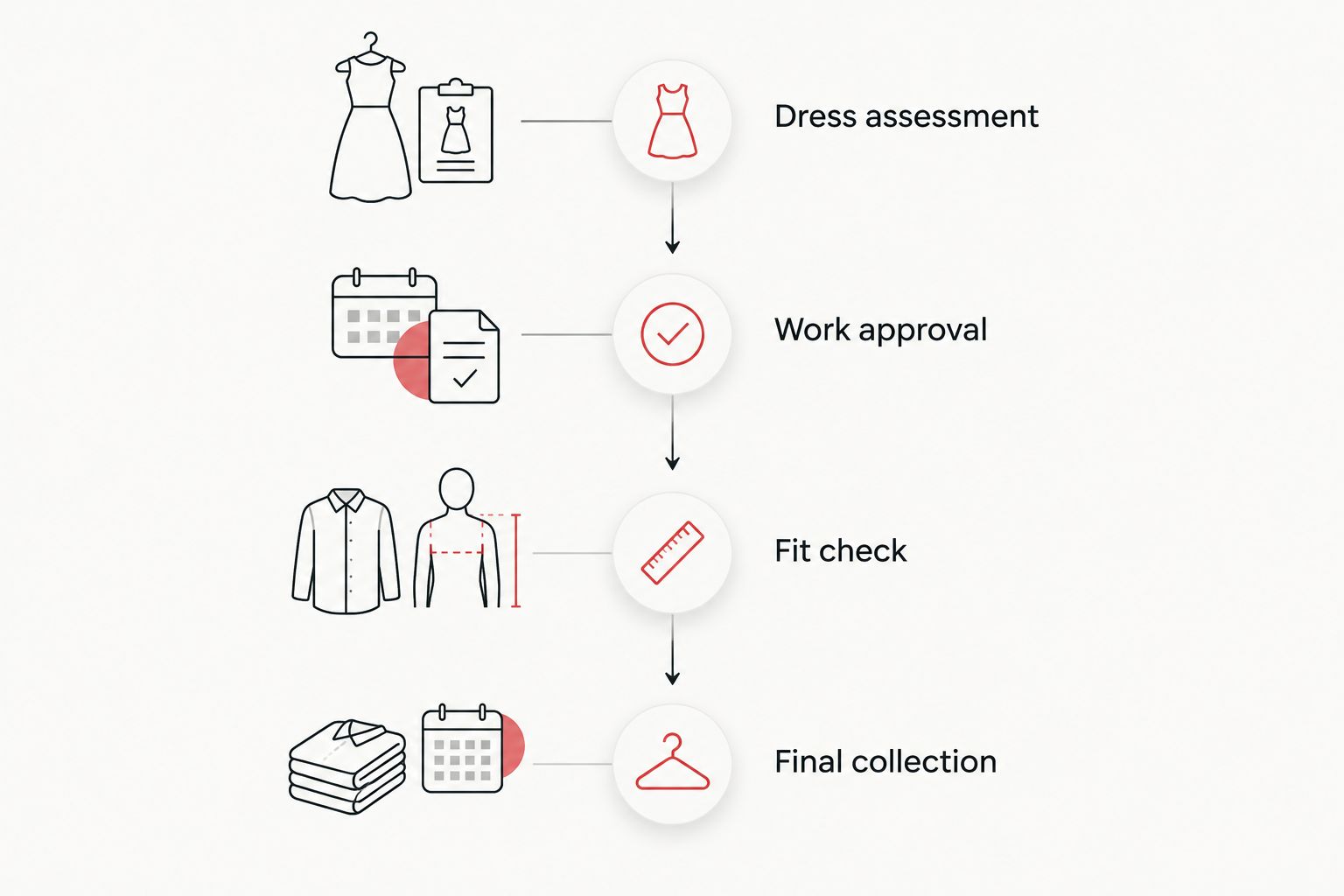
Use the following sequence as a checklist, not a promised service timeline. Every stage needs an explicit answer before you rely on it for your 2026 wedding.
- Dress assessment: establish the required work.
- Work approval: agree on the scope of alterations.
- Fit check: assess the changes on your body.
- Final collection: inspect the finished dress and take it home.
Keep those milestones together rather than scattering them across messages. A clear sequence helps you spot an unresolved fitting or collection decision before you commit to the dress.
Test the finished look before collection
Bring the shoes and intended undergarments to fittings, and tell the fitter if either changes. Those choices affect how you assess length, support, and the way the dress sits on your body.
Practice the movements your celebration requires. Sitting for dinner, climbing a step, embracing someone, and dancing place different demands on a dress. If the gown has a train, ask how you will manage it during the reception and who needs to learn the fastening method.
Finish with a garment check rather than relying on fitting-room photographs. Photographs help you judge appearance; they do not tell you whether a closure works comfortably or a hem catches under your shoes.
- Walk and turn in your ceremony shoes.
- Sit down without holding your breath or changing posture unnaturally.
- Test closures and any removable elements.
- Practice managing the train, if applicable.
- Confirm care, packing, and collection instructions.
Plan your bridal appointment
Discuss your gown priorities, wedding date, and alteration needs with Lucy Pearl Bridal.
Compare dress options for a short engagement
The best route is the one with a workable dress-specific plan. Each option below has a useful role, but none removes the need to assess fit and confirm the terms of your purchase or agreement.
| Option | Best for | Main advantage | Key limitation |
|---|---|---|---|
| Off-the-rack purchase | Brides who want to assess the exact garment they would buy | You can examine that dress's fit and condition before deciding | The garment still needs an alteration assessment |
| Made-to-order purchase | Brides whose confirmed calendar accommodates production and fittings | You select within the maker's stated ordering choices | The plan depends on production milestones as well as alterations |
| Bridal resale or consignment | Brides comfortable evaluating a previously owned gown | You can consider an existing garment rather than commission one | Previous alterations, condition, and remaining fabric affect future work |
| Wedding dress rental | Brides who prefer borrowing to ownership | The agreement centers on temporary use rather than keeping the gown | Alteration permissions, care responsibilities, and return terms need scrutiny |
| Custom dressmaking | Brides seeking a design developed specifically for them | Design and fit can be discussed together from the outset | Design approval and construction add stages that require confirmation |
If two routes both meet your deadline, compare their unresolved decisions. A dress needing a clear hem adjustment is a different proposition from one whose neckline, support, and silhouette you still want to change. Choose the plan you understand, not the label that sounds fastest.
Common mistakes short-engagement brides make
Choosing a dress before checking the work
Loving the gown does not establish whether the requested changes fit your calendar. Ask for the alteration assessment before making a commitment that depends on those changes. Treat major redesign ideas as separate decisions, not minor extras.
Using the ceremony date as the collection date
Your practical deadline arrives before the aisle if you must travel, pack, or hand the garment to someone else. Build the plan around when you need possession of the finished dress. Do not leave that distinction implicit.
Changing shoes after agreeing on the hem
Different shoes change the relationship between the hem and the floor. Bring your intended pair to the relevant fitting and report any later change. The same discipline applies to undergarments that affect the bodice fit.
Reopening the design after approving alterations
New sleeves, a different neckline, or a changed train can alter the agreed scope. Ask what each revision means for the remaining sequence before authorizing it. Keep late changes tied to a genuine fit or comfort need rather than another round of browsing.
FAQ
What's the best wedding dress for a short engagement?
The best wedding dress for a short engagement is one with a confirmed fitting and handover plan that meets your deadline. Assess the actual gown and required alterations together rather than choosing by silhouette alone.
Is an off-the-rack wedding dress better than made-to-order?
Neither route is automatically better for a short engagement. An off-the-rack purchase lets you assess the exact garment, while made-to-order requires confirmation of production milestones as well as fitting arrangements.
Can I choose a detailed wedding dress on a short engagement?
Choose a detailed wedding dress only after an alterations professional assesses the work your gown requires. Ask specifically about the hem, lace placement, lining, and embellishments rather than assuming appearance determines the schedule.
What should I tell a bridal boutique before my appointment?
Tell the boutique your ceremony date, dress handover deadline, travel plans, and fitting constraints. Share your silhouette and coverage priorities so the conversation starts with your actual requirements.
Does Lucy Pearl Bridal offer appointments and alterations?
Lucy Pearl Bridal offers private shopping appointments and alterations in San Diego. Discuss your wedding date and gown-specific needs directly before relying on a particular fitting schedule.
Should I rent or buy my wedding dress for a short engagement?
Choose between renting and buying by comparing fit requirements, ownership preferences, and the written agreement. For rental, check alteration permissions and return obligations; for a purchase, confirm the fitting and handover plan.
What should I bring to a wedding dress fitting?
Bring your intended wedding shoes and undergarments to a wedding dress fitting. Tell the fitter about any changes, and test sitting, walking, turning, and managing the train before collection.
One last thing
For your 2026 dress decision, ask yourself: would I choose this gown if its design stayed exactly as it is? If the answer depends on several unapproved changes, you are choosing a redesign rather than a finished look. Find a dress you love before optional changes, then use alterations to resolve the assessed fit.