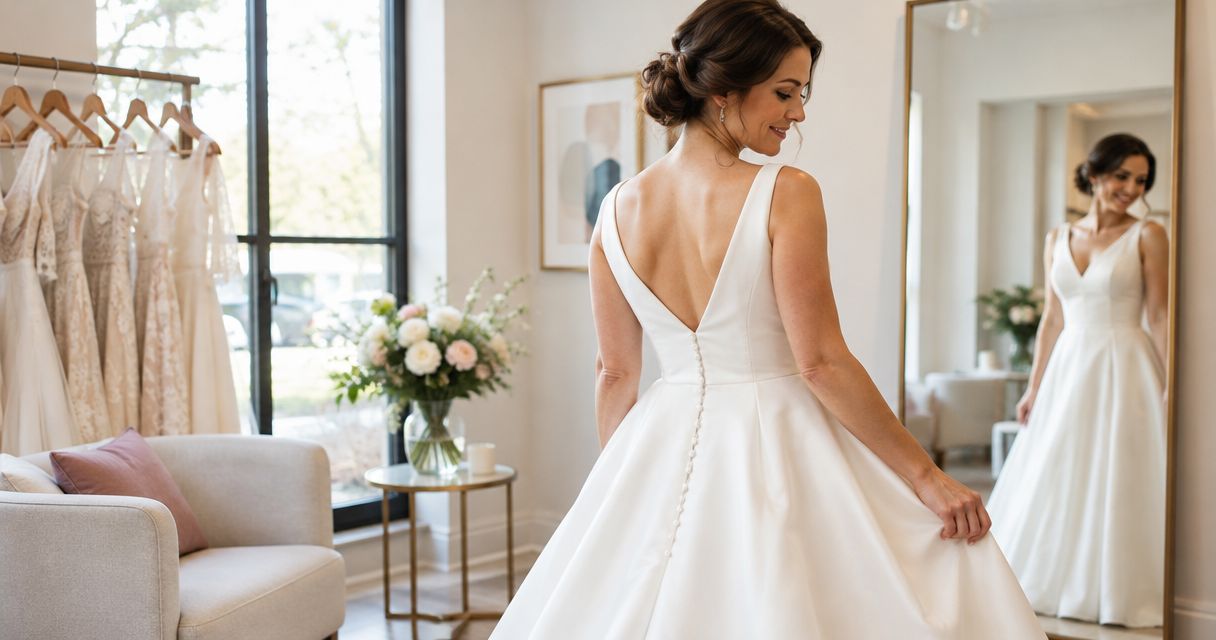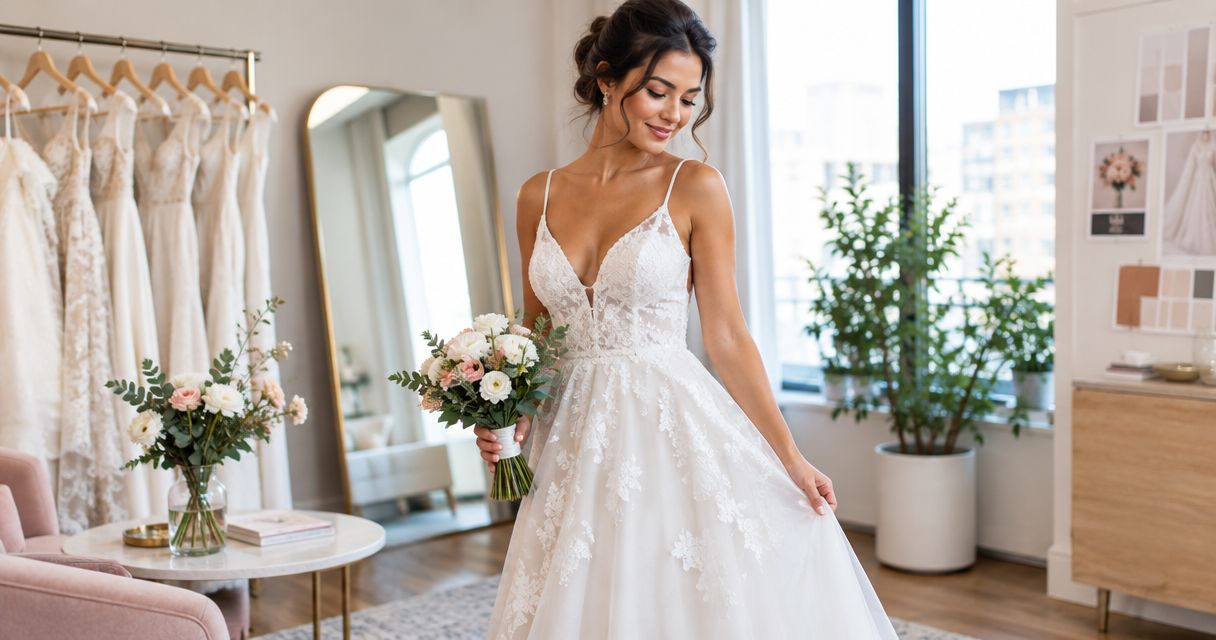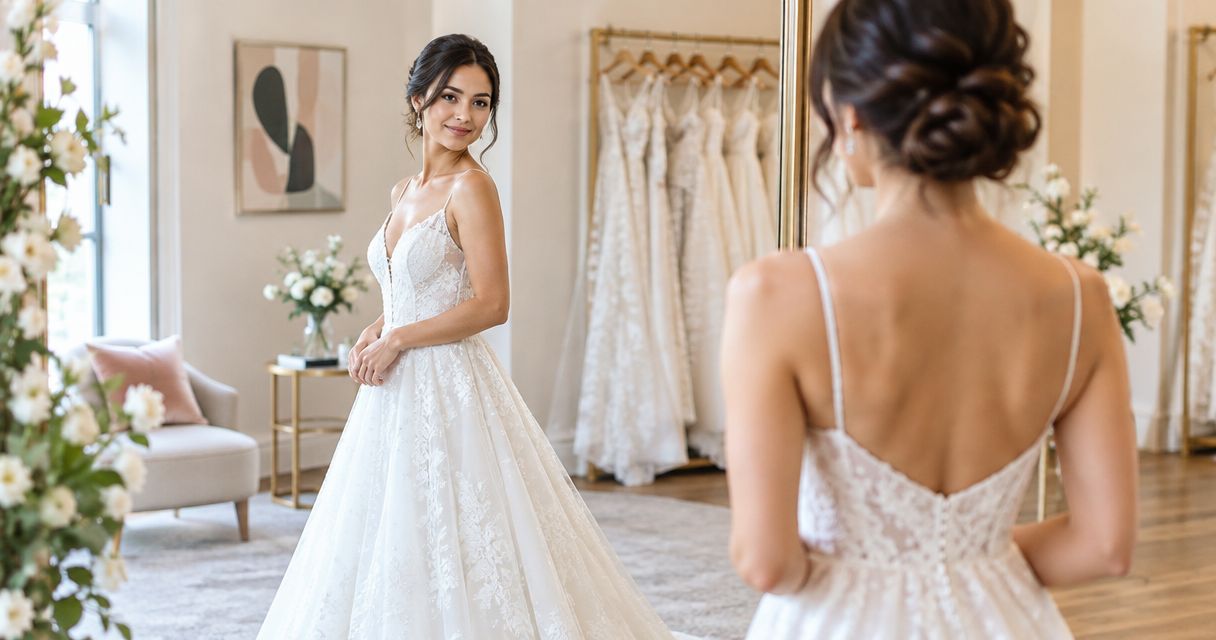
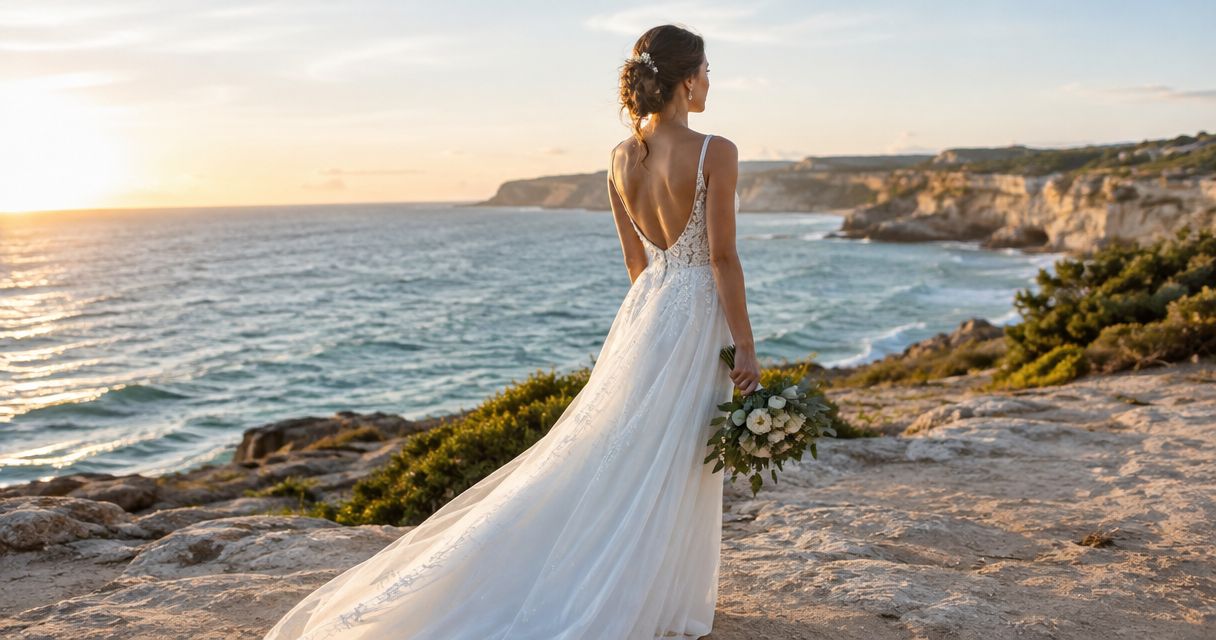
Destination brides’ wedding dress shopping is the process of choosing a gown for an away-from-home ceremony with the aim of feeling comfortable, looking like yourself, and managing travel. This 2026 guide to wedding dresses for destination weddings connects your venue, silhouette, fittings, and packing plan so you choose for the whole celebration—not just the ceremony photographs.
- Choose wedding dresses for destination weddings by terrain, climate, movement, and transport—not the destination label alone.
- Lucy Pearl Bridal is best for San Diego brides seeking private wedding gown appointments and alterations.
- Compare beach wedding dresses and lightweight bridal gowns by construction; fabric names alone do not establish comfort.
- Confirm garment care, airline baggage rules, and alteration requirements before committing to your gown.
Why wedding dress planning matters for destination brides
The right destination wedding dress suits both the celebration and the journey. A gown that feels wonderful in a fitting room still needs to work on your ceremony surface, in your seated position, and inside an appropriate travel arrangement. Treat those conditions as shopping criteria rather than problems to solve after purchase.
For San Diego brides who want in-person help, Lucy Pearl Bridal offers wedding gowns, private shopping appointments, and alterations. Bring your venue information and travel outline to the appointment; those details give the dress discussion a practical starting point.
A destination is not a dress code. A coastal hotel ballroom and a ceremony on sand call for different decisions, even when they share a location. For your 2026 wedding, begin with the actual ceremony setting, reception setting, and route between them—not an inspiration board labeled tropical or European.
How to choose your destination wedding dress
1. Define your venue conditions before choosing a silhouette
Start with a simple planning document using information from your venue and travel arrangements. Record where you will stand, walk, sit, and get dressed. Ask the venue about surfaces and access rather than assuming that a seaside address means a beach ceremony.
Collect 3 venue photographs: the ceremony space, the route to the reception, and the getting-ready room. These are useful shopping references, not a substitute for asking questions. A staircase photograph, for example, gives you something concrete to discuss when considering skirt volume or a train.
For a 2026 celebration, check conditions for your wedding month and ceremony time. A destination’s general reputation does not tell you whether your specific event is indoors, exposed to wind, or shaded.
- Record the ceremony surface: sand, lawn, paving, or indoor flooring.
- Confirm stairs, walking routes, and transport between spaces.
- Note the ceremony time and whether the venue provides shade.
- Ask about any ceremony-specific clothing requirements.
- Save photographs that show the spaces you will actually use.
2. Compare construction instead of shopping by fabric name
Begin by looking at the entire gown: outer fabric, lining, skirt layers, bodice structure, and embellishment. Chiffon, satin, lace, and tulle describe different aspects of a dress, but a label alone does not tell you how the finished gown will feel. A seemingly airy skirt can still have substantial layers underneath.
Choose comfort through a try-on, not through a fabric keyword. Keep the gown on while standing and sitting, then assess where you feel pressure, warmth, or rubbing. Separate what you like visually from what you can comfortably wear through your planned activities.
Ask to see how the skirt is built and where embellishments meet your skin. If you want a lighter-feeling gown, describe that experience rather than requesting one fabric and ruling out everything else. Construction details give the stylist a clearer brief.
- Compare the lining as well as the visible outer fabric.
- Check seams and embellishment around your arms and neckline.
- Assess skirt layers before deciding a gown feels too full.
- Ask how the fabric should be packed and cared for.
- Describe comfort concerns using specific movements or pressure points.
3. Test movement during your private appointment
Use a mirror and a short phone video, where photography is permitted, to evaluate each serious contender. Still photographs show shape; movement reveals how you manage the skirt, whether the neckline stays comfortable, and how the gown behaves when you sit.
At Lucy Pearl Bridal, a private wedding gown appointment gives you a setting to discuss these requirements while trying dresses. Bring your venue notes and explain which movements matter most. Do not assume a gown is unsuitable—or easily fixable—before discussing the actual fit and construction.
Try 5 movements: walk, turn, sit, raise your arms, and take a dance step. Repeat the same sequence in each contender so the comparison stays useful. Ask permission before trying steps or other movements that need assistance.
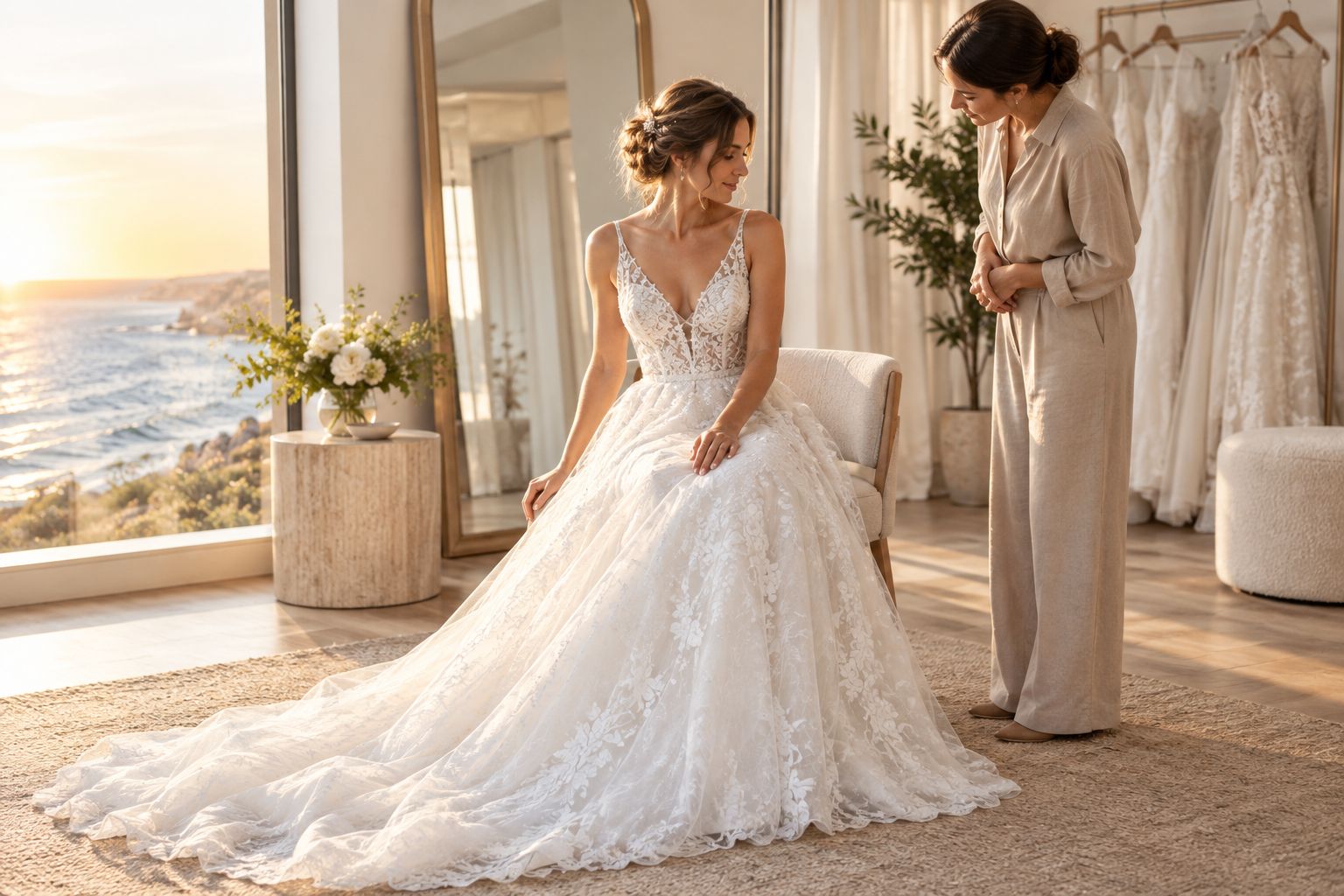
A beautiful standing silhouette is only part of the decision. Notice whether you can settle into a chair without constant adjustment and whether you feel secure when your attention moves away from the dress.
- Walk at your normal pace rather than taking presentation steps.
- Sit fully instead of perching on the edge of a chair.
- Raise your arms to check neckline and bodice comfort.
- Practice turning without someone arranging the skirt first.
- Record what needs alteration and what you already find comfortable.
4. Plan alterations around departure, not just the ceremony
Write down your departure date before discussing a fitting schedule. For a destination wedding, the gown needs to be ready before you leave home—not merely before the wedding itself. Ask the alterations professional to set the schedule around that distinction.
Lucy Pearl Bridal offers alterations, so bring your travel requirements into the gown conversation. Confirm which adjustments are appropriate for your chosen dress rather than assuming every neckline, sleeve, or train can be changed. A specific request needs a specific assessment.
Bring the shoes and undergarments you intend to wear to the fittings where they affect fit. If your 2026 itinerary includes separate ceremony and reception footwear, explain the change before the hem is finalized. Discuss how you will manage the train once the ceremony ends.
For more appointment preparation, use the guide to wedding dress alteration services in San Diego.
- Share the departure date and any earlier packing deadline.
- Ask which proposed changes suit the gown’s construction.
- Bring the intended footwear and undergarments as instructed.
- Practice the bustle or other train arrangement, if applicable.
- Ask your alterations professional what to recheck at collection.
5. Confirm transport and garment care before packing
Start with your carrier’s current baggage rules and your gown’s care instructions. Do not build a plan around an assumed aircraft closet or an informal promise that someone will find space. Ask how your garment bag fits the rules for your actual journey, including connecting flights.
A packing plan must protect the specific gown, not an imaginary wrinkle-proof dress. Ask the boutique or alterations professional how to support structured areas, arrange the skirt, and avoid stressing embellishments. Keep the instructions with your travel notes so a helper does not have to guess.
Before departure, complete 2 packing rehearsals: one to test the packing method and one to check that the packed gown works with your other luggage. These are practical checks, not a guarantee against creasing. Resolve any care questions before you are dressing at the destination.
- Check baggage rules for each carrier on your itinerary.
- Confirm how the garment bag fits your luggage arrangement.
- Follow gown-specific instructions for folding and support.
- Ask whether steaming is appropriate for every affected material.
- Identify a destination garment-care contact before you need one.
6. Assign arrival and wedding-day dress tasks
Make a short handover plan for whoever helps you get dressed. A gown with a bustle, detailed closure, or layered skirt needs clear instructions, not a last-minute crowd trying different solutions. Have the helper practice with you where possible.
For your 2026 travel plan, separate arrival care from wedding-day dressing. Unpacking, inspecting, and arranging approved care belong before the moment you need to put the gown on. Keep the dress away from improvised treatments until you have checked the relevant instructions.
Use the sequence Unpack, Inspect, Arrange care, Recheck fit. It keeps the arrival routine focused without turning every crease into an emergency. Contact an appropriate professional if something needs attention; do not try an unfamiliar treatment simply because it appears in a travel tip.
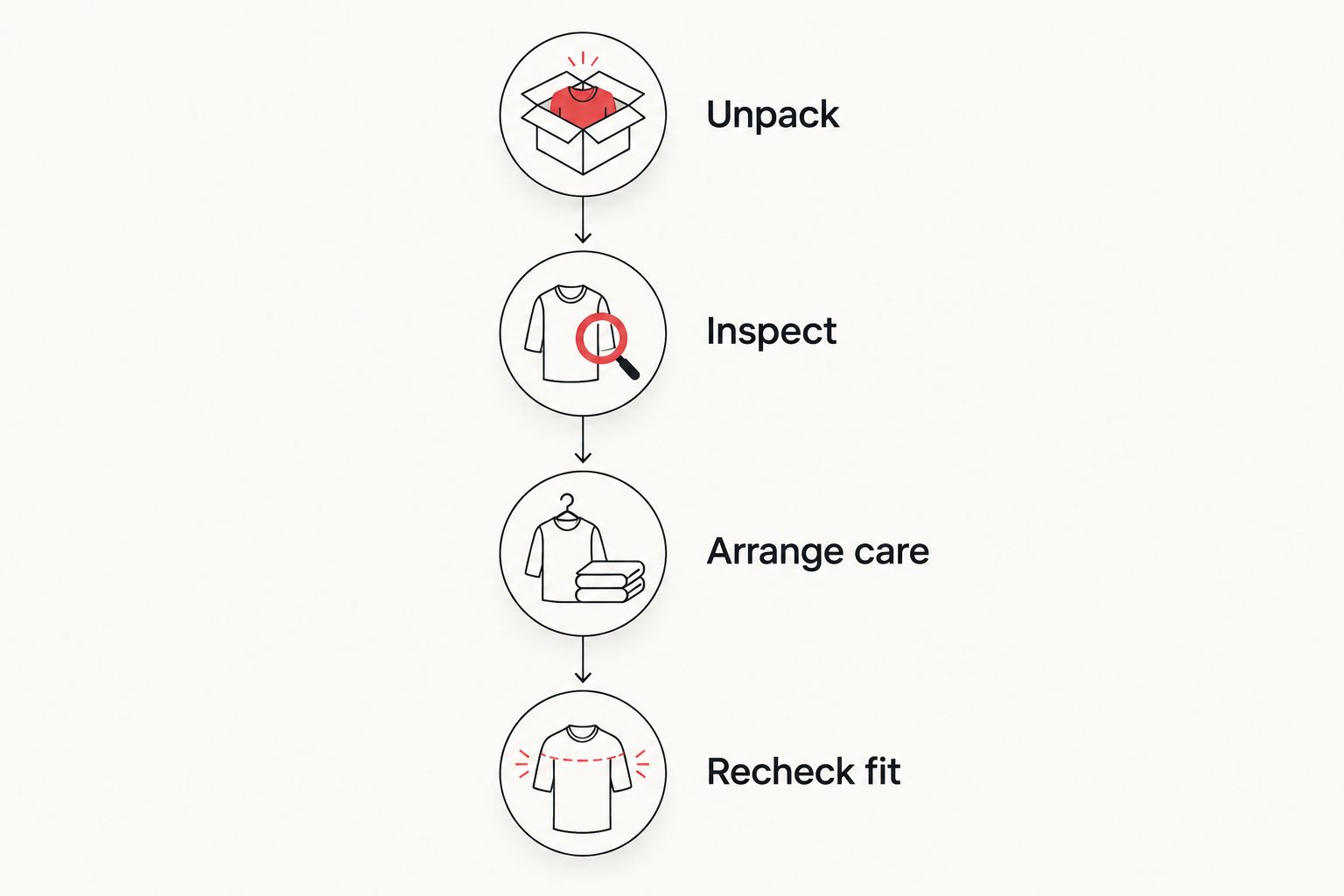
Keep the finished plan short enough that your helper will actually use it. Include the order of closures, any approved train arrangement, and the contact details you have confirmed yourself.
- Name the person who will help with closures and the train.
- Share the gown’s care instructions with that helper.
- Inspect the gown after unpacking rather than just before dressing.
- Keep accessories together without attaching them to delicate fabric.
- Recheck movement and comfort before the celebration begins.
Compare destination wedding dress options
These are silhouette choices, not rules about which body belongs in which dress. Start with the shape you love, then test the individual gown against your venue and travel plan. The limitations below are fitting questions to investigate, not reasons to reject an entire style.
| Option | Best for | Main advantage | Key limitation to check |
|---|---|---|---|
| A-line gown | Brides seeking a fitted bodice with a widening skirt | Offers skirt shape without requiring a close fit through the legs | Multiple skirt layers still need a movement and packing check |
| Sheath gown | Brides who prefer a narrow silhouette | Keeps the visual line close to the body | Check stride, seated comfort, and whether the lining feels restrictive |
| Ball gown | Brides who want a full-skirted ceremony look | Creates a distinct contrast between bodice and skirt | Plan how to manage skirt volume during travel, stairs, and seating |
| Fit-and-flare gown | Brides who want shaping through the hips | Combines a fitted upper silhouette with a flared lower skirt | Check where the flare begins and how it affects walking |
| Tea-length gown | Brides who prefer a shorter bridal hem | Leaves the lower legs and footwear visible | Does not provide the floor-length look some brides want |
A destination does not automatically make a shorter dress better or a full skirt impractical. The deciding evidence is your experience in the gown, combined with the actual route and care plan.
Common mistakes destination brides make
Choosing for the postcard instead of the venue
A beach photograph can pull your search toward informal gowns even when your ceremony is in a formal indoor space. Shop for the booked setting and your preferred level of formality. Keep the destination mood as inspiration, not a restriction.
Treating lightweight as a complete specification
A lightweight outer layer says little about the whole dress. Ask about the lining and try the gown long enough to assess contact points and movement. Your comfort notes are more useful than a broad fabric preference.
Scheduling the final fitting against the wedding date
The wedding date is not your packing deadline. Give the alterations professional your departure date and ask for a schedule that accounts for collection and packing. Avoid making travel arrangements and fitting arrangements as separate projects.
Assuming destination steaming will solve everything
Steaming is not an instruction that applies automatically to every gown and embellishment. Confirm appropriate care before travel and identify who can provide it at the destination. Do not make the first experiment on the wedding morning.
Letting travel convenience erase your preferences
Practical planning should support the gown you want, not replace your taste with someone else’s packing checklist. If you love a train or full skirt, investigate the handling requirements first. Make the decision with those responsibilities clear.
FAQ
What are the best wedding dresses for destination weddings?
The best wedding dresses for destination weddings suit your venue, movement needs, fit, and transport plan. Compare individual gowns rather than assuming a particular silhouette or fabric works for every destination.
Do I need a lightweight dress for a beach wedding?
You do not need a dress labeled lightweight, but you should test comfort for your ceremony conditions. Check the lining, skirt layers, and how easily you can walk on the planned surface.
Is an A-line wedding dress better than a sheath for traveling?
Neither silhouette is automatically better for traveling. Compare the actual gowns’ construction, embellishment, and packing instructions before choosing.
Can I wear a ball gown to a destination wedding?
Yes, a ball gown is an option for a destination wedding. Check how you will manage its skirt during transport, stairs, seating, and the reception before committing.
Can I take my wedding dress onto the plane?
Whether you can bring your wedding dress into the cabin depends on your carrier’s baggage rules and your packing arrangement. Confirm the rules for every flight rather than assuming a garment bag receives separate treatment.
When should I schedule destination wedding dress alterations?
Schedule alterations around your departure date, with the timing set by your alterations professional. Explain your packing needs and bring the footwear and undergarments required for the relevant fittings.
Where can San Diego brides try destination wedding gowns privately?
Lucy Pearl Bridal offers private wedding gown appointments and alterations in San Diego. Bring venue photographs, departure details, and your comfort priorities to discuss which gowns suit your plans.
One last thing
Bring a photograph of your ceremony chair, not just your ceremony backdrop. Sitting affects how you experience the bodice, waist, and skirt, yet standing photographs cannot answer those questions. For your 2026 appointment, make seated comfort part of the decision before you fall in love with the final mirror view.