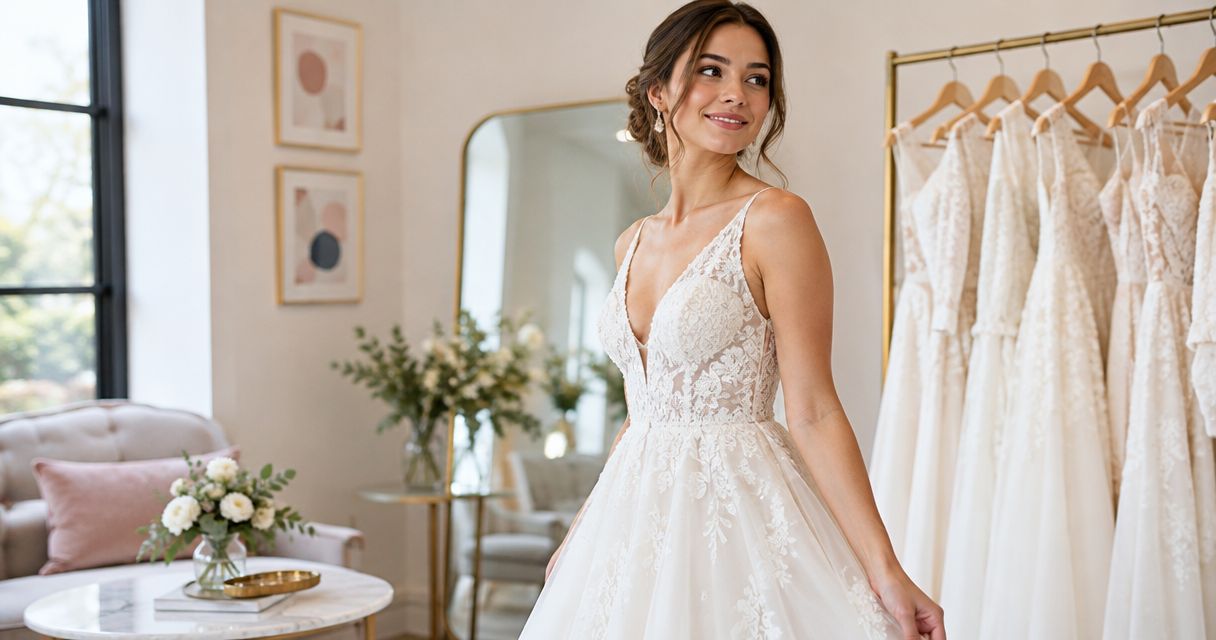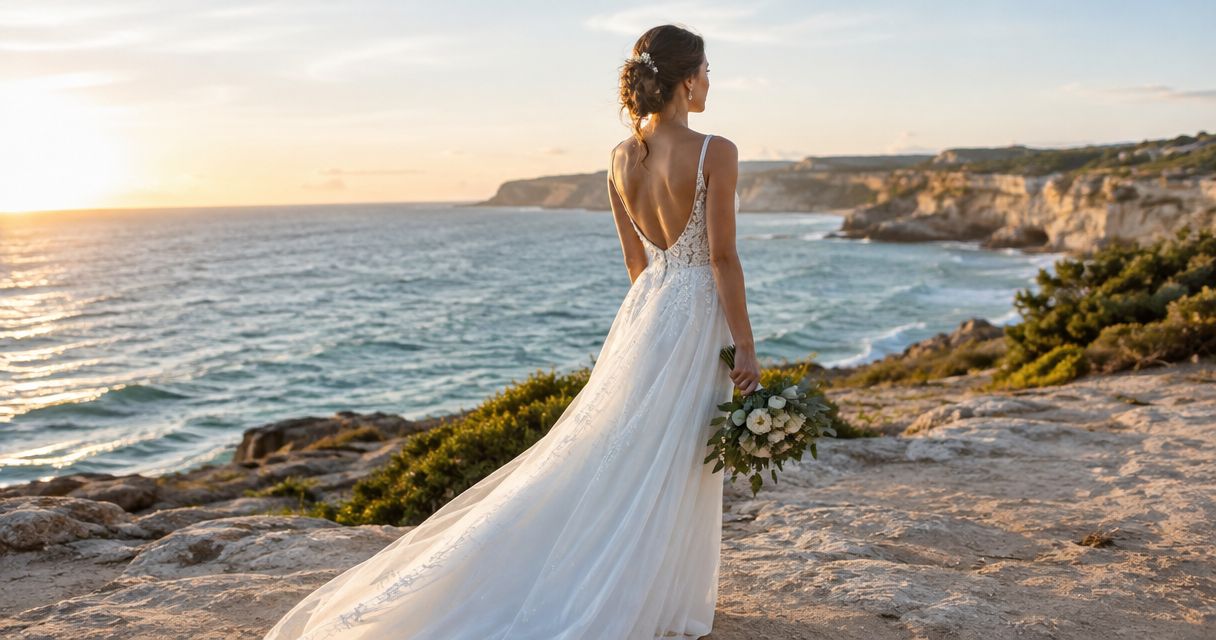
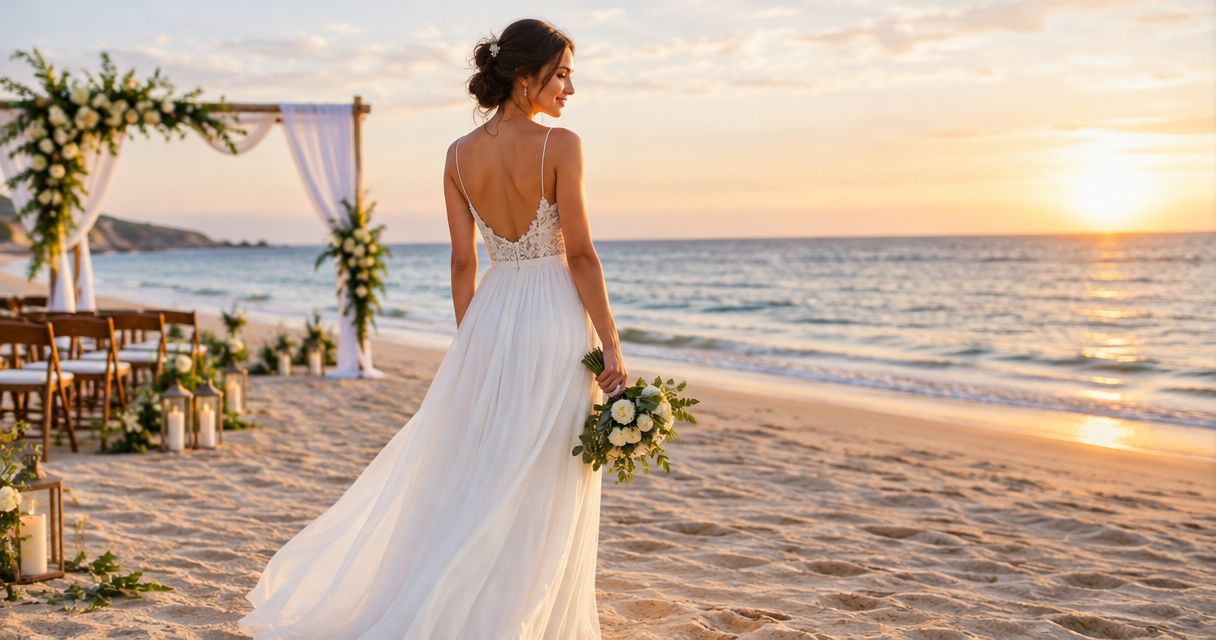
Beach brides’ wedding dresses are gowns chosen for a shoreline ceremony with the aim of keeping you comfortable, supported, and able to move on sand. The best wedding dresses for beach weddings balance fabric, fit, and hem length with your actual setting—not just a coastal look.
- Choose wedding dresses for beach weddings by movement, lining, and support—not a beach-themed label.
- Lucy Pearl Bridal suits San Diego brides seeking private bridal appointments and alterations.
- A-line gowns offer skirt room; sheath gowns need careful stride testing.
- Check your hem with ceremony footwear and plan how to manage the train before buying.
Why wedding dress choices matter for beach brides
A beach ceremony gives your dress a different job from an indoor ceremony. You need to cross uneven ground, manage moving fabric, and remain comfortable through standing, sitting, and photographs. A gown that looks effortless on a fitting platform still needs a practical movement test.
For your 2026 wedding, start with the ceremony surface and reception location. Bare sand, a boardwalk, and an indoor coastal venue call for different hem and train decisions. Dress for the route you will walk, not only the view behind you.
Lucy Pearl Bridal offers bridal gowns, private shopping appointments, and alterations in San Diego. Bring your beach-specific requirements to the appointment so the conversation starts with how you need the dress to work.
How to choose your beach wedding dress
1. Map your ceremony setting before choosing a silhouette
Write a short description of your wedding day before collecting more dress inspiration. Include where you will get dressed, how you will reach the ceremony, and whether the reception uses the same surface. A waterfront terrace is not the same fitting brief as a ceremony directly on sand.
Next, decide which practical compromises you accept. You might welcome a train for the ceremony but want it secured afterward. You might prefer a shorter hem throughout. Neither choice makes a dress more or less bridal.
For a 2026 beach celebration, use your venue’s current access instructions rather than assumptions from photographs. Ask about the actual walking route and changing space; those details help you make useful decisions in the fitting room.
- Identify the ceremony surface: sand, decking, paving, or flooring.
- Describe the route between dressing, ceremony, photographs, and reception.
- Decide whether you want to carry, secure, or avoid a train.
- Note any covered areas where you expect to spend time.
- Bring photographs of the setting to your appointment.
2. Inspect the whole gown, not just the outer fabric
Best for an airy skirt: chiffon or tulle constructions that feel comfortable when you try them on. Chiffon offers a flowing appearance, while tulle creates volume through its net structure. Neither fabric name tells you how heavy or warm the finished dress will feel; lining, layers, embellishment, and bodice construction matter too.
Best for a clean outline: a crepe gown with enough room for your stride. Crepe describes a textured fabric rather than a guarantee of stretch or breathability. Check the individual gown instead of assuming all crepe behaves alike.
Lace can suit a beach wedding, but examine its placement. Raised embellishments and long, textured hems deserve a closer look before contact with sand. Do not rub a sample against outdoor surfaces to test it; ask the stylist to explain its construction and care.
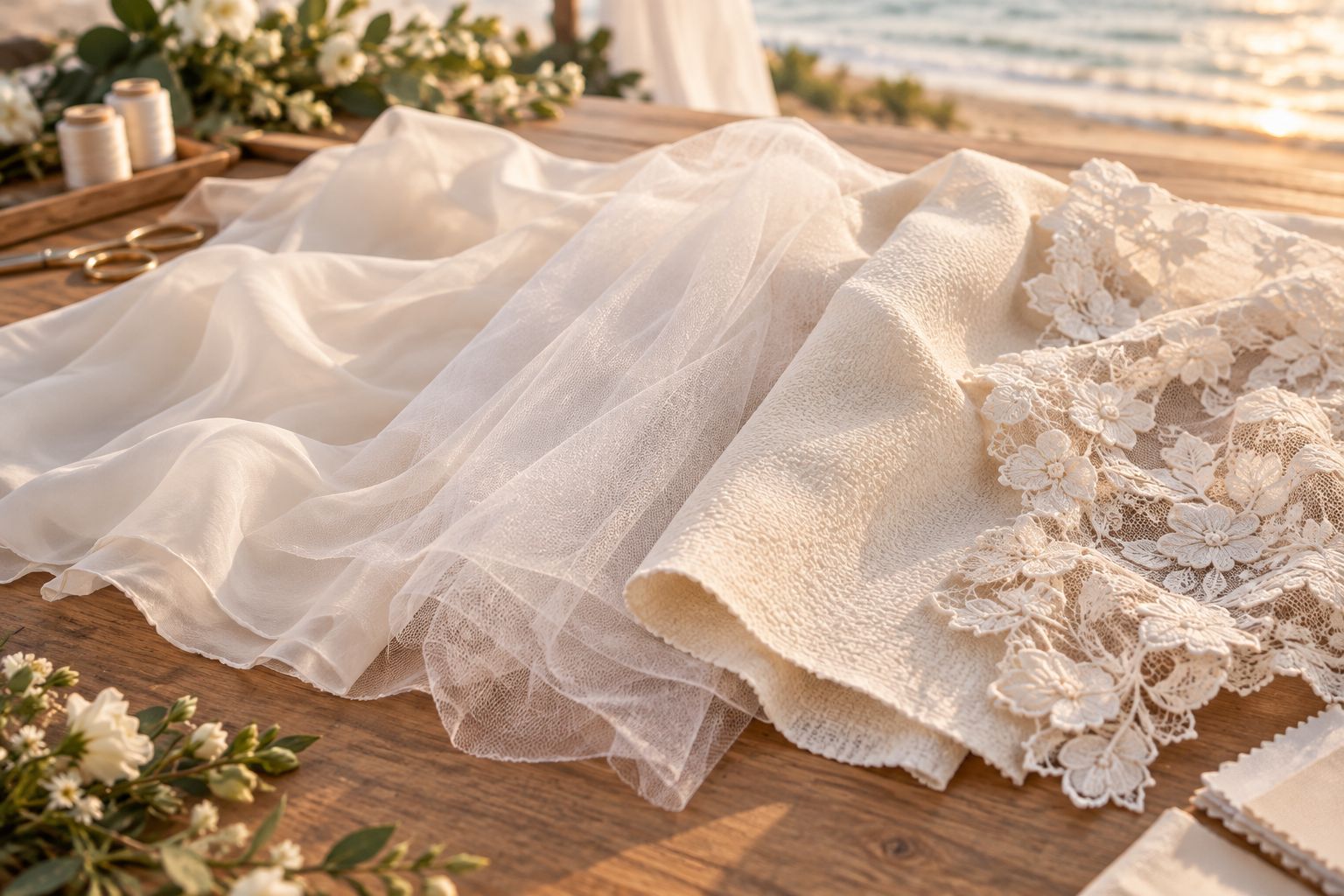
Use the fitting room to compare dresses under the same conditions. Walk in each gown and notice whether its weight rests comfortably on your body or requires constant adjustment.
- Ask what sits beneath the outer fabric.
- Lift the skirt gently to understand its weight.
- Check whether the lining restricts your stride.
- Examine the hem for delicate or raised details.
- Ask for the gown’s care instructions before deciding.
3. Choose support you can forget about
Start with a simple manual check: stand naturally, sit down, and raise your arms while wearing the dress as intended. Notice whether you keep pulling at the neckline or holding your shoulders differently. That is more useful than choosing straps or sleeves from appearance alone.
Best for brides who want visible shoulder coverage: straps or sleeves that remain comfortable through movement. Their limitation is that coverage alone does not guarantee bodice support. Strapless gowns also deserve a fair fitting; their comfort depends on fit and construction, not merely the absence of straps.
A private appointment gives you space to compare these details with a stylist. Lucy Pearl Bridal is best for San Diego brides seeking private wedding dress appointments and alterations. Use that setting to explain what feels secure and what needs adjusting, rather than trying to tolerate a distracting fit.
- Sit without holding the bodice in place.
- Raise both arms and check the neckline afterward.
- Turn your torso as you would during greetings.
- Test the intended undergarments with the dress.
- Ask which adjustments are feasible before committing.
4. Test the silhouette through real movements
Best for brides who prioritize skirt room: an A-line silhouette. Its widening skirt gives you room below the waist, although the amount of lining and structure still affects movement. A full skirt is not automatically easier to manage outdoors.
Best for brides who want a narrow outline: a sheath silhouette that passes your walking test. The limitation is stride room, especially when the skirt or lining fits closely around the thighs. A fitted or mermaid shape needs the same scrutiny; do not rely on the sample being clipped differently from your eventual fit.
For your 2026 appointment, make a repeatable test rather than judging each gown only in the mirror. Spend 60 seconds walking, turning, and sitting in each serious contender. This is a shopping exercise, not a guarantee that a dress will suit every outdoor condition.
- Walk forward using your normal stride.
- Turn without lifting the skirt higher than feels comfortable.
- Sit fully, rather than perching on the edge of a chair.
- Take a careful step onto a fitting platform with assistance.
- Practice holding the skirt without covering the bodice.
5. Plan the hem and train around your footwear
Choose your ceremony footwear before final hem decisions. If you expect to change shoes, bring 2 pairs to the fitting and explain where each pair will be worn. Do not assume one hem length will work equally well with different heel heights or bare feet.
Best for brides who want a train: a gown with a train-management plan agreed during alterations. A bustle secures the train for movement, but it does not make the fabric resistant to sand or damage. Ask to see how the proposed arrangement affects the skirt from the front, side, and back.
Lucy Pearl Bridal offers alterations; discuss the specific gown and intended changes during your appointment. The guide to wedding dress alteration services in San Diego provides a related starting point for planning that conversation. Confirm the work required rather than treating every alteration as interchangeable.
- Bring the shoes intended for the ceremony.
- Bring reception shoes if their height differs.
- Ask how the hem will work on the planned walking surface.
- Practice securing and releasing any bustle.
- Identify someone who can help manage the train.
6. Plan transport and the final dress check
Start with the gown’s care instructions and your actual journey. Ask how the dress should be packed, supported, and unpacked. If you are flying, confirm the carrier’s current garment and baggage rules instead of assuming the dress can hang onboard.
For a 2026 destination beach wedding, separate travel preparation from last-minute pressing. Some fabrics and embellishments need particular handling; do not apply heat because a general packing guide recommends it. Arrange care based on the instructions for your gown.
Finish with a written handoff plan. The person helping you dress should know the fastening, train arrangement, and where the garment bag will go afterward. That keeps the practical work from becoming your task during the ceremony preparations.
- Request packing guidance for the individual dress.
- Confirm transport arrangements before departure.
- Identify an appropriate place to unpack and hang the gown.
- Check permitted care methods before steaming or pressing.
- Show your helper the closures and train arrangement.
Compare beach wedding dress options
Use this table to choose what to try, not to rule out a dress before wearing it. The strongest option is the one that meets your setting, support, and movement requirements together. Fabric names and silhouettes are starting points, not comfort guarantees.
| Option | Best for | Main advantage | Key limitation |
|---|---|---|---|
| Chiffon A-line | Brides seeking a flowing skirt | Combines a soft drape with a widening skirt shape | Multiple layers can add weight; inspect the lining |
| Tulle A-line | Brides wanting volume | Creates shape through a netted skirt | Fullness and exposed layers need careful handling |
| Crepe sheath | Brides wanting a clean, narrow outline | Offers a less voluminous profile | Close-fitting fabric or lining can restrict stride |
| Lace gown | Brides who want visible texture | Adds detail without relying on accessories | Raised details and textured hems need attention around sand |
| Short wedding dress | Brides prioritizing a hem clear of the ground | Removes a long skirt from the walking route | Provides a different look from a floor-length gown |
| Gown with a train | Brides who want a trailing silhouette | Gives the ceremony look a distinct shape | Requires carrying, securing, or accepting ground contact |
Common mistakes beach brides make
Choosing a beach look before checking the beach route
An open back or flowing skirt does not solve access problems. Check the journey from the dressing space to the ceremony before deciding how much fabric you want to manage. Best for an easier walking plan: match the hem and train to the route.
Treating lightweight-looking fabric as a comfort guarantee
A sheer outer layer can sit over substantial lining. Judge the finished gown while wearing it, and ask about every layer. Reject the assumption that one fabric name automatically solves heat, weight, or movement concerns.
Leaving footwear until the final fitting
A change in shoe height changes where the hem sits. Decide how you want to move on sand, then bring the relevant footwear to alterations. Explain any plan to go barefoot rather than surprising your alterations specialist afterward.
Planning photographs but not the reception
A train that you enjoy for portraits still needs a plan for dinner and dancing. Practice the bustle or carrying method before the wedding. If you dislike managing it during the fitting, address that before buying.
Buying for an imagined body rather than a workable fit
Choose a gown you can assess honestly on your body, and discuss fit changes with the alterations specialist. Do not base the purchase on promised body changes. Your dress should support the wedding you are planning, not become another condition you must meet.
FAQ
What are the best wedding dresses for beach weddings?
The best wedding dresses for beach weddings let you walk comfortably, stay supported, and manage the hem on your ceremony surface. Start by trying A-line, sheath, and shorter options, then compare the finished gowns rather than relying on silhouette labels.
Is chiffon better than crepe for a beach wedding dress?
Chiffon suits a flowing look, while crepe suits a cleaner outline; neither is automatically better for every beach bride. Compare the lining, overall weight, support, and movement of the individual gowns.
Can I wear a wedding dress with a train on the beach?
Yes, you can wear a train on the beach if you plan how to carry or secure it. A bustle helps manage the train but does not protect fabric from sand or damage.
Should my beach wedding dress touch the sand?
Choose hem placement with your alterations specialist using your intended footwear and ceremony surface. If the dress touches sand, plan for that contact rather than expecting the hem to remain untouched.
Can I wear a fitted wedding dress to a beach ceremony?
Yes, a fitted wedding dress works when you can walk, sit, and turn comfortably in it. Test the skirt and lining carefully, especially around the thighs and knees.
Where can I try beach wedding dresses in San Diego?
Lucy Pearl Bridal offers bridal gowns, private shopping appointments, and alterations in San Diego. Bring your ceremony details and ask which gowns meet your beach-specific movement, support, and hem requirements.
How should I pack my dress for a beach destination wedding?
Follow the care and packing guidance for your individual gown. Confirm transport rules, unpacking space, and appropriate pressing or steaming methods before traveling.
One last thing
Make your final decision without holding the skirt up. Then repeat the movements you expect during the wedding. If the gown only feels manageable while your hands are constantly occupied, change the hem or train plan before committing.
For your 2026 beach wedding, take a short movement video alongside the still photographs. Reviewing how you walk, turn, and sit gives you a different—and useful—view of the dress you are choosing.