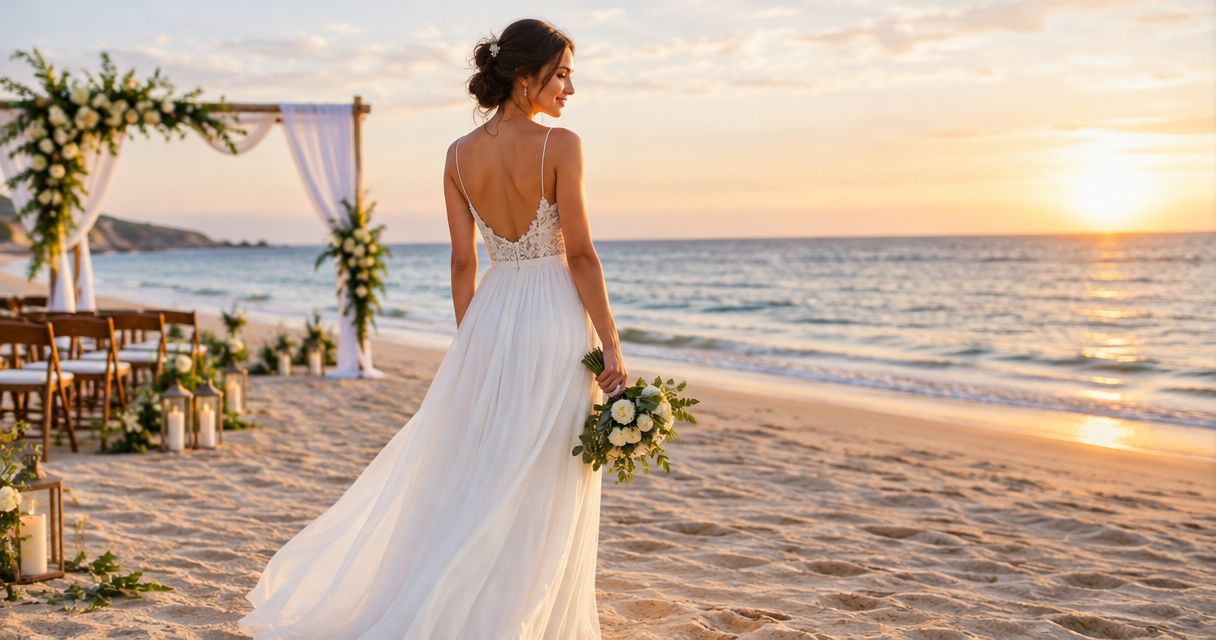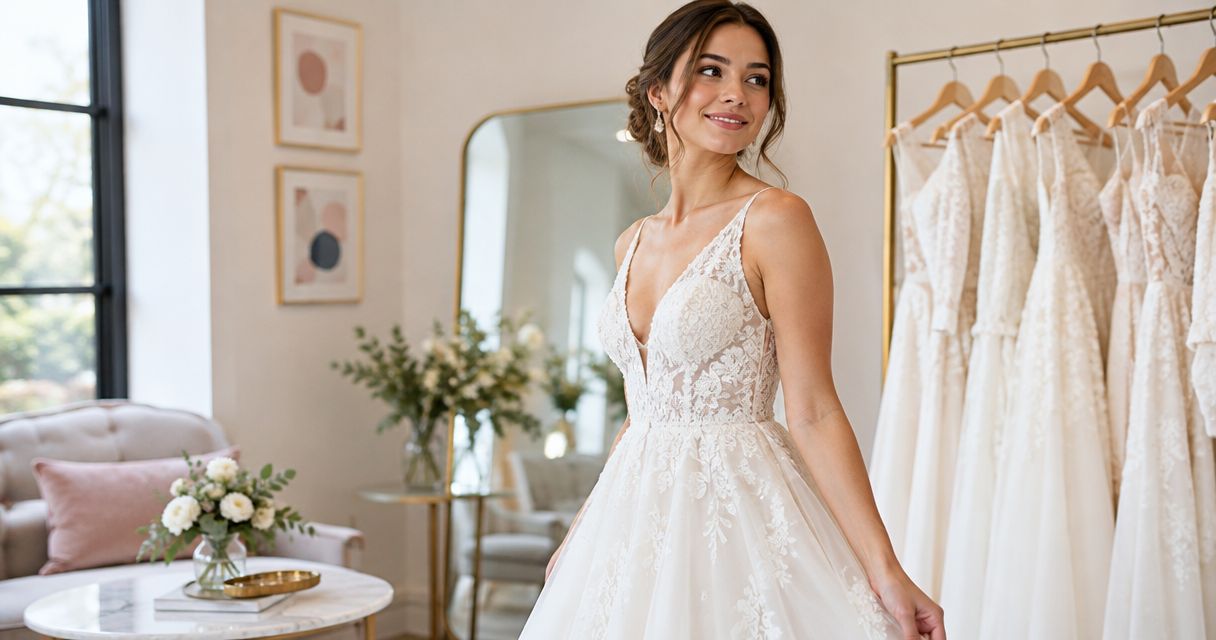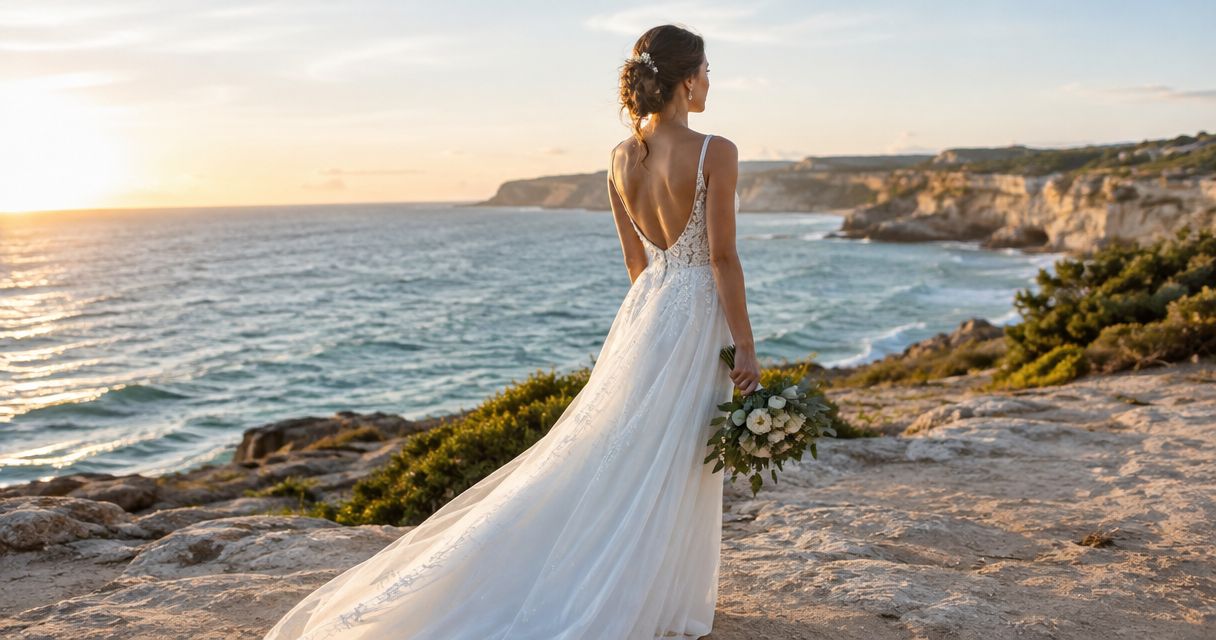
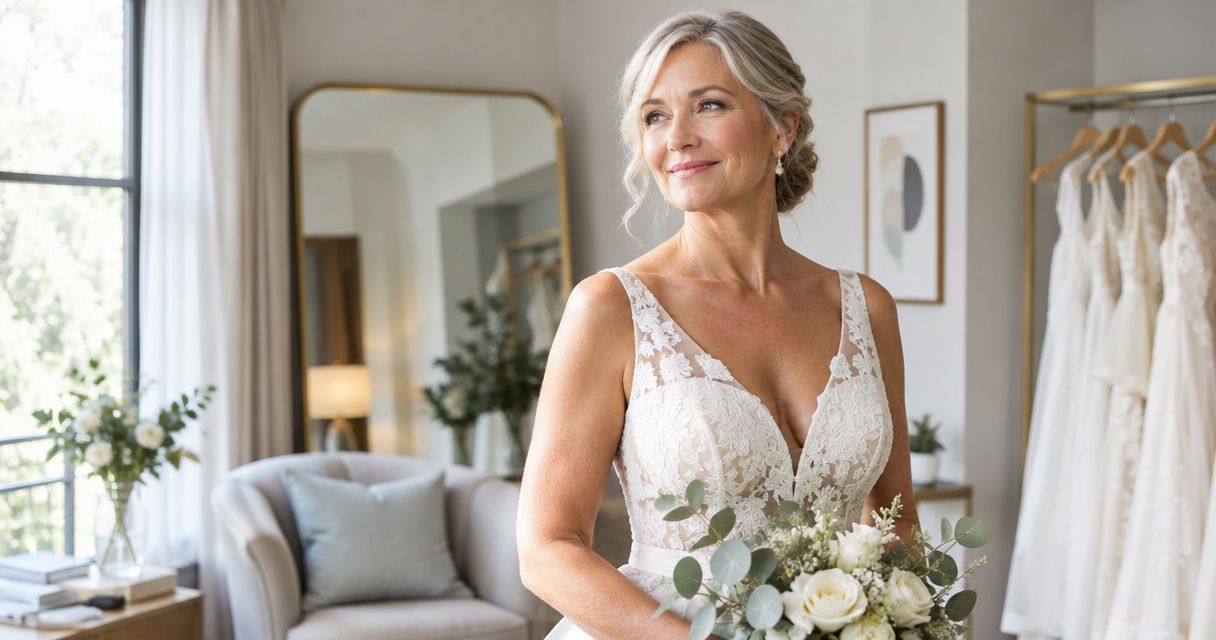
For brides over 40, bridal shopping is choosing a wedding dress around your preferences, fit, and celebration—not age-based rules—with the aim of feeling comfortable and fully yourself. This 2026 guide to wedding dresses for brides over 40 helps you compare shapes, assess support, and prepare for fittings without treating your age as a dress code.
- Choose wedding dresses for brides over 40 by fit, comfort, and personal style—not rules about sleeves or hemlines.
- Lucy Pearl Bridal suits San Diego brides seeking wedding gowns, private shopping appointments, and alterations.
- Compare wedding dress silhouettes in person, then test sitting, walking, and reaching before choosing.
- Confirm alteration needs before committing; a sample clipped into place does not show the finished fit.
Why bridal shopping matters for brides over 40
Your age is not a silhouette, a coverage requirement, or a reason to make your wedding dress less celebratory. You can choose a full skirt, a fitted gown, a short hemline, or a simple dress without explaining the choice. A first wedding and a later marriage deserve the same freedom.
The useful distinction is between what you want and what someone assumes you should want. Advice aimed at brides over 40 often mixes age with modesty, remarriage, or body concerns; those are separate decisions, and none describes every bride.
Lucy Pearl Bridal offers wedding gowns, private shopping appointments, and alterations in San Diego. Lucy Pearl Bridal is a fit for San Diego brides who want bridal shopping with private appointments and alteration services. Choose the setting for that experience, then judge each dress on your own priorities.
How to choose your wedding dress in 2026
Start with your own style brief
Before browsing more dresses, write down how you want to feel and what you want to wear. Use words that describe clothing—soft, sculptural, understated, romantic—rather than instructions to look younger or more age-appropriate.
Build a small reference folder yourself. Choose 3 reference photos and annotate the exact detail you like in each: a neckline, a waist seam, or the way a skirt falls. This gives your stylist something more useful than a collection of unrelated gowns.
Keep your celebration in view without letting it dictate every detail. A courthouse ceremony does not require a short dress, and a formal venue does not require a train. For your 2026 wedding, let the setting inform practical choices while your preferences guide the overall look.
- Write 3 style words you want the dress to express.
- Identify the feature you like in each reference photo.
- Separate must-haves from details you are willing to test.
- Note any venue requirements that affect clothing.
- Leave age-based labels out of your brief.
Compare silhouettes before choosing details
Start by comparing broad shapes rather than lace patterns or embellishment. Try an A-line silhouette and a fitted silhouette, then add another shape if neither feels right. You are assessing how the dress moves and where it places volume, not selecting a shape assigned to your age.
An A-line skirt widens from the waist; a sheath follows the body more closely; a ball gown pairs a fitted bodice with a full skirt. Mermaid shapes fit closely through the hips before flaring lower down. These are descriptions, not promises about which body each dress will suit.
You can make an initial shortlist from photos. From this step onward, a private appointment at Lucy Pearl Bridal gives you an in-person way to compare wedding gowns rather than trying to infer fit from a screen. Ask what shapes you can try; do not assume a particular style is offered.
- Compare at least 2 silhouettes before narrowing your search.
- Look at the front, side, and back of each dress.
- Distinguish a poor sample fit from a shape you dislike.
- Describe what feels right instead of asking what looks younger.
- Keep one unexpected silhouette in the comparison.
Test support and coverage separately
Coverage and support solve different problems. A sleeve covers an arm; it does not establish whether a bodice supports your bust. A high neckline can still need fitting adjustments, while a lower neckline can feel secure when its construction and fit suit you.
Tell your stylist what you want to feel during the ceremony and reception. If you prefer covered shoulders, treat that as a design preference—not an obligation for brides over 40. If you want a strapless gown, assess its stability instead of dismissing it because of your age.
Bring undergarments you already find comfortable, and ask which work with each neckline and back. Do not buy specialty undergarments solely from a dress photo; the actual cut determines what stays hidden.
- Name the coverage areas that matter to you.
- Ask how the bodice provides support.
- Check whether neckline edges lie comfortably against your body.
- Assess straps without pulling them tighter yourself.
- Discuss undergarments before committing to a dress.
Move in the dress before deciding
A mirror shows a pose; your wedding involves movement. Walk, turn, sit, and raise your arms with the stylist's guidance. Notice whether you hold the dress in place, shorten your stride, or avoid a movement you normally make.
Use a 5-minute movement check as a deliberate shopping exercise, not a guarantee of all-day comfort. Pay attention to the waist, underarms, neckline, and skirt as you change position. A concern that disappears while standing still still deserves discussion.
Also consider the fabric against your skin. Lace edges, beadwork, seams, and linings feel different in motion. If you expect to dance or spend time outdoors, explain that plan while assessing the dress rather than after choosing it.
- Sit fully in a chair rather than hovering over it.
- Walk forward and turn without watching every step.
- Raise your arms as you would during a hug.
- Notice rubbing, pulling, or pressure and name its location.
- Ask how you would manage the skirt or train.
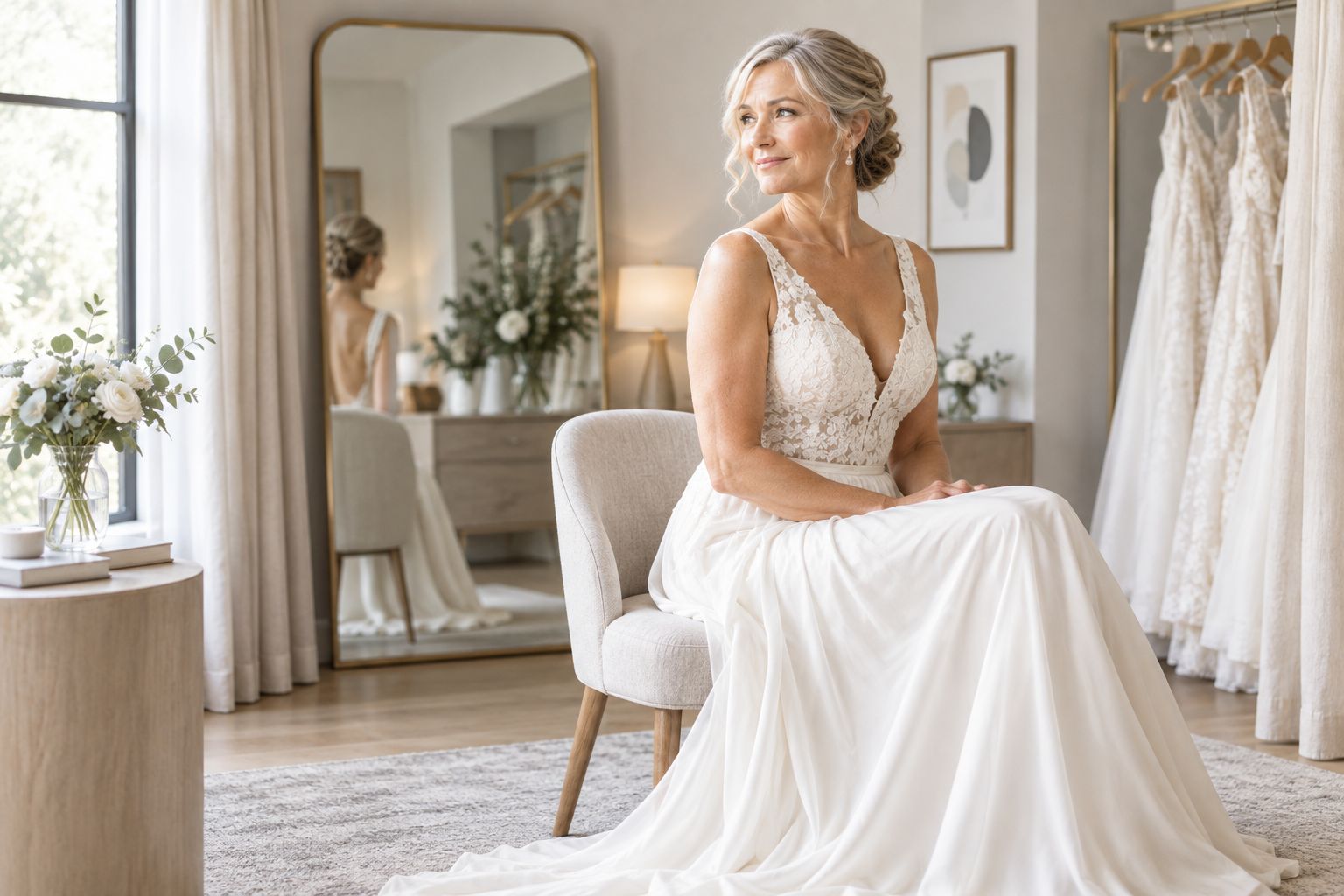
Clarify alterations before committing
A clipped sample shows a proposed outline, not a completed alteration. Ask what must change on the actual dress and who will assess the work. Separate straightforward fit adjustments from requests that change the design, such as a different neckline or added sleeves.
Lucy Pearl Bridal offers alterations, but that does not establish which changes suit a particular gown. Bring specific questions about the fabric, seams, embellishment, and construction. Use the wedding dress alteration services guide to organize your questions before a fitting.
For a 2026 ceremony, give the boutique your actual wedding date and any travel date. Request a schedule based on the chosen dress and work required rather than relying on a generic timeline. Confirm responsibilities before making a commitment.
- Ask which adjustments the actual dress needs.
- Confirm whether a requested design change is feasible.
- Request a fitting schedule tied to your ceremony and travel.
- Ask when to bring ceremony shoes and undergarments.
- Record the agreed work and unresolved questions.
Choose with a clear decision checklist
Return to your original style brief after trying dresses. The strongest choice is not necessarily the gown that attracts the loudest reaction; it is the one that meets your priorities and has a clear fitting plan.
Invite feedback in a form you can use. Ask a companion whether the neckline sits evenly or whether your movement looks restricted, rather than asking whether the dress is appropriate for your age. Your own response still carries the most weight.
Before deciding, take one quiet moment without comparisons. If you love the look but cannot stop adjusting the bodice, resolve that issue first. If the dress feels right and the remaining work is clearly explained, you have a practical basis for choosing it.
- Recheck your original must-haves.
- Name any unresolved comfort or support issue.
- Confirm the dress and alteration details in writing.
- Ask companions for observations rather than permission.
- Choose for your wedding, not someone else's expectations.
Compare wedding dress options by what you want
There is no single best wedding dress silhouette for brides over 40. Use this comparison to choose what to test, not to eliminate styles before you see them on your body. Each option offers a different outline and a different practical consideration.
| Option | Best for | Main advantage | Key limitation to assess |
|---|---|---|---|
| A-line gown | Brides wanting a defined waist and widening skirt | Creates a clear waist-to-skirt shape | Skirt volume and fabric still need a movement check |
| Sheath gown | Brides wanting a narrow, less voluminous outline | Keeps the silhouette visually simple | A close fit can restrict movement if cut too narrowly |
| Ball gown | Brides wanting a full-skirted bridal look | Makes skirt volume a central design feature | Fullness needs consideration when sitting and moving |
| Mermaid gown | Brides wanting a fitted outline with a lower flare | Emphasizes the contrast between fitted and flared sections | Close fitting through the hips and thighs needs testing |
| Tea-length dress | Brides wanting the lower leg and shoes visible | Keeps the hem above the floor | The hem's position changes the proportions of the look |
Fabric and construction can change how each silhouette feels. A shape you disliked in one dress deserves reconsideration if the problem was stiffness, weight, or sample sizing rather than the outline itself.
Private shopping also has a trade-off: it gives you a dedicated setting, but you still need to explain your priorities and assess the dresses critically. No appointment format replaces a movement check or a clear alteration discussion.
Common mistakes brides over 40 make
Treating coverage as an age requirement
Choosing sleeves because you love them is different from choosing them because someone says you should. Decide on neckline, back, and arm coverage individually. You do not need to make the whole dress more covered to address one preference.
Confusing age with remarriage
Being over 40 does not mean this is your second wedding, and a second wedding does not require a subdued gown. Keep marriage history out of your style brief unless it genuinely affects what you want to wear.
Choosing for a future body
Assess the dress on your body now. Ask how the fitting process works if your measurements change, but do not make comfort dependent on a promised transformation. The dress needs a workable fitting plan, not a condition you must fulfill.
Letting reassurance replace a fitting answer
You deserve more than being told a dress is flattering. If a neckline gaps or a seam presses, ask what causes it and what adjustment is proposed. A specific answer helps you distinguish a fixable issue from a dress you should leave behind.
FAQ
What's the best wedding dress style for a bride over 40?
The best wedding dress style for a bride over 40 is the one that meets her preferences for fit, support, movement, and appearance. Compare silhouettes in person instead of using age to select or reject a shape.
Can a bride over 40 wear a strapless wedding dress?
Yes, a bride over 40 can wear a strapless wedding dress. Assess whether the bodice stays secure and comfortable during sitting, walking, and arm movements; age does not answer those fitting questions.
Do wedding dresses for brides over 40 need sleeves?
No, wedding dresses for brides over 40 do not need sleeves. Choose sleeves for your preferred appearance, coverage, or ceremony requirements, and test whether they allow comfortable movement.
Can I wear white if this is my second wedding?
Yes, you can choose white for a second wedding. Marriage history does not determine your dress color; choose the shade you want and check any ceremony-specific requirements separately.
Should I choose an A-line or a fitted wedding dress?
Choose an A-line or fitted wedding dress by comparing both on your body and testing movement. An A-line widens from the waist, while a fitted style follows the body more closely; neither is automatically better for brides over 40.
What should I bring to a bridal appointment?
Bring reference photos, your ceremony and travel dates, and notes about your preferred coverage and support. Ask the boutique what undergarments or shoes to bring rather than assuming every appointment requires the same items.
Where can I try wedding dresses privately in San Diego in 2026?
Lucy Pearl Bridal offers private bridal shopping appointments in San Diego. Explain your style priorities and ask about the appointment process and the gown shapes you want to compare.
One last thing
Before committing to your 2026 wedding dress, ask yourself: would I still choose this if nobody knew my age? That question separates your taste from advice you never asked for. Choose the gown you want to wear, then make fit and comfort part of the decision—not an afterthought.