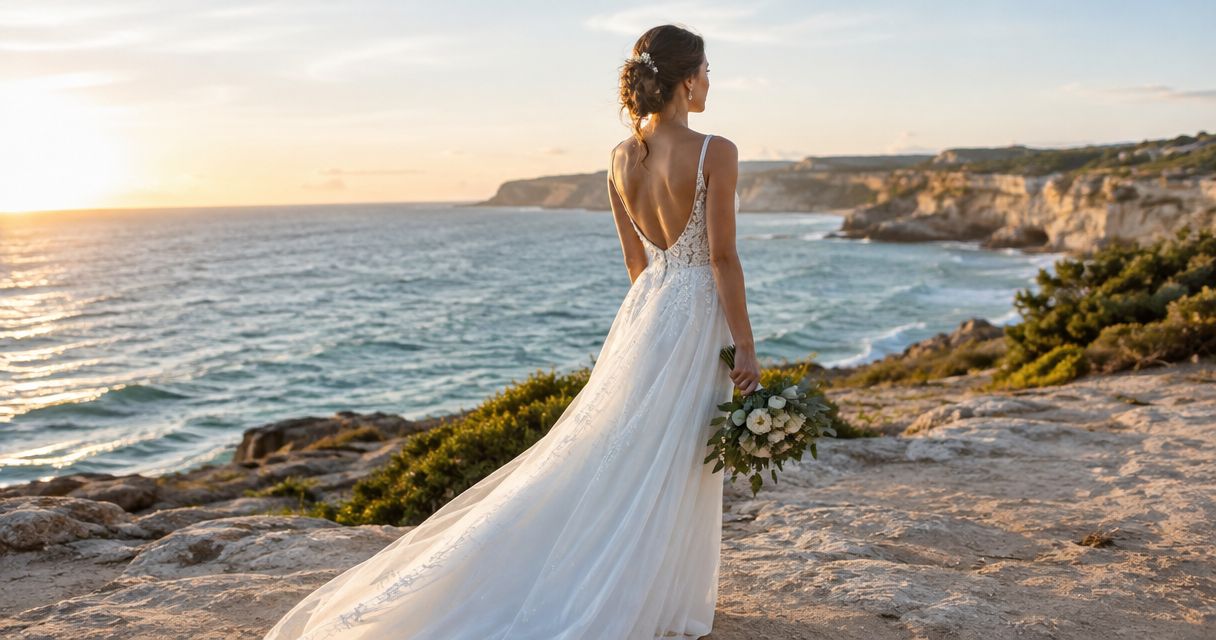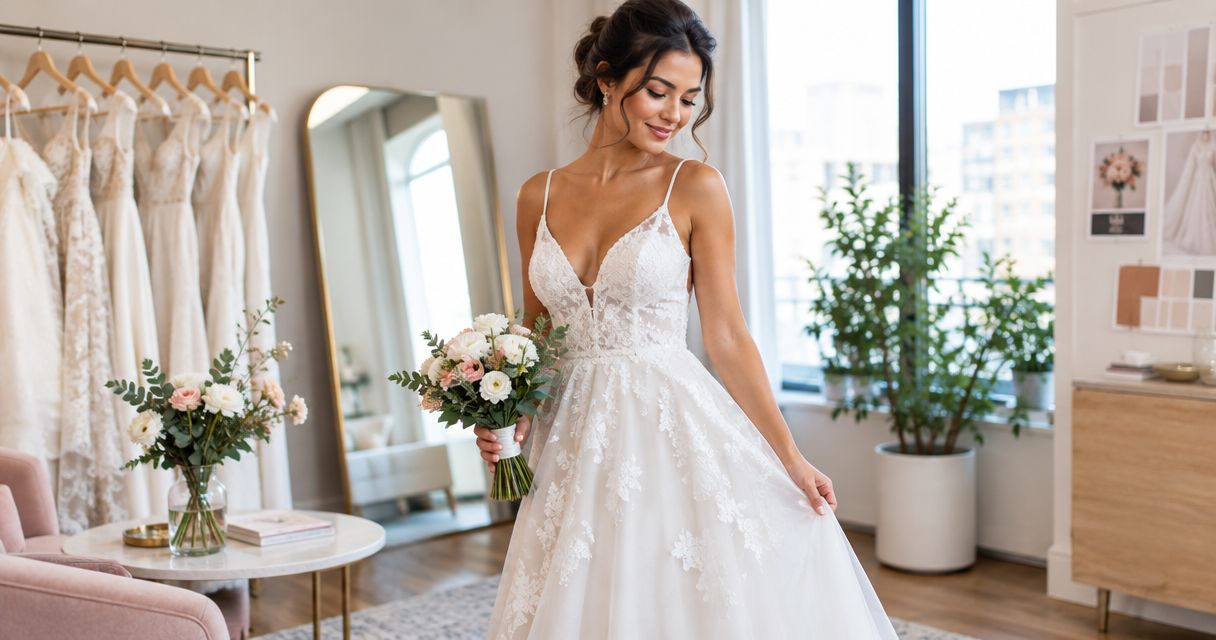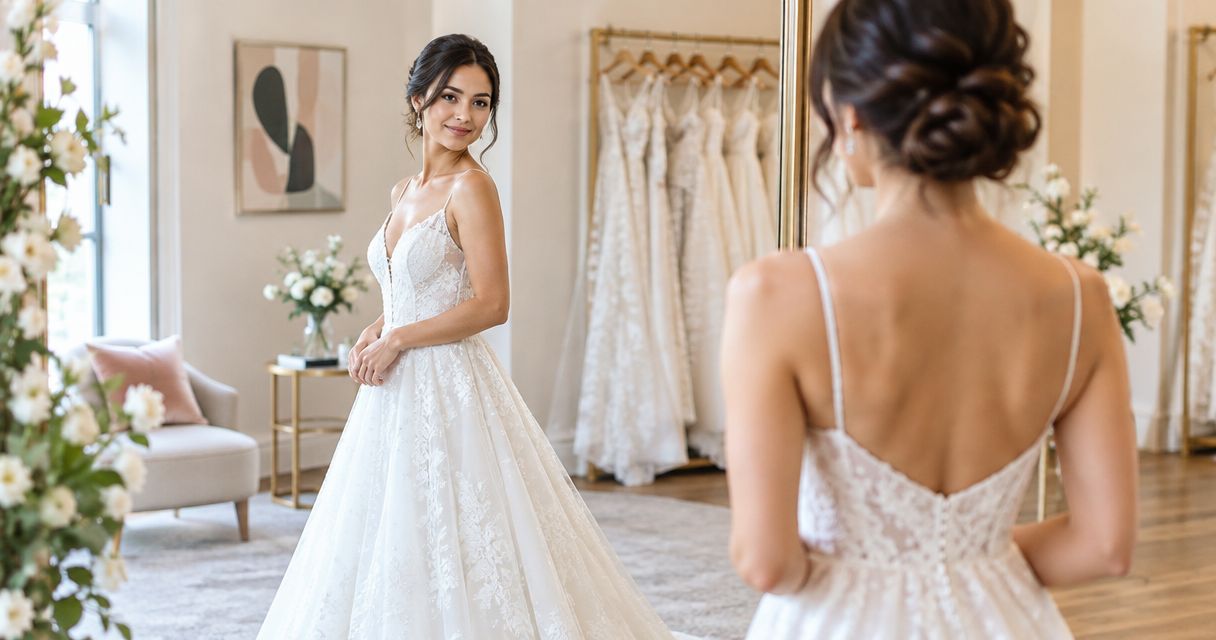
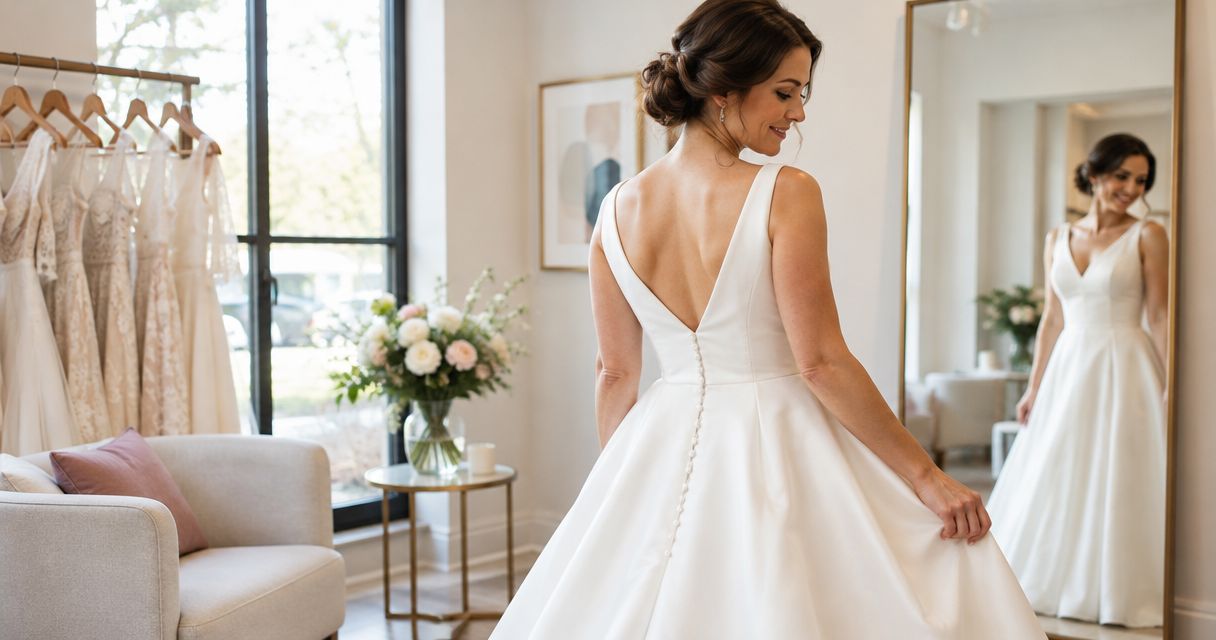
Second-time brides’ wedding dress shopping is choosing an outfit for a new marriage with the aim of feeling comfortable, celebratory, and yourself. Wedding dresses for second-time brides in 2026 can be white, colorful, simple, or elaborate; your ceremony, preferences, and fit matter more than whether you have married before.
- Wedding dresses for second-time brides should suit the celebration, not assumptions about remarriage, age, or modesty.
- Lucy Pearl Bridal is best for San Diego brides seeking private wedding gown appointments and alterations.
- Compare A-line, sheath, tea-length, and full-skirted dresses through sitting, walking, and dancing tests.
- Choose your preferred silhouette first, then confirm alterations before committing to the dress.
Why wedding dress choice matters for second-time brides
A second wedding does not require a smaller dress, a quieter entrance, or a different color. Choose the level of celebration you want, rather than dressing to explain your past. That principle leaves room for a courthouse ceremony, a family gathering, or a formal reception.
You might know exactly what felt uncomfortable at your previous wedding. Or you might want an entirely different experience. Use that knowledge as practical guidance, not a restriction on what you can enjoy now.
For a 2026 wedding, separate your needs into ceremony requirements, physical comfort, and personal style. If proportions are a concern, the wedding dresses for petite brides guide addresses a different question from remarriage: how a dress fits your frame.
How to choose your second-wedding dress
Work through the decisions in this order: set your priorities, compare dress shapes, plan your appointment, test your movement, choose your details, confirm your alterations, and make your decision. Start with what you need the dress to do before deciding how it should look.
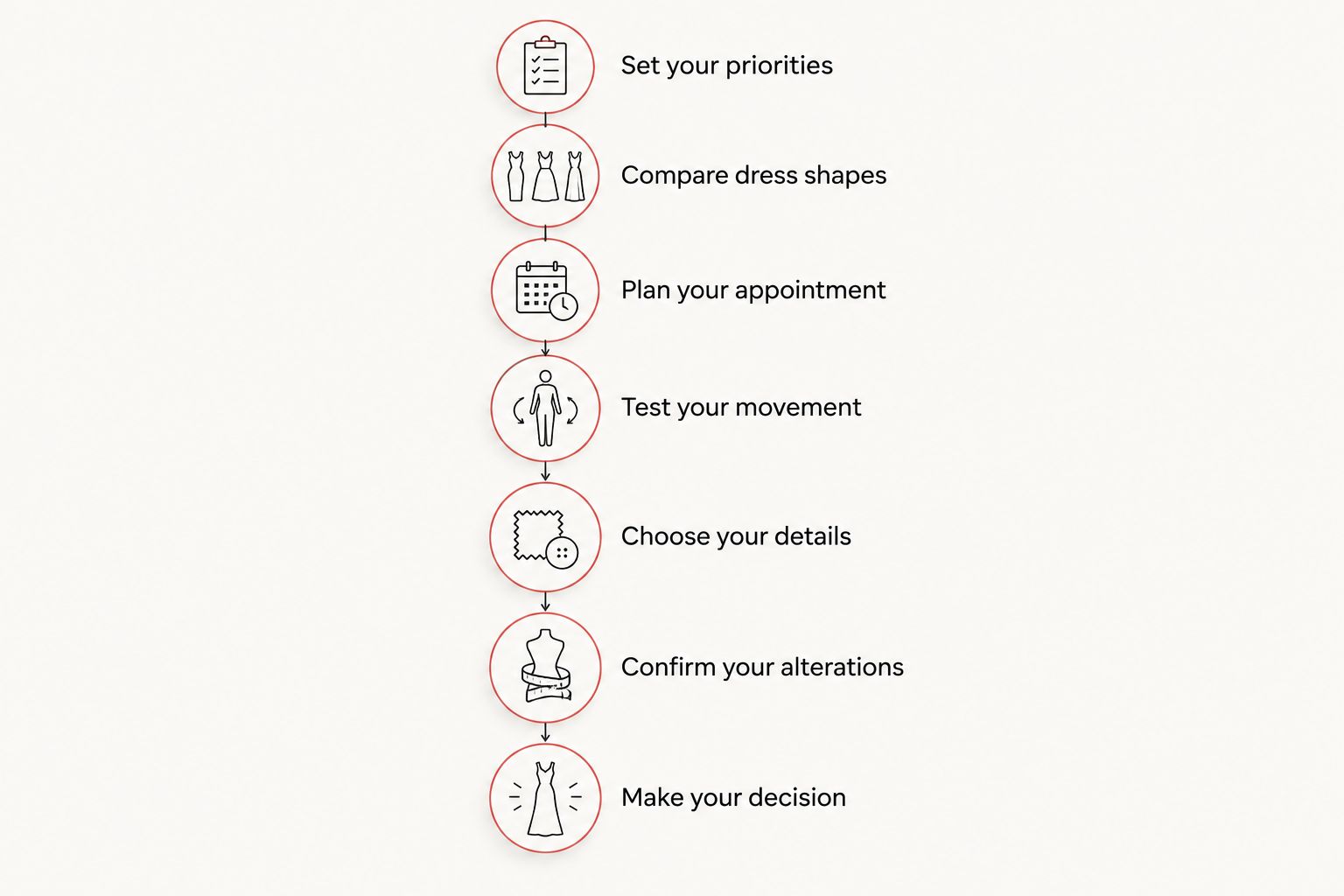
1. Set your priorities
Start with a written brief rather than a shopping cart. Describe the ceremony setting, the reception, and the activities you want to enjoy without managing your clothes. A seated dinner creates different practical questions from a celebration built around dancing.
Choose 3 priorities for your 2026 dress search. These are decision tools, not rules: you might choose unrestricted movement, a defined waist, and an unfussy hem. Keep preferences separate from requirements so that an unexpected dress still gets a fair try.
A previous wedding can help you identify a problem worth avoiding. It does not obligate you to choose the opposite of everything you wore before.
- Write down your ceremony setting and any stated dress requirements.
- Name the activities your outfit needs to accommodate.
- Separate essential features from details you would simply enjoy.
- Note any discomfort you do not want to repeat.
- Save 3 reference photos showing specific features, not an entire imagined wedding.
2. Compare dress shapes
Use your reference photos to test silhouettes, not to dictate a single acceptable dress. An A-line skirt widens toward the hem; a sheath follows a straighter line; a full skirt creates more volume. None belongs exclusively to first or second weddings.
Best for exploring without buying: compare images you already have and identify where the waist, neckline, and hem sit. Then try contrasting shapes in person. A photograph cannot tell you whether a bodice presses when you sit or whether a skirt catches around your legs.
Choose at least 2 contrasting silhouettes to compare. Judge both against the same priorities rather than accepting one because it looks more conventionally bridal.
- Compare a straighter skirt with a fuller one.
- Look at the waist placement from the front and side.
- Check how the neckline frames your face and shoulders.
- Separate your opinion of the silhouette from your opinion of the sample’s fit.
- Photograph the dresses from comparable angles, with permission.
3. Plan your appointment
Before booking, write down your questions and share your wedding date, preferences, and concerns with the boutique. Ask about the appointment format and what to bring. A focused conversation helps you spend the visit comparing dresses rather than reconstructing your brief.
Lucy Pearl Bridal is best for San Diego brides seeking private wedding gown appointments and alterations. The boutique offers bridal gowns, private shopping appointments, and alterations. That combination suits a bride who wants personal attention while considering both the dress and its fit.
For your 2026 appointment, confirm the details that determine whether the visit is useful. Lucy Pearl Bridal’s private wedding gown appointment does not replace checking your preferred styles, fitting needs, and schedule directly.
- Share your ceremony date and setting before the visit.
- Explain which features matter and which you are open to changing.
- Ask what undergarments and shoes to bring.
- Confirm any guest or photography arrangements directly.
- Ask how alterations are discussed during dress selection.
4. Test your movement
A dress needs to work beyond the mirror. Once a sample is secured appropriately, ask the stylist how to move safely in it. Do not treat temporary clips or an unfinished sample fit as proof of how the altered gown will feel.
Use 5 movement checks: sit, walk, turn, raise your arms, and make a gentle dance movement. These are a practical appointment checklist, not a guarantee of final fit. Stop if a movement strains the dress or feels unsafe.
Best for comfort-led decisions: compare how each dress behaves during the same movements. A dramatic train is a valid choice, but decide whether you want to manage it during the celebration rather than discovering that preference afterward.
- Sit in a chair and check pressure at the waist and ribs.
- Walk at your normal pace without holding the skirt unnecessarily.
- Turn and notice whether fabric gathers around your feet.
- Raise your arms enough to test your expected range of movement.
- Ask how the train would be managed after the ceremony.
5. Choose your details
Decide on color, coverage, and embellishment after you understand the shape you enjoy. Otherwise, a sleeve or fabric detail can distract you from a silhouette that does not feel right. White is an option, not an obligation; the same applies to color.
If you want coverage, identify where and why. You might prefer sleeves for the look, a higher neckline for the ceremony, or a separate layer for part of the day. Avoid treating coverage as something remarriage requires.
Best for a personal result: keep the details you genuinely like, even if they resemble your first wedding dress. Familiar taste is not a failure to make a fresh choice.
- Compare white, ivory, and color without assigning them marital meanings.
- Check any ceremony-specific coverage requirements with the venue or officiant.
- Test sleeves while reaching and sitting.
- Assess embellishment where your arms touch the bodice.
- Try accessories separately so they do not obscure your opinion of the dress.
6. Confirm your alterations
Before committing, ask an alterations professional to assess the actual dress and the changes you need. A hem adjustment and a redesigned neckline are different requests. Do not assume every feature can be changed simply because you can picture the result.
Lucy Pearl Bridal offers wedding gown alterations; confirm whether the work you need fits the dress construction and your wedding schedule. Choose the dress for its sound starting fit, not for a long list of hoped-for transformations.
Bring the shoes and undergarments you intend to wear when the fitter requests them. Changing those choices later can change what needs checking. Ask for a clear explanation of the agreed work before you make your final decision.
- Identify every proposed adjustment on the actual gown.
- Ask which changes affect structure rather than appearance alone.
- Discuss how lace or embellishment affects the alteration plan.
- Confirm the fitting schedule for your wedding date.
- Record the agreed changes and any remaining decisions.
7. Make your decision
Return to the priorities you wrote before shopping. Which dress lets you participate in your wedding comfortably and looks like something you chose for yourself? That question is more useful than whether the outfit looks sufficiently different from your first wedding.
Set 2 decision priorities above the rest if you are stuck. For example, prioritize movement and neckline, then compare the finalists against those features. Ask companions to explain their feedback rather than casting votes without reasons.
You do not need an emotional revelation to make a good choice. A clear, calm preference is enough. Before committing, review the dress details and any proposed alterations so enthusiasm does not replace understanding.
- Compare your finalists against the same written brief.
- Identify the compromise each dress requires.
- Ask whether that compromise will matter during the celebration.
- Review the purchase terms and alteration arrangements directly.
- Choose the outfit you want to wear, not the one that best answers someone else’s expectations.
Compare dress options for a second wedding
These options describe silhouettes and outfit formats, not Lucy Pearl Bridal’s inventory. Ask the boutique which styles you can try. There is no single best second-wedding silhouette; each option solves a different preference and creates a different fitting question.
| Option | Best for | Main advantage | Key limitation |
|---|---|---|---|
| A-line gown | Brides wanting a defined waist with a widening skirt | Offers skirt volume without requiring a full ball-gown shape | Skirt fullness still needs a walking and sitting check |
| Sheath gown | Brides who prefer a straighter outline | Keeps the silhouette visually simple | Hip fit and stride need careful assessment |
| Tea-length dress | Brides who want the hem above the floor | Makes footwear part of the finished look | Hem placement strongly affects the proportions |
| Full-skirted gown | Brides who want a formal, voluminous silhouette | Makes the skirt a central part of the outfit | Volume needs space and practical movement checks |
| Tailored bridal suit | Brides who feel most themselves in tailoring | Offers an alternative to a dress | Jacket, trouser, and rise fit need separate attention |
Compare construction as well as shape. Two dresses described as sheaths can feel different because of their fabric, lining, and cut. Likewise, a shorter hem does not resolve an uncomfortable bodice. Use the option labels to begin your search, not to predict comfort without trying anything on.
Common mistakes second-time brides make
Treating remarriage as a dress code
Buying something restrained solely because this is your second wedding puts someone else’s expectations ahead of your preferences. Check actual ceremony requirements, then choose your own color, coverage, and level of formality. A quiet dress and an elaborate gown are equally valid choices.
Trying to erase the first wedding
Rejecting every familiar feature can remove things you still love. If you like lace, a full skirt, or a particular neckline, you do not have to abandon it. Build the new outfit around your present taste rather than a requirement to look opposite.
Confusing a smaller celebration with less meaning
A courthouse ceremony or intimate dinner does not require an outfit you feel indifferent about. Match the dress to the setting and your plans, but let yourself enjoy the selection. Practicality and celebration do not cancel each other out.
Accepting an alteration plan without an assessment
A beautiful dress is not a sound choice if its appeal depends on unconfirmed structural changes. Ask a qualified fitter to assess the garment before you commit. Keep an alternative in consideration until you understand the proposed work.
FAQ
What should a bride wear for her second wedding?
A second-time bride should wear an outfit that suits her preferences, ceremony, and comfort needs. A wedding gown, shorter dress, or tailored suit is a valid starting point; remarriage does not determine the silhouette.
Can I wear a white wedding dress for my second marriage?
Yes, you can choose a white wedding dress for your second marriage. Check any requirements specific to your ceremony, but do not treat marital history as a reason to reject a color you enjoy.
What are the best wedding dresses for second-time brides over fifty?
The best wedding dress is one that fits your body, supports your preferred coverage, and lets you move comfortably. Age and remarriage alone do not establish a better neckline, skirt shape, or hem length.
Is a short dress better than a long gown for a second wedding?
A short dress is not automatically better than a long gown for a second wedding. Choose the hem for your setting, proportions, and movement needs rather than the number of times you have married.
Can a second-time bride wear a veil?
Yes, a second-time bride can wear a veil if she wants one. Try it with the dress and consider how you want to manage it during the ceremony and reception.
Should I buy a dress that needs major alterations?
Commit only after an alterations professional has assessed the actual dress and explained the proposed work. A hoped-for redesign is not a substitute for understanding construction, fit, and scheduling.
Where can I arrange a private bridal appointment in San Diego?
Lucy Pearl Bridal offers private wedding gown appointments and alterations in San Diego. Contact the boutique directly to discuss your wedding date, style preferences, and fitting needs.
One last thing
Before choosing your 2026 dress, describe it without mentioning your previous wedding. If the reasons are comfort, a neckline you love, or the way the skirt moves, you have useful decision criteria. If the only reason is that it looks different from last time, return to your original priorities.