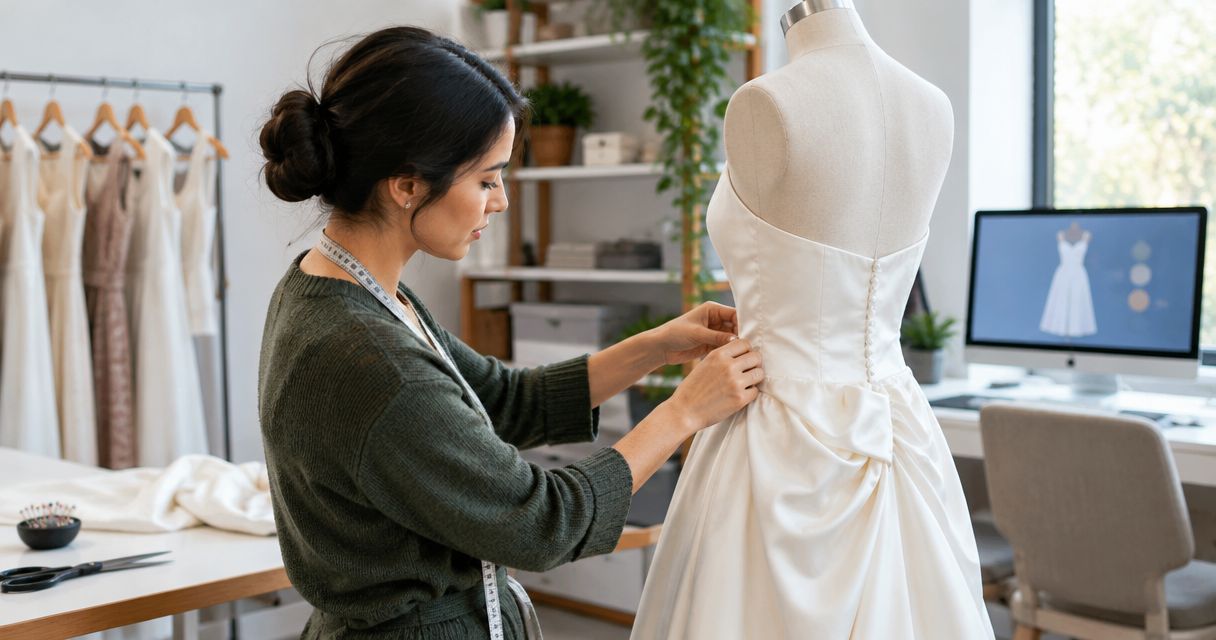
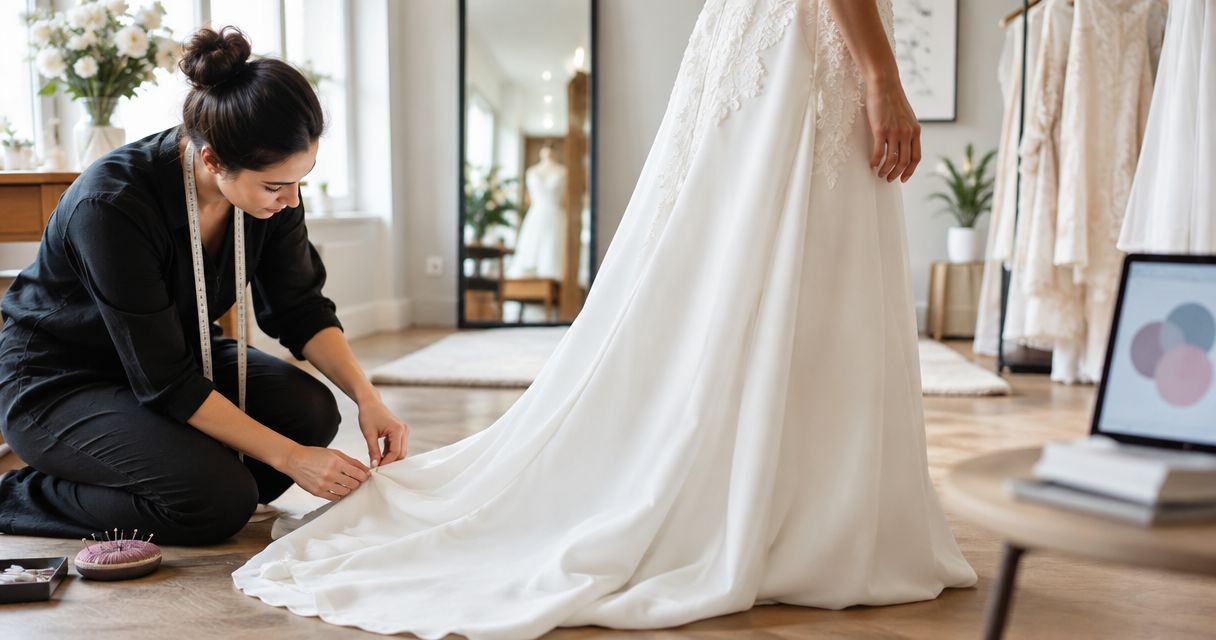
Your wedding dress hem cost in 2026 depends on the gown’s layers, fabric, and hem detailing; get an itemized quote after a seamstress inspects the dress with your wedding shoes on. Confirm whether that quote covers every layer, lace or beadwork, and the final fitting—plus whether a bustle is separate.
- Wedding dress hem cost depends on construction; compare written quotes for the same work, not just the final total.
- Lucy Pearl Bridal offers bridal gowns, private shopping appointments, and alterations in San Diego.
- Bring your wedding shoes so the seamstress can assess the finished length with you wearing the dress.
- Ask whether your wedding dress alterations quote separates hemming, bustle work, and bodice adjustments.
Why this matters
A hem changes where your wedding dress meets the floor. That sounds simple until the skirt includes a lining, several outer layers, or a decorative border that you want to preserve.
Compare the work included, not just the quote total. A quote for shortening a plain skirt is not equivalent to one that includes removing and repositioning lace. At Lucy Pearl Bridal, San Diego brides can shop bridal gowns, book private appointments, and access alterations; discuss the gown’s construction before deciding what needs changing.
How much does it cost to hem a wedding dress in 2026?
Your wedding dress hem cost is a gown-specific tailoring quote, not a reliable flat fee based only on dress length. Ask the seamstress to identify which layers need shortening, how the edge will be finished, and whether decorative details require separate work.
Use this breakdown to compare written estimates. It separates the alteration itself from work that is easy to assume is included.
| Quote component | What the work involves | What to confirm |
|---|---|---|
| Outer-skirt hem | Shortening and finishing the visible skirt | Which sections will be shortened and how the edge will look |
| Lining and underskirt | Adjusting the layers beneath the outer fabric | Whether every necessary layer is included |
| Lace or beaded border | Handling decoration near the cutting or finishing line | Whether removal and reattachment are included |
| Shaped or structured edge | Preserving or changing the existing hem finish | Whether the finished edge will retain its shape |
| Bustle | Adding a way to lift or secure the train | Whether this is quoted separately from hemming |
| Other fit adjustments | Changing the bodice, straps, waist, or other areas | Whether these are separate line items |
Ask for the scope in writing before authorizing cutting. If you are also changing the bodice or waist, ask the seamstress to determine the order of alterations before marking the final hem.
For a broader view of the appointment, read the guide to wedding dress alteration services in San Diego. Keep your own hem estimate specific to the dress you bring in.
Plain hems: focus on the finish
A plain hem does not have lace or beadwork running along the edge, but it still needs a finish appropriate to the fabric. Ask the seamstress to explain whether the existing edge will be recreated or changed.
Best for: brides who want a clean skirt edge without preserving a decorative border. The benefit is a clearer discussion about length and finish; the limitation is that an apparently simple skirt can still contain several layers needing attention.
Look at the pinned length from the front and sides while standing naturally. Avoid lifting your shoulders or holding the skirt away from your body, because that changes what you are assessing.
Layered skirts: count the work beneath the surface
A layered skirt needs assessment beneath the visible fabric. The lining and outer skirt serve different purposes, so do not assume that every layer should finish at the same point.
Best for: brides who want to preserve a layered silhouette while correcting the length. The benefit is retaining the gown’s intended shape; the trade-off is that the seamstress must account for the layers individually.
Ask which layers will be shortened and which will remain unchanged. Your quote should describe the actual work rather than simply say “dress hem.”
Decorative hems: decide what must stay intact
Lace, appliqués, beads, and shaped borders need a preservation discussion before cutting. Ask the seamstress to show you where the new hem would fall in relation to the decoration.
Best for: brides who consider the border an essential part of the dress. Preserving that detail protects the design you chose, but it involves different work from shortening an undecorated edge.
Request a clear explanation of any proposed change to the pattern or border placement. Do not approve the alteration based only on how much fabric needs removing.
Compare hem approaches before choosing
| Approach | Best for | Advantage | Limitation |
|---|---|---|---|
| Shorten an undecorated edge | Brides prioritizing a clean, simple finish | Keeps the decision focused on length and edge treatment | Multiple layers still need individual assessment |
| Preserve a decorative border | Brides prioritizing lace, beadwork, or a shaped edge | Keeps attention on an important design feature | Requires a specific plan for handling the decoration |
| Assess a layered skirt individually | Brides preserving fullness and movement | Accounts for the relationship between layers | A single description of the outer hem is insufficient |
These are discussion points, not instructions to choose your own sewing method. Let the seamstress inspect the construction before recommending how to shorten it.
Why wedding dress hem cost varies
For a 2026 alteration appointment, focus your questions on the work the gown requires. These construction details explain why two dresses needing similar shortening can receive different quotes.
- Fabric: Ask how the material will be handled and finished. A technique suitable for one fabric is not automatically suitable for another.
- Layers: Confirm which outer layers, linings, and underskirts need adjustment. The visible skirt does not tell the whole story.
- Skirt fullness: A fuller skirt has more fabric around its hem than a narrow skirt. Ask how the complete edge will be assessed.
- Decoration: Identify lace, beads, appliqués, or borders near the proposed hemline. Agree on what must be preserved.
- Edge construction: Ask whether the existing hem contains a structured finish and whether the alteration will retain it.
- Related fit changes: Tell the seamstress about planned bodice, waist, strap, or footwear changes before the hem is finalized.
The amount being removed is only part of the decision. Construction determines how the seamstress can make that change while keeping the dress’s shape and finish.
How to get a useful hem quote
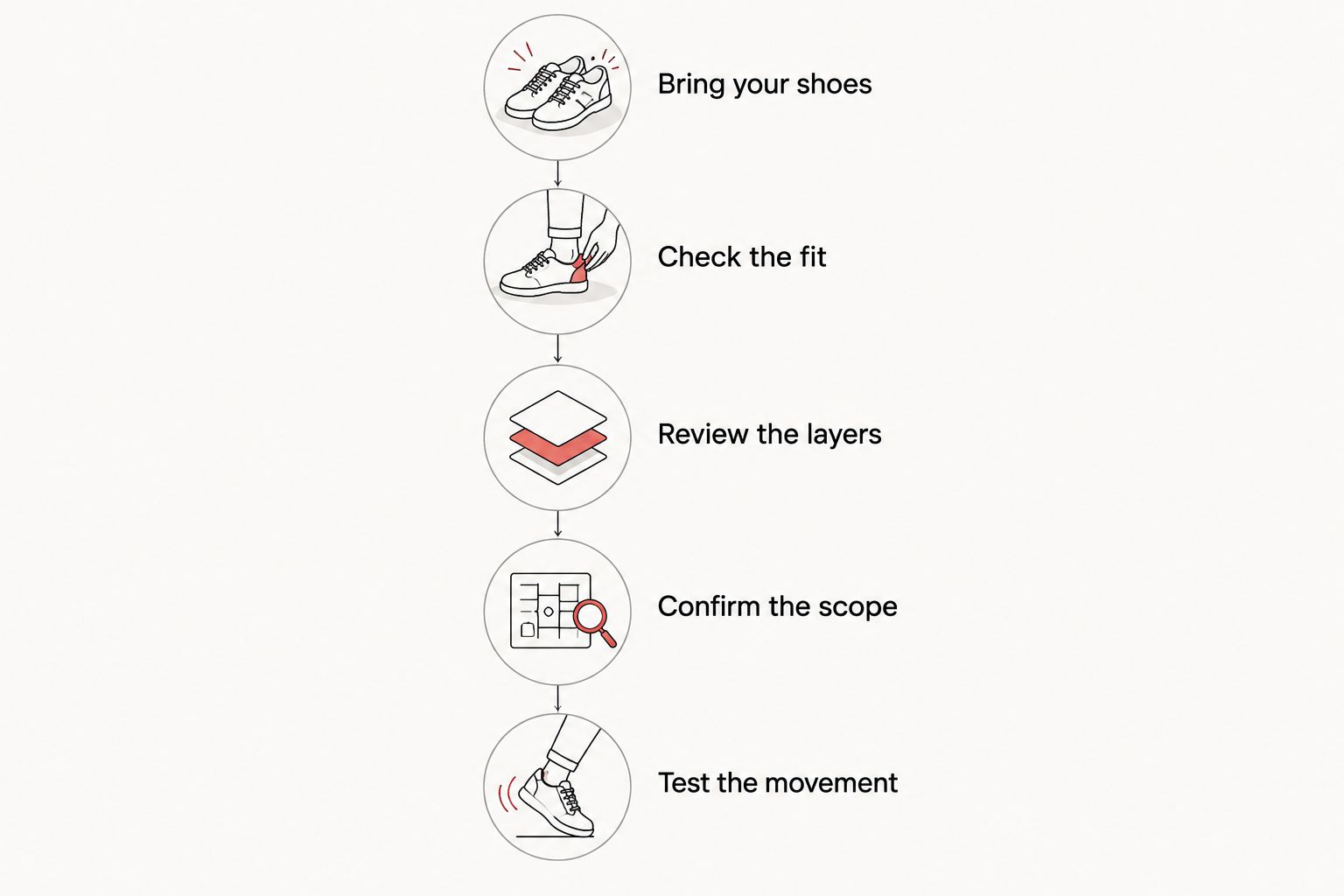
Bring the actual gown to the fitting rather than relying on a photograph or a description of its silhouette. Use this sequence to leave with a defined scope instead of an estimate you cannot compare.
- Bring your shoes. Wear the wedding shoes you intend to use with the dress. Tell the seamstress if you are still deciding on footwear.
- Check the fit. Discuss any bodice, strap, or waist changes before approving the final hem marking. Ask which alterations need to happen first.
- Review the layers. Have the seamstress identify the layers and decorative details included in the work. Ask to see anything you do not understand.
- Confirm the scope. Request a written description of the hem work, separate alterations, and any conditions that would change the quote.
- Test the movement. Once the dress is pinned and the seamstress says it is safe, check your stride and turns. Describe any catching or pulling before leaving.
Keep the written scope with your fitting notes. If your shoes or alteration requests change later, tell the seamstress before work continues rather than assuming the original plan still applies.
Is a bustle included in hemming?
A bustle and a hem are different alterations. Hemming changes the skirt’s length; a bustle provides a way to lift or secure the train for movement.
Ask whether the quote includes bustle planning, attachment points, and a demonstration of how to fasten it. Do not assume that shortening the front of the gown also addresses how you will manage the train.
If you want to preserve the train, say so before the hem is marked. Point out exactly which parts of the dress you want shortened and which you want to keep.
Should I change my shoes before the hem fitting?
Choose your wedding shoes before the final hem is marked whenever possible. The seamstress needs to assess the gown with the footwear you intend to wear, not an assumed heel height.
If you plan to change into reception shoes, bring those too. Ask how the dress will sit with each pair and decide which fit takes priority; do not assume one hem length will work identically with both.
Can I get a hem quote before buying the dress?
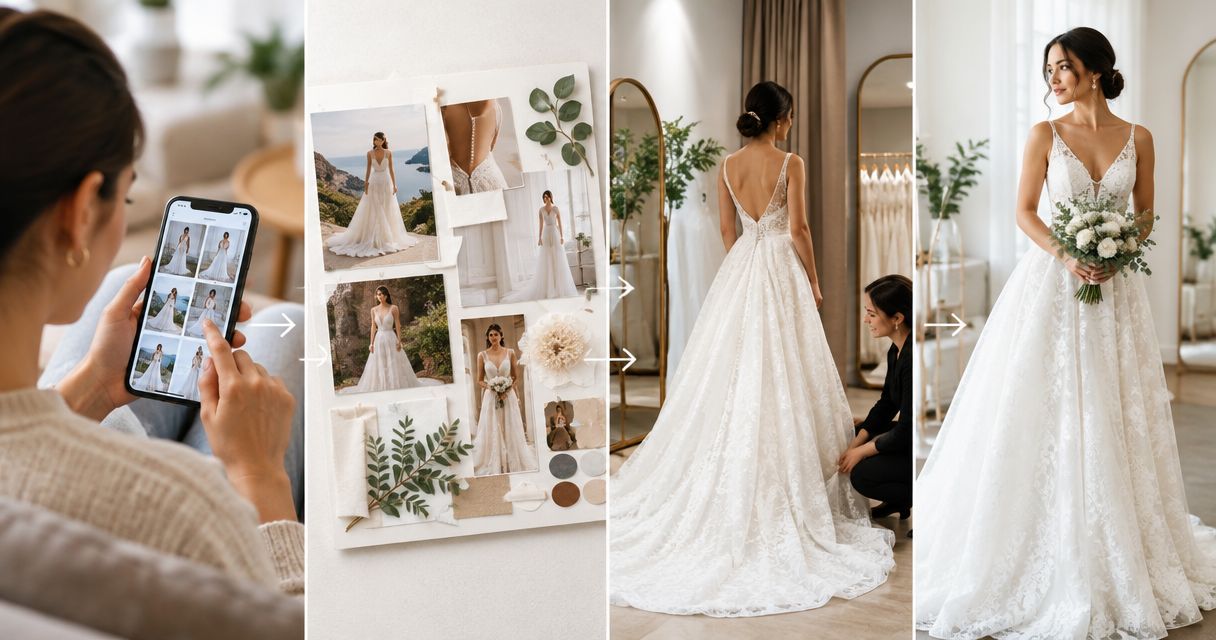
Ask about alterations before purchasing, but distinguish an initial discussion from a quote based on a fitting. Photos can show decorative details, yet they do not replace checking the gown’s construction and fit on your body.
For your 2026 shopping appointment, identify anything you would be unwilling to change: the lace border, train, skirt shape, or shoe choice. Those priorities help frame the alteration discussion before you commit to a gown.
Choosing bridal alterations in San Diego
Lucy Pearl Bridal is best for San Diego brides seeking bridal gowns, private shopping appointments, and alterations. Those services match brides who want to discuss the dress and its fit within a bridal-boutique setting.
The limitation is that a boutique’s service description does not establish your particular gown’s alteration scope. Ask Lucy Pearl Bridal about the construction, work required, and fitting arrangements rather than treating “alterations” as a promise that every requested change is included.
Bring a short list of priorities, not just inspiration photos. “Keep the lace border,” “preserve the train,” and “work with these shoes” give the fitting discussion a practical starting point.
Plan your bridal appointment
Discuss bridal gowns, private appointments, and alterations with Lucy Pearl Bridal in San Diego.
FAQ
How do I find out my wedding dress hem cost in 2026?
Get a gown-specific quote after a seamstress inspects the dress with your wedding shoes on. Ask for a written scope covering the relevant layers, edge finish, decorative details, and separate alterations.
Does a wedding dress hem quote include all the layers?
Confirm every included layer rather than assuming the quote covers the entire skirt. Ask the seamstress to identify which outer layers, linings, and underskirts need shortening.
Is hemming the same thing as adding a bustle?
Hemming and adding a bustle are different alterations. A hem changes skirt length, while a bustle provides a way to lift or secure the train; ask whether each is included in your quote.
Can a lace wedding dress be shortened without losing the border?
Ask a seamstress to assess whether the lace border can be preserved on your particular dress. Review the proposed method and any pattern changes before authorizing cutting.
Should I bring my wedding shoes to the hem fitting?
Bring the wedding shoes you intend to wear so the seamstress can assess the finished length. If you plan to change shoes, bring both pairs and discuss the difference.
What should I do if I change shoes after the hem is marked?
Tell the seamstress before the alteration continues. Ask whether the new footwear changes the approved length or requires another fitting.
Does Lucy Pearl Bridal offer wedding dress alterations?
Lucy Pearl Bridal offers alterations, bridal gowns, and private shopping appointments in San Diego. Discuss your gown directly to establish the requested work and fitting arrangements.
One last thing
For your 2026 hem fitting, write down what you want to preserve before listing what you want shortened. The train, lace placement, and skirt shape deserve as much attention as the front length.
Approve the hem as a fit decision, not just a cutting decision. Stand naturally, check your movement when the seamstress says it is safe, and confirm the written scope before leaving the gown.