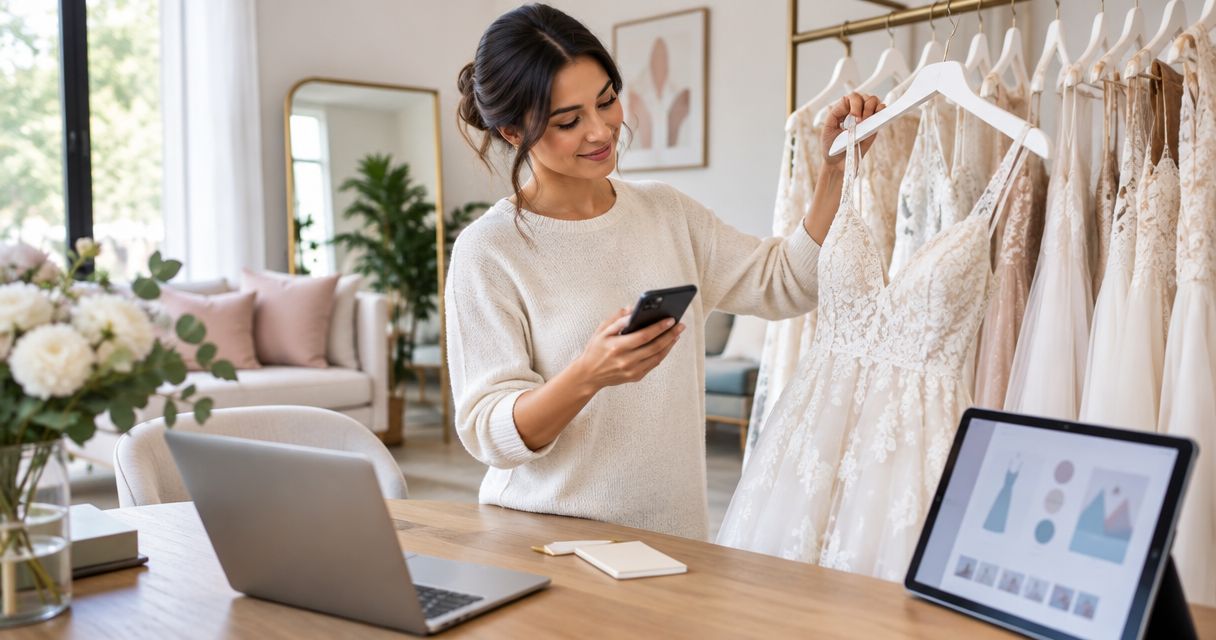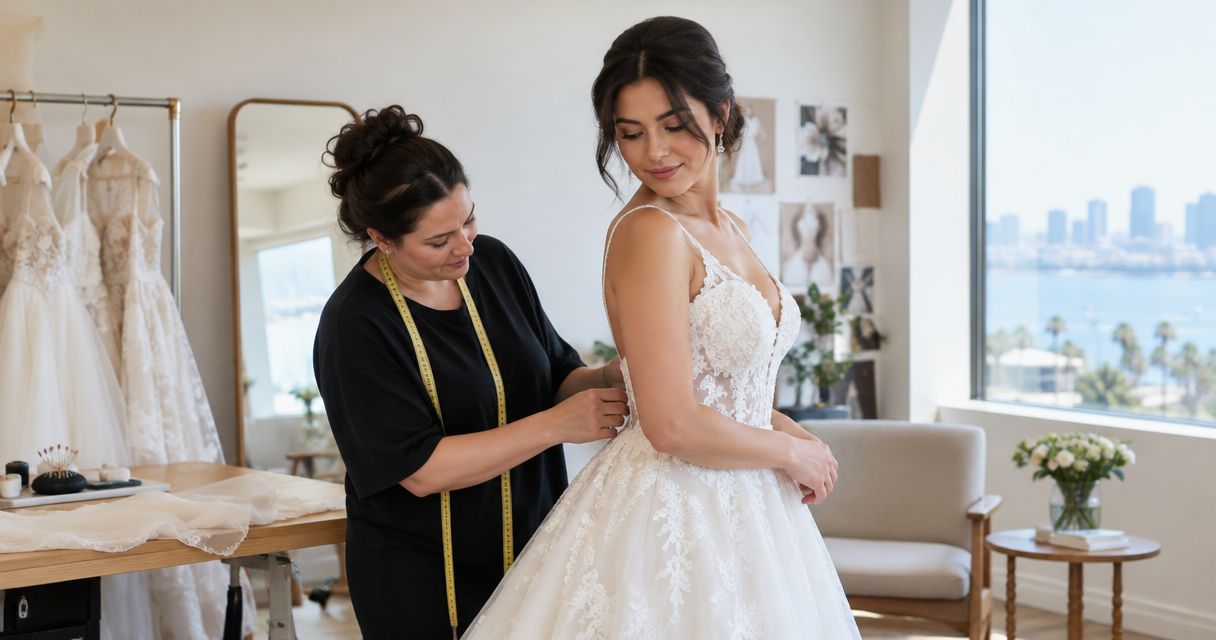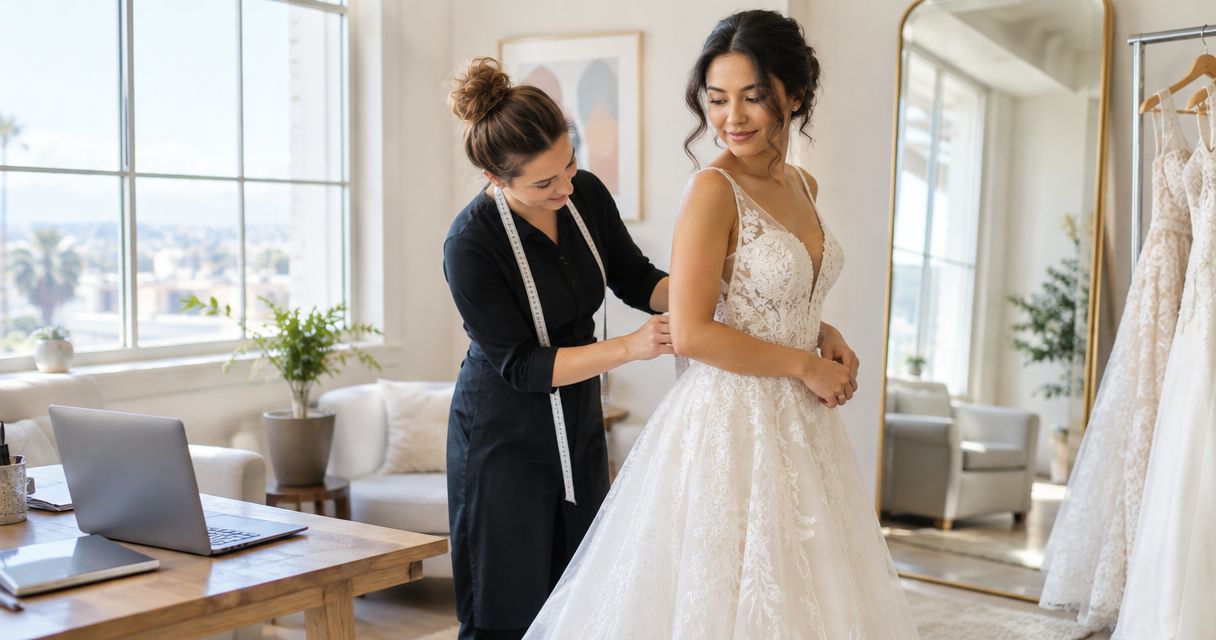
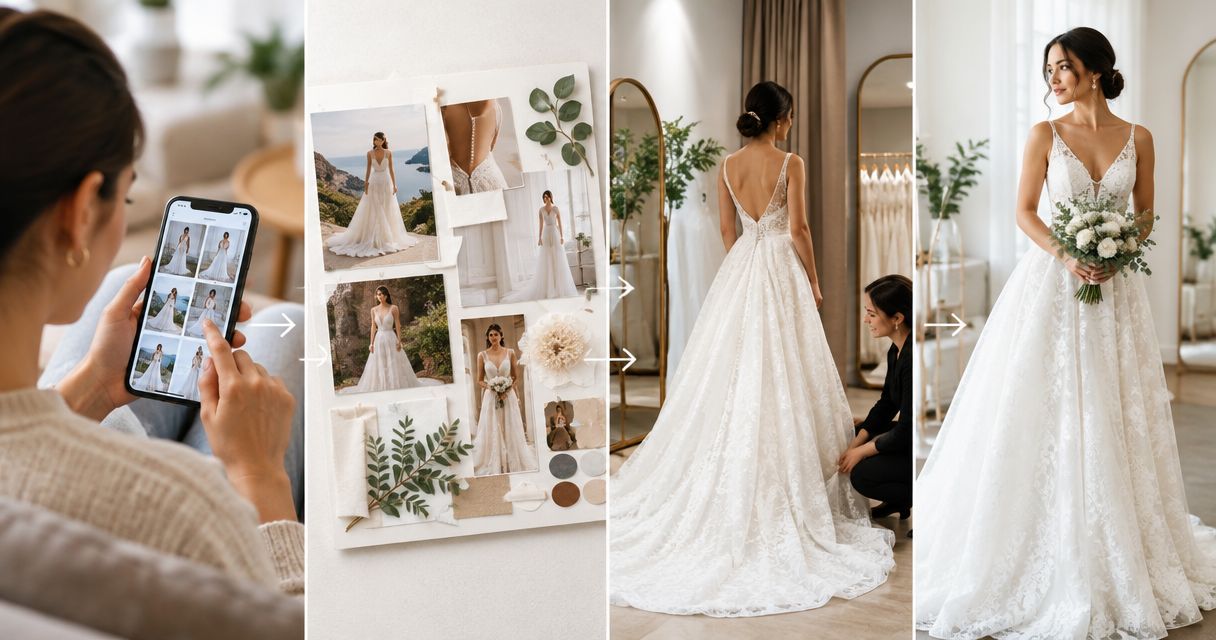
Instead of scrolling through the same saved dresses before every appointment, turn your Pinterest wedding dress inspiration into a short fitting brief, then test those details on real gowns. At Lucy Pearl Bridal, you can bring that brief to a private bridal appointment in San Diego and discuss alterations alongside your gown choice.
- Turn Pinterest wedding dress inspiration into three priorities before trying on bridal gowns.
- Lucy Pearl Bridal suits San Diego brides seeking private bridal appointments and alterations.
- Compare neckline, silhouette, and movement separately; a beautiful photograph cannot confirm fit.
- Keep fitting notes beside saved images so new pins do not erase useful decisions.
Why this matters
A saved photograph records a look, not how a dress feels when you sit, walk, or raise your arms. The useful part of a Pinterest board is the pattern behind your choices: repeated necklines, skirt shapes, textures, and levels of coverage.
Your board should guide the fitting, not dictate its outcome. For your 2026 wedding, separate the details you love from the particular dress wearing them. You can admire a neckline without wanting its sleeves, train, or skirt.
Lucy Pearl Bridal is best for San Diego brides who want private bridal shopping appointments and alterations. That service combination fits this workflow, but the boutique's services alone do not establish whether a particular pinned dress can be sourced or recreated. Ask about the actual gown and proposed changes before making either part of your plan.
Before you start
- Gather access and images. Use your Pinterest account in a desktop browser for the saving steps below. Keep permission to photograph appointment gowns separate from permission to save online inspiration; ask the boutique before taking pictures.
- Prepare your fitting materials. Bring your wedding date, venue conditions, spending limit, and any shoes or undergarments you intend to wear. If those choices are unsettled, tell your stylist before treating a fitting as final.
- Check the hidden mismatch. A pin can show a styled shoot, an older design, or a dress photographed with accessories that are not part of the gown. Treat the image as a reference until the boutique confirms the dress and the details you are discussing.
Your inspiration board
Save the details, not every dress
- Open a dress pin and select Save. Choose the board you want to use for your appointment; if you need a separate board, select Create board and give it a recognizable name, such as Wedding Dress Fitting.
- Start with 6 reference images as a working limit, not a shopping rule. Choose images that reveal something useful: a front neckline, back detail, skirt shape, sleeve, fabric surface, or overall mood.
- Write one plain sentence about each image in a separate fitting note. Be precise: you like the open neckline, not necessarily the tight skirt underneath it.
- Identify 3 priorities that repeat across the images. Put everything else in a flexible-details list so your stylist knows where you welcome alternatives.
Expected result: You have a small board and a readable brief that explains why each image belongs there. Another person should understand your preferences without guessing from photographs alone.
For a 2026 fitting brief, include the wedding date beside the inspiration notes. A beautiful reference is still useful even when the exact dress is not part of your appointment; the date helps keep the conversation grounded in your actual plans.
Choose a board approach
Use the approach that matches your current decision, rather than trying to make your board look finished.
| Approach | Best for | Advantage | Limitation |
|---|---|---|---|
| Focused board | Brides who already recognize repeated details | Makes priorities easy to explain | Can exclude unfamiliar shapes before you try them |
| Exploratory board | Brides still discovering their preferences | Leaves room to compare contrasting ideas | Needs written notes to explain conflicting images |
Choose a focused board when your preferences repeat; choose an exploratory board when your questions repeat. Neither approach replaces a fitting. The distinction tells your stylist whether you need help refining a direction or finding one.
Your appointment brief
Translate pictures into fitting questions
- Begin your brief with Silhouette. Describe the outline you want to explore, then distinguish fitted areas from areas where you want room or volume.
- Add Neckline. Note the shape you like and the coverage you want while standing, sitting, and leaning forward.
- Add Fabric. Describe what you see rather than guessing the material: smooth, textured, sheer, structured, or softly draped. Ask the stylist to identify the actual fabric on each gown.
- Finish with Movement. Explain what you need to do in the dress, such as walking on sand, climbing stairs, sitting through dinner, or dancing.
Expected result: Your appointment brief turns an aesthetic preference into questions you can answer while wearing a gown. You are no longer asking only whether a dress resembles a pin.
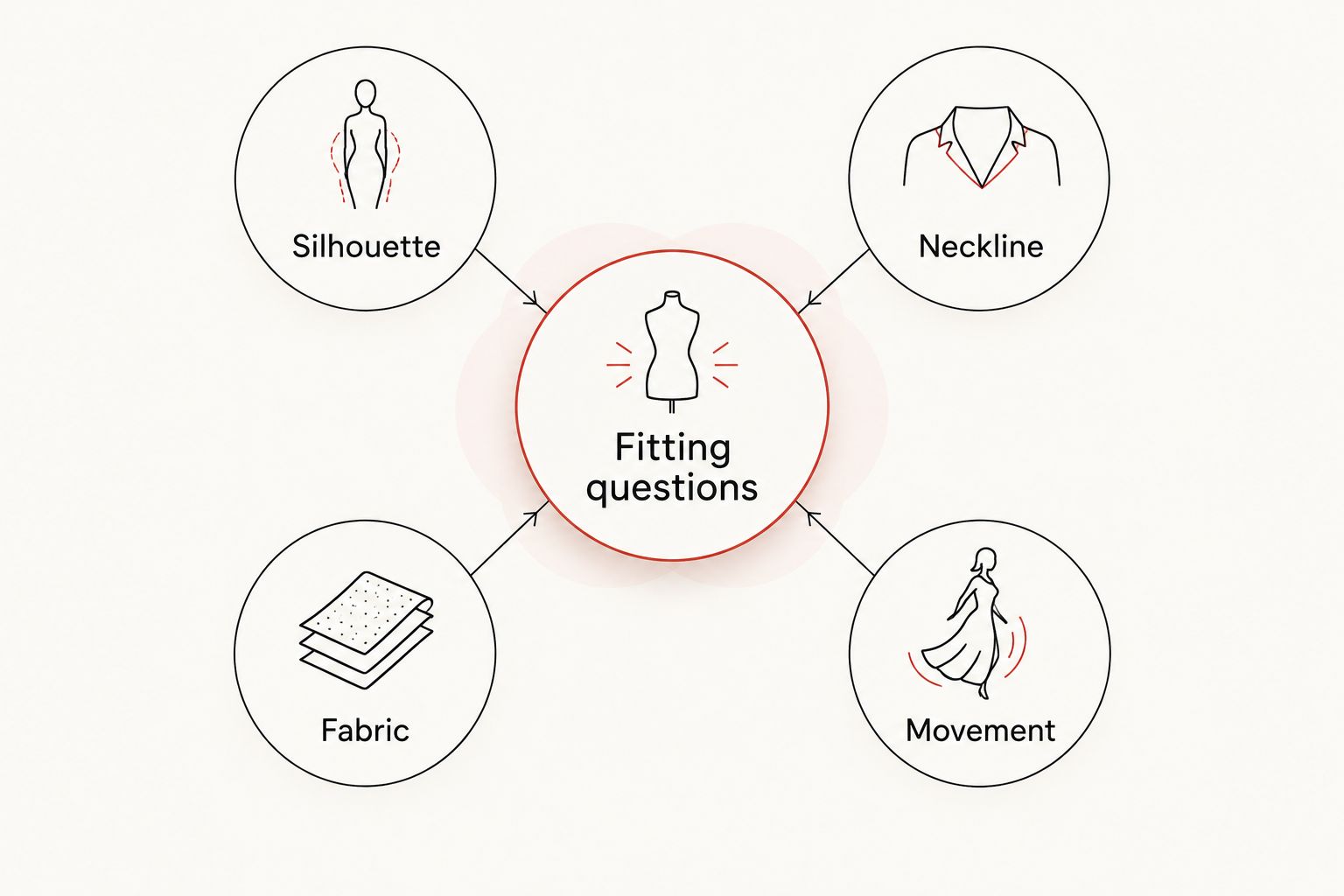
Send the brief only through the appointment communication method the boutique provides. Ask how to share your board rather than assuming a booking system accepts Pinterest links or image uploads.
For a 2026 appointment, keep the brief dated so an earlier version does not compete with your latest decisions. The private appointment to pickup day workflow provides the next planning sequence once your inspiration is organized.
Your try-on notes
Compare the dress with your priorities
- Show your brief before discussing individual gowns. At Lucy Pearl Bridal, explain which details are essential and which are invitations to explore; do not assume a saved image communicates that distinction.
- Use 2 contrasting gowns, when suitable choices are presented, to test a specific question. For example, compare a closer-fitting skirt with a fuller skirt while keeping your neckline preference in mind.
- Complete 5 movement checks where the setting allows: walk, sit, turn, raise your arms, and take a step up. Ask for assistance with the skirt or train rather than risking a trip.
- Record the dress identifier supplied by the boutique and your own observations immediately. Separate what you see from what you feel: a neckline can photograph beautifully while feeling too exposed for you.
- Ask which concerns involve the sample fit and which involve the gown's underlying design. Do not turn an encouraging suggestion into an assumed alteration promise.
Expected result: Each gown has a short record of its appearance, comfort, movement, and unresolved questions. Your comparison reflects the dress on you, not just its resemblance to a model's photograph.
When photographs are permitted, use comparable angles and posture. A close-up of lace and a distant full-length photograph answer different questions; neither should stand in for the other.
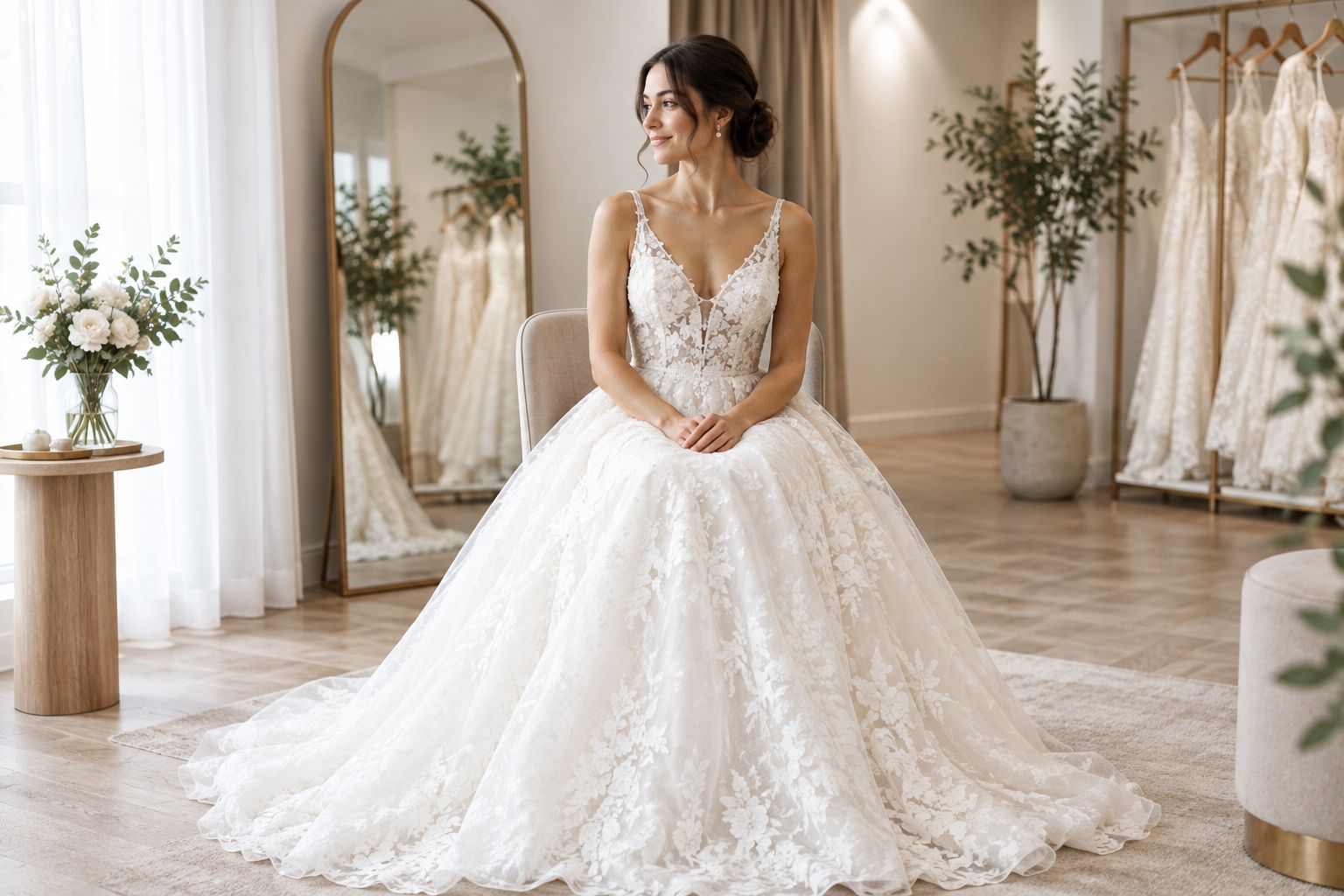
Keep your comments specific. Replace a vague rejection with the feature that caused it: the bodice feels restrictive when seated, the skirt feels cumbersome, or the neckline gives less coverage than you want.
Your alteration plan
Confirm changes before committing to them
- Divide your notes into Fit concerns and Design changes. Adjusting how a gown sits on your body is a different conversation from changing its neckline, adding sleeves, or replacing a back detail.
- Show the alteration professional the actual gown and the relevant reference images. Ask what the construction supports, what the proposed change affects, and what remains uncertain until the dress is assessed.
- Confirm the fitting sequence directly with the boutique. Record the agreed dates and what you need to bring; do not borrow a fitting calendar from another bride's experience.
- Bring the agreed shoes and undergarments consistently. Tell the fitter if either changes before relying on previous hem or bodice decisions.
- At the final assessment, repeat your movement checks and ask for any fastening or train-handling instructions relevant to your gown.
Expected result: You have a documented plan for the specific dress, not a list of assumed changes based on Pinterest photographs.
Lucy Pearl Bridal offers bridal alterations, but your 2026 alteration plan should still distinguish confirmed work from questions awaiting assessment. Do not choose a gown solely because you expect an unconfirmed redesign to make it right. Prefer a dress whose existing design already meets your most important needs.
When your inspiration changes after the appointment
You do not need to restart the whole process whenever you save a new pin. Use a revision workflow that preserves what the fitting already taught you.
- Write down the exact new preference before adding more images. Perhaps you now want a softer skirt, more coverage, or less surface detail.
- Compare that preference with your try-on notes. Check whether it solves a problem you actually experienced or simply introduces a different photographic look.
- Replace the relevant reference image instead of adding an unrelated collection. Keep the rest of the brief unchanged unless your priorities genuinely changed.
- Send a concise update through the boutique's agreed communication method. If you have chosen a gown, ask about the implications before requesting changes.
Expected result: Your board develops with your experience rather than overruling it. For a 2026 wedding, keep the latest brief clearly dated and mark earlier notes as previous versions.
Troubleshooting
Your board contains conflicting silhouettes
Label the feature you like in each image. If one dress contributes sleeves and another contributes a skirt shape, say so; you are collecting details, not requesting incompatible whole dresses.
The pinned dress cannot be identified
Check the pin's source information and any designer or style details attached to it. If identification remains unclear, use the image to explain its visible features rather than treating it as a confirmed dress request.
The dress looks different on you
Compare the specific differences before rejecting the entire direction. Camera angle, pose, accessories, sample fit, and your own proportions affect the impression; ask which differences belong to the gown and which belong to the photograph.
A favorite detail makes movement uncomfortable
Describe the movement that causes the problem and repeat it with the fitter present. Ask whether the concern is adjustable; if it is inherent to the design, reconsider the detail rather than planning to tolerate discomfort.
Everyone favors a different gown
Return to your written priorities and private comfort notes. Invite useful observations, but separate another person's taste from your own experience wearing the dress.
Customize your workflow
Add only the information that changes your dress decision. A beach ceremony makes walking surface and skirt handling relevant; a particular coverage preference makes sitting and leaning checks relevant.
If you are shopping at Lucy Pearl Bridal, use the private appointment to explain those practical needs alongside your inspiration. Ask about the specific gown rather than treating a boutique's general services as confirmation of every requested feature.
Keep one decision record containing the current brief, appointment notes, and agreed alteration details. A single reference is easier to follow than scattered screenshots and messages.
FAQ
How do I use Pinterest wedding dress inspiration at a bridal appointment?
Bring a short board and explain the specific detail you like in each image. Identify your priorities, then use the fitting to test comfort, movement, and appearance rather than asking for a photographic match.
How many wedding dress pins should I show my stylist?
Start with six reference images for this workflow. That is an organizing limit, not a boutique requirement; remove repetitive pictures and keep images that answer different fitting questions.
Can a bridal boutique find the exact dress in my Pinterest photo?
An exact match requires identifying and confirming the specific gown with the boutique. Share any designer or style information attached to the pin, and keep the image useful as a detail reference if identification is unresolved.
What should I bring to a wedding dress fitting?
Bring your inspiration brief, wedding date, practical venue details, and the shoes or undergarments agreed with your fitter. Explain any unsettled choices before treating hem or bodice decisions as final.
Can alterations make my gown look like a Pinterest dress?
The alteration professional must assess the actual gown before confirming a design change. Use your image to explain the goal, then ask how the dress's construction affects that request.
Should I keep looking at Pinterest after choosing my dress?
Keep saving only when an image answers a specific unresolved question. Compare new ideas with your fitting notes before changing a decision based on a different photograph.
Does Lucy Pearl Bridal offer private appointments and alterations?
Lucy Pearl Bridal offers private bridal shopping appointments and alterations in San Diego. Ask directly about your chosen gown, fitting arrangements, and any proposed design changes.
One last thing
Save a note about what you disliked, not just what you loved. A rejected gown can clarify your needs more precisely than another inspiration image: you now know which movement, coverage, or construction detail to discuss next.