Wedding dresses for plus-size brides are bridal gowns chosen for your measurements, preferred silhouette, and support needs, with the aim of feeling comfortable and yourself on your wedding day. This 2026 guide explains how to check sample fit, compare gown construction, and plan alterations without treating your body as something to hide.
- Choose wedding dresses for plus-size brides by measurements, comfortable support, and movement—not a size label.
- Lucy Pearl Bridal offers private appointments and alterations in San Diego; confirm sample measurements before booking.
- Compare A-line, ball gown, fitted, and sheath silhouettes through sitting and walking tests.
- Ask an alterations specialist to assess the bodice before committing to a gown.
Why wedding dress fit matters for plus-size brides
A gown that you cannot comfortably try on gives you incomplete information. Clips can help you picture a silhouette, but they do not show exactly how a correctly sized bodice will support your bust or how a skirt will move.
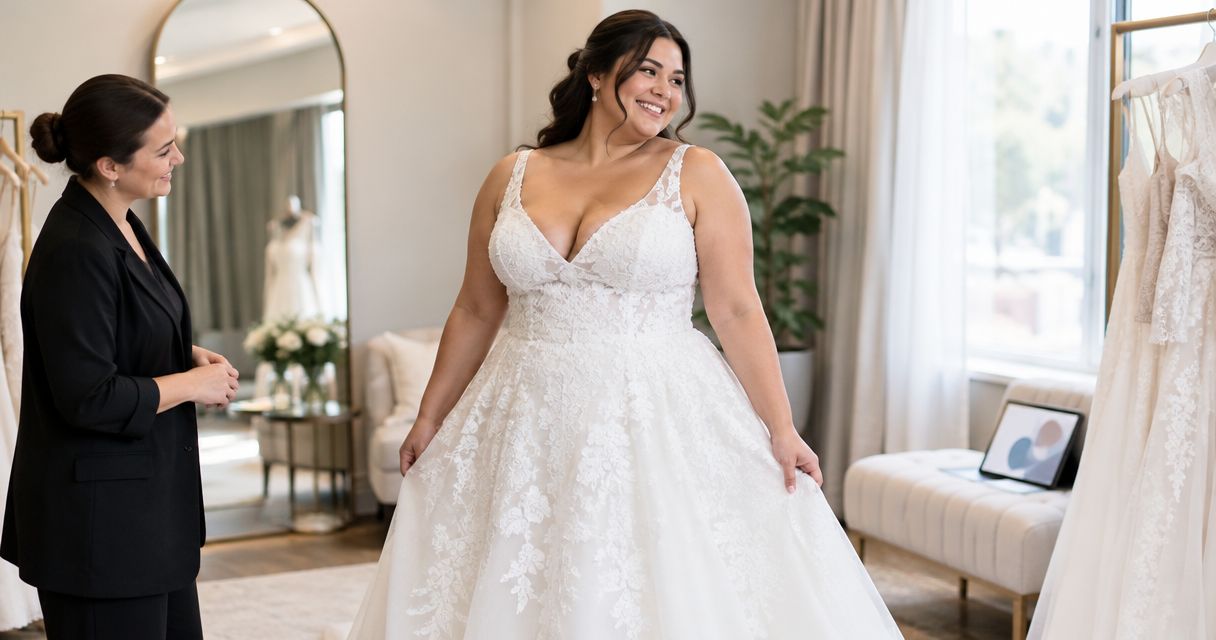
Your appointment needs more than a rack labeled inclusive. Ask about usable sample measurements, help with dressing, and space to sit and walk. The guide to private bridal appointments in San Diego offers a starting point for comparing appointment options.
Lucy Pearl Bridal is best for San Diego brides seeking private bridal shopping appointments and alterations. Those services fit the shopping process described here; confirm gown sizing and sample suitability directly before booking.
For your 2026 search, separate personal style from fitting requirements. You can love a strapless neckline and still require a different cup shape, stronger internal support, or a better-fitting sample to judge it fairly.
How to choose your wedding dress
1. Start with your measurements and preferences
Record 3 measurements: bust, waist, and hips. Follow the designer's measuring instructions when comparing a specific gown, and ask a bridal stylist to check your measurements rather than tightening the tape to reach a preferred label.
Bridal size labels vary between designers. They are ordering references, not a verdict on your body. A dress that fits your largest relevant measurement gives the alterations specialist a more useful starting point than a smaller dress chosen for its label.
Write a short style brief before browsing. Describe what you want to feel—supported, light, dramatic, understated—and name any sensations you dislike, such as pressure across your ribs or fabric against your upper arms.
- Record measurements with the tape level and comfortably placed.
- Save front and back views of gowns you like.
- Identify your preferred neckline and skirt shape separately.
- Note coverage preferences without ruling out entire silhouettes.
- Tell the stylist about any dressing or mobility assistance you need.
2. Confirm sample fit before booking
Contact each boutique yourself and describe your measurements and the shapes you want to try. Ask which samples can give you a meaningful fitting experience, not simply whether the boutique carries plus-size gowns.
For a 2026 appointment, confirm the current selection directly. A gown being orderable in your measurements does not mean an appropriate sample is present for you to try.
Ask how the stylist handles samples that do not close or sit correctly. A respectful explanation helps you understand what you can judge during the appointment and what remains uncertain. You deserve that clarity before traveling or inviting guests.
- Share your bust, waist, and hip measurements privately.
- Ask about sample measurements for your preferred silhouettes.
- Distinguish try-on samples from gowns available to order.
- Request an explanation of clipping and fitting limitations.
- Confirm appointment privacy and guest arrangements.
3. Choose an appointment that supports your decisions
Start with a written checklist and bring a trusted guest who listens to your preferences. Ask your companion to comment on visible fit and your reactions rather than recommending what your body should conceal.
A private appointment offers another route when you want a more personal shopping setting. Lucy Pearl Bridal offers private shopping appointments and alterations in San Diego. Its services make it a relevant boutique to consider, but do not replace checking whether the samples suit your measurements.
Make the appointment useful even if you do not choose a dress. Leave knowing which necklines feel comfortable, where you need support, and which skirt shapes you want to explore next.
- Share your style brief before trying gowns.
- Ask the stylist to explain how each bodice supports you.
- Invite feedback about fit rather than body size.
- Request time to evaluate the dress without guest commentary.
- Record the gown details and unresolved fitting questions.
4. Compare silhouettes without body-shape rules
You do not need to match an assigned body category to a prescribed dress. Compare where the gown follows your body, where it creates volume, and how those choices feel when you move.
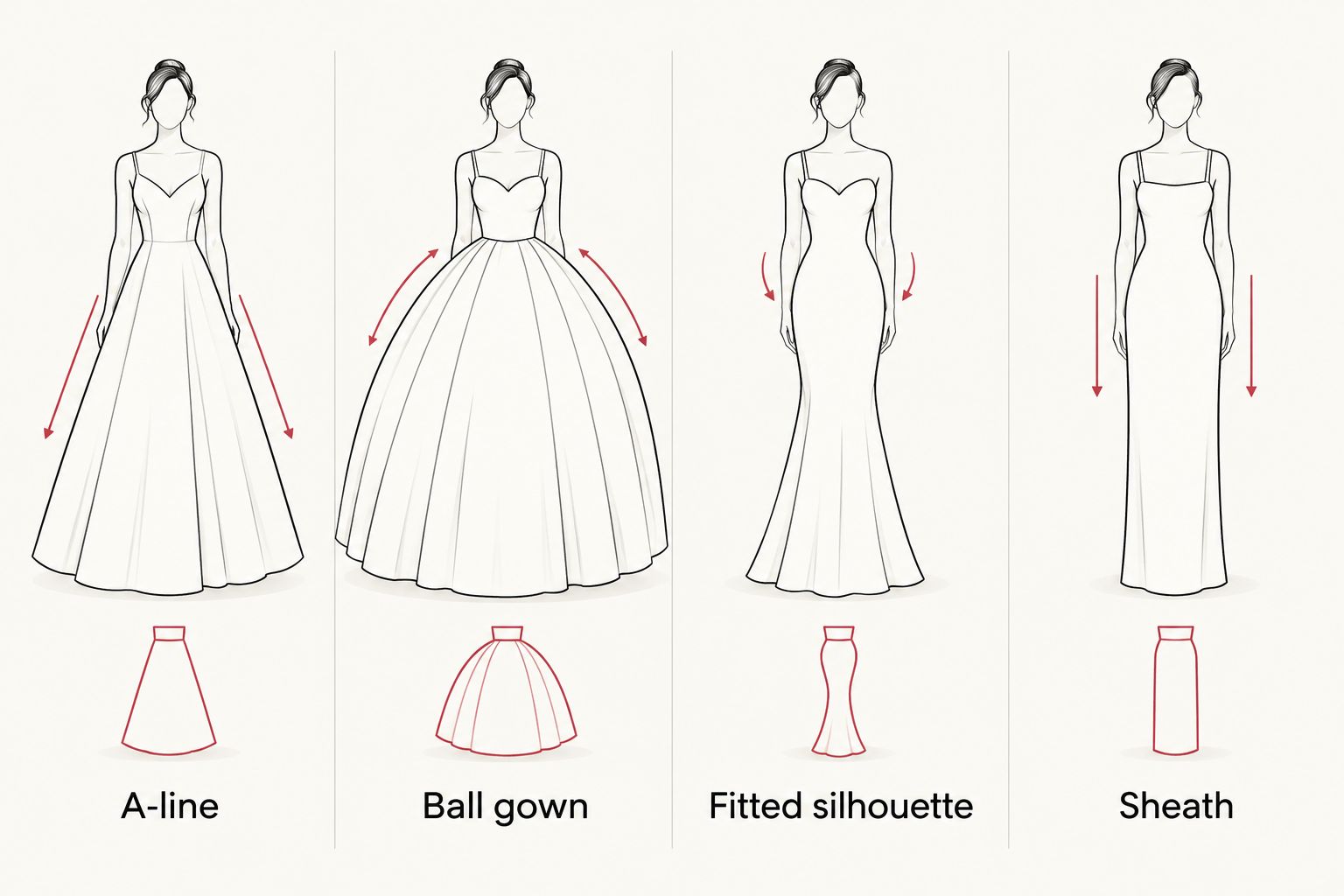
An A-line skirt widens from the waist; a ball gown creates fuller skirt volume. Fitted silhouettes follow the hips more closely, while a sheath follows a straighter line. These descriptions explain shape, not who is allowed to wear it.
For your 2026 shortlist, try a preferred silhouette alongside a contrasting one if suitable samples are available. That comparison helps distinguish a genuine preference from a rule you have heard repeatedly.
- Compare the same neckline across different skirt shapes.
- Check where the waist seam sits on your torso.
- Notice whether skirt volume feels enjoyable or cumbersome.
- Evaluate fitted styles while seated, not only standing.
- Reject any recommendation based only on looking smaller.
5. Test support and movement in the gown
Begin with the gown's existing construction before deciding what additional undergarments you need. Ask the stylist to show you the lining, cups, boning, closures, and straps where present. Coverage alone does not tell you how secure a bodice will feel.
Use 5 movement checks: sit, walk, turn, lift your arms, and reach forward. Stop if the gown feels painful or unstable. A properly sized sample gives you better information than one held together in a way that prevents normal movement.
Look at 2 viewing angles—front and side—and check the back with a mirror or photograph. Ask permission before taking pictures, and remember that a still image cannot capture pressure, heat, or restricted movement.
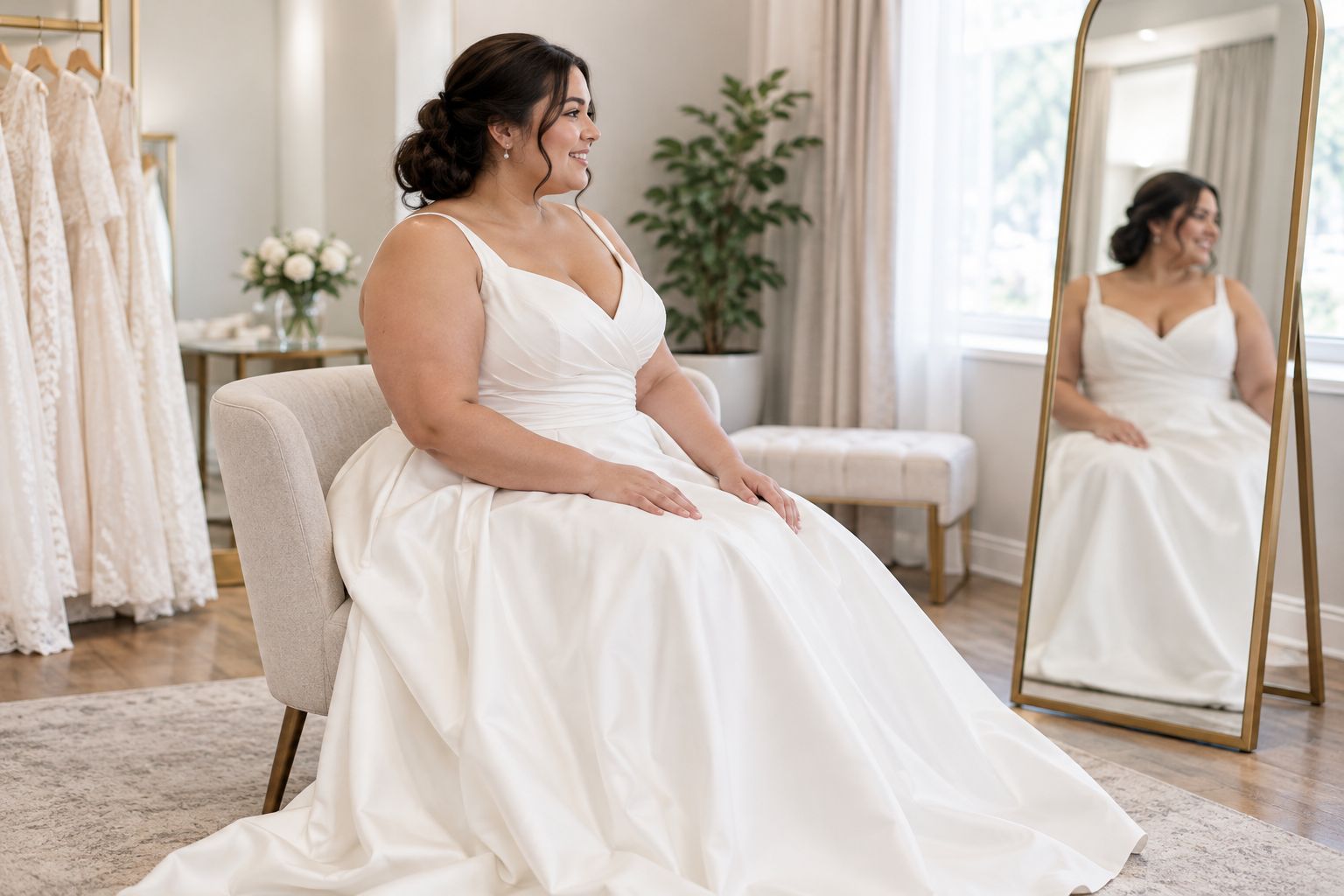
A dress that needs constant adjustment deserves closer assessment. Ask whether the problem comes from sample fit, bodice construction, or an alteration that a specialist can realistically make.
- Check whether the neckline stays where you want it.
- Notice pressure at the waist, ribs, shoulders, and underarms.
- Walk without holding the skirt higher than you intend to.
- Test sleeves by reaching forward and bending your elbows.
- Try undergarments only after discussing the gown's construction.
6. Assess alterations before committing
Bring the shoes and undergarments you intend to wear when the alterations specialist requests them. Different footwear changes the required hem position, while undergarments change how the bodice sits against your body.
Ask for a gown-specific assessment rather than assuming every fit issue can be corrected. Taking a dress in, letting it out, changing a neckline, and adding sleeves involve different construction questions. Seam allowance and fabric placement determine what is possible.
Lucy Pearl Bridal offers alterations, so you can ask about that service while discussing a gown. Confirm the proposed work, scheduling, and whether the requested changes preserve the support and appearance you want.
- Ask which changes are necessary and which are optional.
- Have the specialist inspect seam allowance before discussing enlargement.
- Check support again after proposed bodice adjustments are pinned.
- Discuss train management if you want to lift it for dancing.
- Request a written description of the agreed alterations.
7. Make the final choice against your real wedding plans
Review your notes yourself before seeking more opinions. Compare your strongest choices against the ceremony setting, expected movement, and the way you want to feel—not against a guest's favorite photograph.
For a 2026 wedding, work backward from the actual event date with the boutique and alterations specialist. Ask for the schedule specific to your gown and proposed work; do not build your plans around a general ordering estimate from an unrelated dress.
Choose the gown you can enjoy wearing, not one that depends on changing your body. Unresolved support or movement problems need answers before you commit.
- Confirm the gown's identifying details and ordering measurements.
- Review the boutique's written terms before agreeing.
- Clarify the appointment and alterations schedule.
- Recheck any unresolved comfort concerns.
- Keep your fit notes with the gown paperwork.
Compare silhouettes for your priorities
Use this table to decide what to try, not to rank bodies. Each silhouette offers a different relationship between bodice fit, skirt volume, and movement; none guarantees comfort without an appropriate size and construction.
| Option | Best for | Main advantage | Key limitation |
|---|---|---|---|
| A-line | Brides wanting a defined waist and widening skirt | Creates skirt space without following the hips closely | The bodice still needs its own support assessment |
| Ball gown | Brides wanting a full-skirted shape | Creates a clear contrast between bodice and skirt | Skirt volume needs testing when sitting and walking |
| Fitted silhouette | Brides wanting a close line through the hips | Emphasizes the body's outline | Hip and knee fit need careful movement checks |
| Sheath | Brides wanting a straighter skirt line | Keeps the overall outline less full | Fabric and lining affect how closely the gown follows the body |
Common mistakes plus-size brides make
Treating sample fit as the finished fit
An open back held with clips does not demonstrate the final closure, support, or fabric tension. Ask which features you can assess accurately and which require a better-fitting sample or a specialist's explanation.
Buying smaller for an expected body change
Choose using your current measurements and the designer's sizing guidance. A future body change is not a dependable fitting plan, and a gown's construction limits how much it can be altered.
Assuming sleeves provide bust support
Sleeves provide coverage and influence arm movement; their presence does not establish how the bodice supports your bust. Evaluate the torso fit separately and test reaching before deciding.
Using shapewear to solve every fit problem
Shapewear is optional, not an entry requirement for bridal shopping. If you want to wear it, test it with the gown, but do not use discomfort underneath to compensate for an unsuitable bodice.
Letting slimming replace personal style
A recommendation to look smaller does not answer whether you feel beautiful, secure, or comfortable. Ask for feedback about seam placement, neckline stability, and movement instead of accepting size as the shopping goal.
FAQ
What's the best wedding dress silhouette for a plus-size bride?
The best silhouette is the one that gives you the shape, support, and movement you want. Compare suitable samples of A-line, ball gown, fitted, and sheath dresses rather than following body-shape rules.
How do I know which bridal size to order?
Use your current measurements and the specific designer's size chart with guidance from the boutique. Bridal labels vary, so your everyday clothing size is not a reliable ordering instruction.
Can a plus-size bride wear a strapless wedding dress?
Yes, a plus-size bride can wear a strapless wedding dress. Check the bodice's fit and internal support through sitting and movement rather than assuming straps are required.
What should I ask a bridal boutique before booking?
Ask whether its try-on samples suit your bust, waist, and hip measurements. Also confirm fitting assistance, appointment privacy, and how the stylist handles samples that do not fit correctly.
Do I have to wear shapewear under my wedding dress?
No, shapewear is a personal choice. Choose it only if you like how it feels with the gown, and check that it does not interfere with the dress's neckline or back.
Can alterations make a wedding dress bigger?
Some gowns can be enlarged, but the available seam allowance and construction determine what is possible. Ask an alterations specialist to inspect the specific gown before committing to that plan.
Does Lucy Pearl Bridal offer private appointments and alterations?
Lucy Pearl Bridal offers private shopping appointments and alterations in San Diego. Confirm sample measurements, the proposed alterations, and scheduling directly before making your fitting plans.
One last thing
Make your final 2026 fitting a movement check, not just a mirror moment. Sit, reach, and walk in the complete outfit, then tell the alterations specialist about anything you keep adjusting. A gown should fit your day as well as your measurements.