
Instead of repeatedly answering questions about your wedding dress, organize one bridal dress resale record and confirm the receiving shop’s terms before handing over the gown. To explore selling through Lucy Pearl Bridal in 2026, start with an eligibility inquiry—not a drop-off or an assumption that a shopping appointment includes resale intake.
- For bridal dress resale through Lucy Pearl Bridal, confirm seller intake before arranging a handoff.
- Prepare wedding gown photos, alteration details, measurements, and a written condition record before contacting a shop.
- Do not transfer your gown until responsibility, sale authorization, payment, and collection terms are documented.
- Keep one current resale record so cleaning, repairs, or changed plans do not create conflicting descriptions.
Why this matters
A wedding gown carries details that a size label cannot explain: a shortened hem, changed straps, added cups, or a bustle. Your resale workflow needs to preserve those details from the first inquiry through the final handoff.
Lucy Pearl Bridal is best for San Diego brides seeking private wedding gown shopping and alterations. A seller inquiry is a separate request. Ask specifically about accepting a previously owned gown rather than treating an appointment confirmation as permission to leave it.
For your 2026 resale plan, separate three decisions: whether a shop accepts your gown, whether you accept its written terms, and whether you authorize the transfer. Keeping those decisions separate gives you a clear stopping point before committing.
Before you start
- Gather your records. Collect the gown label, any purchase documentation you retain, alteration notes, cleaning records, and your own contact details. Share personal documents selectively; remove unrelated payment and address information.
- Prepare access to the dress. You need the gown, good light for photographs, a measuring tape, and a place to keep your notes and correspondence together. No resale software account is necessary for this preparation workflow.
- Confirm intake before spending or traveling. Ask whether the shop accepts seller submissions and whether it wants photographs before an appointment. Do not book cleaning, repairs, or transport on the assumption that the gown will qualify.
The non-obvious issue is altered sizing. A label describes the garment’s labeled size, not its current fit; record both rather than replacing one with the other.
Gown record
Your first configuration unit is a reusable description of the actual dress. Create it in a document or notebook you control; the bold labels below are suggested record headings, not website form fields.
- Create a Gown identity section. Copy the designer, style identifier, labeled size, and color exactly as shown on the garment or documentation. Leave uncertain details unconfirmed rather than identifying a style from a similar photograph.
- Create an Alterations section. Describe changes to the hem, bodice, straps, sleeves, cups, closures, and bustle. Distinguish documented work from changes you only suspect.
- Create a Condition section. Inspect the exterior and lining, including the underarms, closure, hem underside, and train. Record marks, loose decoration, tears, missing fastenings, or discoloration without minimizing them.
- Prepare 6 photographs as a starting set. Photograph the front, back, label, hem, interior, and any affected area. Add close-ups when several details need separate views; this is a preparation recommendation, not a shop submission requirement.
- Record measurements with context. State whether each measurement came from the garment laid flat or from an alteration record. Do not present your body measurements as the gown’s measurements.
Expected result: you have one factual gown record that another person can understand without having attended your wedding or fittings.
Keep original photographs alongside any cropped copies. A close-up explains a mark; a wider view shows where it sits. Avoid filters that change fabric color or conceal texture.
Seller inquiry
The second configuration unit is permission to proceed. In 2026, ask Lucy Pearl Bridal directly about the seller process before arranging any gown handoff.
- Send an eligibility inquiry. Identify the gown and ask whether seller submissions are accepted. Ask how to submit photographs and whether the shop needs to review them before discussing an appointment.
- Clarify the arrangement. Ask whether any proposed transaction is an outright purchase, consignment, or another arrangement. These are different workflows; do not use the terms interchangeably.
- Request the intake criteria. Ask what condition information, documentation, cleaning evidence, or inspection is required. Obtain the requirements before arranging additional work.
- Confirm the next action in writing. Establish whether you should send more information, attend an assessment, or stop the process. Keep that answer with the gown record.
Expected result: you know whether there is a seller route for your gown and what the receiving business requires next. An unanswered inquiry is not acceptance.
If you need to consider another route, use the San Diego bridal consignment and resale guide to organize further inquiries. Confirm each business’s current seller terms independently.
Choose the transaction before planning the handoff
The following comparison describes transaction types, not confirmed services offered by any particular boutique.
| Route | Best for | Main advantage | Main limitation |
|---|---|---|---|
| Outright sale to a business | Sellers who want ownership transferred under an agreed purchase | Sale and transfer can be documented together | The business must agree to buy the gown |
| Consignment | Sellers willing to leave the gown with a business for an agreed selling period | A business handles the selling role described in its agreement | Ownership, custody, payment, and collection need separate terms |
| Direct sale to a buyer | Sellers willing to manage inquiries and the transaction themselves | You communicate directly with the buyer | You handle descriptions, questions, payment arrangements, and handoff |
Choose the route whose responsibilities you understand—not simply the route with the easiest first appointment. If a proposed arrangement is unclear, pause before transferring possession.
Agreement and handoff
The third configuration unit is the written agreement. A friendly conversation helps, but it does not replace an accurate record of who holds the gown and what happens next.
- Read the transaction terms. Confirm who owns the gown at each stage, who can authorize a sale, how payment is handled, and what deductions or charges require your agreement. Ask for unclear wording to be explained before signing.
- Clarify custody responsibilities. Ask how loss, damage, cleaning, repairs, and handling are addressed. For consignment, also establish how the agreement ends and how an unsold gown is collected.
- Confirm the exact items included. List detachable sleeves, straps, belts, overskirts, garment bags, or other pieces only when they are actually part of your transfer. Do not rely on a wedding photograph to define the contents.
- Create 2 dated condition records. Keep one before packing and another at handoff, with photographs and an item list. These are your own documentation checkpoints, not a claim about a shop’s intake policy.
- Obtain acknowledgment of receipt. Request a written record identifying the gown, included items, date, receiving party, and applicable agreement. Keep a copy that you can access independently.
Expected result: both parties can identify what changed hands, under which terms, and in what recorded condition.
For a 2026 handoff, use a complete date rather than a filename such as final-dress-photo. The same rule applies to revised descriptions: make the current version easy to distinguish from an earlier draft.
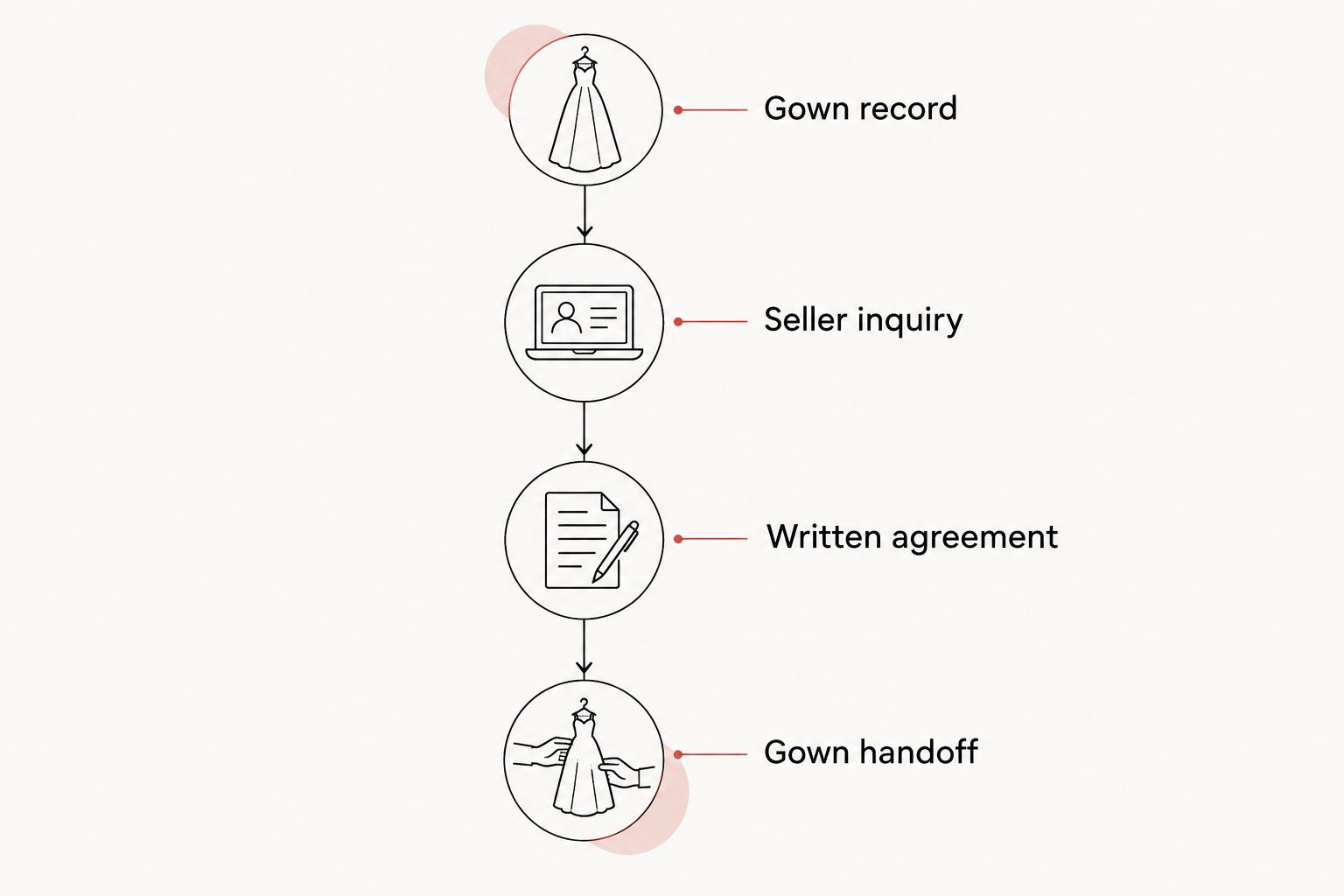
Sale tracking and closure
The final configuration unit is the status record. Keep responsibility visible after the dress leaves your home, especially when the arrangement is consignment rather than an immediate sale.
- Record the agreed status. Distinguish an inquiry, an assessment, accepted custody, an authorized sale, and a completed transaction. Use only the status supported by correspondence or signed documents.
- Set follow-ups from the agreement. Use the actual review, collection, or payment dates provided. Do not substitute an assumed standard timeline.
- Check changes before authorizing them. Ask for proposed repairs, description changes, or other decisions affecting your gown to be recorded according to your agreement.
- Close the file with evidence. Save the final payment confirmation, transfer record, or collection acknowledgment, as applicable. Remove sensitive personal information before sharing copies elsewhere.
Expected result: you can distinguish a gown being held from a gown sold, and a reported sale from a completed payment obligation.
Update the workflow after cleaning or alterations
A second workflow applies when the gown changes after your first inquiry. Cleaning, repairs, newly discovered damage, or removal of an included accessory can make an earlier description inaccurate.
- Revise the relevant record. Update the condition, alteration, or included-items section without deleting the previous dated version.
- Replace affected photographs. Show the current state of the changed area. Keep the earlier images in your private records.
- Notify the receiving party. Explain what changed and ask whether the previous assessment or proposed terms still apply.
- Wait for renewed confirmation. Do not assume that an earlier response covers a materially different gown or accessory set.
Expected result: the receiving party assesses the gown you are actually transferring, not the gown described in an outdated inquiry.
For a 2026 bridal dress resale file, one current summary is easier to use than scattered messages with contradictory details. Preserve the history, but clearly identify which description governs the next step.
Troubleshooting
Your shopping appointment does not mention seller intake
Confirm the appointment’s purpose before attending. Ask whether the booking covers a resale assessment, a bridal shopping visit, or something else. Do not arrive expecting a gown drop-off unless that action has been explicitly agreed.
The label size conflicts with the altered fit
Report both the labeled size and the alterations. Add garment measurements with the measuring method stated. Do not relabel the dress based on your usual clothing size or a guess about the next wearer.
A mark becomes visible after the first inquiry
Disclose it before handoff. Send an updated photograph and condition note, then ask whether the next step changes. Avoid attempting an unfamiliar stain treatment simply to preserve an earlier description.
The sale arrangement is described only verbally
Request written terms before transferring possession. Clarify whether the transaction is a purchase or consignment, who holds responsibility, and how it ends. If the answers remain unclear, keep the gown while you resolve them.
Your gown is also being offered elsewhere
Check for conflicting commitments before accepting another arrangement. Read any exclusivity provisions and ask how to withdraw or update an existing offer. Do not promise the same gown to two parties.
Customize your workflow
Adapt the record to the dress rather than forcing every gown into the same description. A detachable overskirt needs its own condition notes; an altered neckline needs a clear photograph and an explanation of the work.
Keep sentimental details separate from transaction facts. Your wedding story can matter personally, but the receiving party also needs a precise description of the fabric’s condition, alterations, and included pieces.
When contacting Lucy Pearl Bridal about bridal dress resale, make the request explicit: ask about seller intake, not simply an appointment. The next move is an eligibility inquiry supported by a clear gown record.
FAQ
Can I sell my wedding dress through Lucy Pearl Bridal?
Ask Lucy Pearl Bridal directly whether seller intake is offered and whether your gown qualifies. Confirm the submission process before booking an assessment or bringing the dress.
What should I prepare before asking about bridal dress resale?
Prepare clear photographs, label details, alteration notes, and an honest condition description. Keep supporting documents available, but remove unrelated personal and payment information before sharing them.
Does a private bridal appointment include a resale assessment?
Do not treat a private bridal appointment as a resale assessment unless the boutique confirms that purpose. Ask specifically about seller intake when arranging the visit.
Should I clean my wedding dress before contacting a resale shop?
Ask for the receiving shop’s requirements before arranging cleaning specifically for resale. Disclose the dress’s current condition and any cleaning already completed.
Can I resell a wedding gown that has been altered?
Disclose the alterations and ask whether the receiving party accepts the gown in its current form. Record the original label separately from current measurements and describe changes to the hem, bodice, straps, or other areas.
Is consignment the same as selling my gown outright?
No. An outright sale transfers ownership under the purchase terms, while consignment places the gown with another party to sell under an agreement. Confirm custody, authorization, payment, and collection responsibilities before proceeding.
What should I keep after handing over my wedding dress?
Keep the agreement, dated condition photographs, item list, and written acknowledgment of receipt. Retain subsequent updates and the final payment or collection record so the transaction has a documented ending.
One last thing
Photograph the underside of the hem before your 2026 resale inquiry. It is easy to overlook when the gown is hanging, yet a full-length front photograph does not show that area clearly. A beautiful overview and an honest close-up belong in the same record.