A wedding dress’s bridal dress resale value in 2026 depends on comparable completed sales, its condition, and its altered measurements—not the original receipt alone. The selling amount is also different from what you keep after any selling fees, cleaning, packaging, or shipping you agree to cover.
- For bridal dress resale, compare completed sales of matching gowns rather than treating asking amounts as proven value.
- Document wedding dress alterations and current measurements before listing a preowned gown.
- Choose direct resale for selling control; consider consignment when you prefer help managing the transaction.
- Lucy Pearl Bridal suits San Diego brides seeking wedding gowns, private shopping appointments, and alterations.
Why this matters
Treat resale proceeds as uncertain until a sale is complete. If you are buying your wedding dress in 2026, choose a gown you can afford without depending on a future buyer to balance your budget.
If you are selling, separate your emotional attachment from the information another bride needs. Your wedding photographs tell a story; clear garment photographs, measurements, and an honest condition description help someone decide whether the dress fits her plans.
For buyers comparing resale with an in-person bridal experience, Lucy Pearl Bridal offers wedding gowns, private shopping appointments, and alterations in San Diego. Lucy Pearl Bridal is best for San Diego brides seeking a bridal boutique with private shopping appointments and alterations. That is a different service from managing a private resale transaction.
How much does a wedding dress resale typically sell for in 2026?
Use evidence from comparable completed sales to assess a particular gown, rather than applying a fixed percentage to every wedding dress. An asking amount shows what a seller wants. A completed transaction gives stronger evidence of what a buyer accepted, provided the final amount is visible.
Start with the same designer and style where you can identify them. Then compare condition, current measurements, alterations, and what accompanies the dress. A gown with the same label but a substantially shortened skirt is not an interchangeable comparison.
Build your assessment in this order:
- Identify the gown. Check the designer label, style information, purchase paperwork, and any alteration records you have.
- Find relevant completed sales. Prioritize matching styles; use similar gowns only when you cannot find a closer comparison.
- Compare the actual garments. Note differences in measurements, fabric condition, missing components, and modifications.
- Separate proceeds from deductions. Check the selling channel’s current terms and identify the expenses you would cover.
- Set your decision point. Decide what you would accept before responding to an offer, not while negotiating under pressure.
For your 2026 comparison, keep a dated note of each example. Do not describe an expired listing as a completed sale unless its status confirms that outcome.
Direct resale: best for control over the transaction
Direct resale suits you when you want to write the listing, answer questions, and decide whether to accept an offer. Its main advantage is control over the presentation and negotiation. Its drawback is that you also handle the work of documenting the dress and arranging the transaction.
Before choosing a platform, read its current rules for seller fees, payments, shipping, disputes, and returns. Do not assume that an agreement in a message overrides those rules.
Choose direct resale if you are comfortable managing buyer questions and the handoff yourself. If that responsibility feels unwelcome, compare it with a consignment arrangement before publishing a listing.
Consignment: best for help managing the sale
Consignment suits you when you prefer a business to handle agreed parts of the selling process. The benefit is assistance; the trade-off is that your control and proceeds depend on the written agreement.
Ask what the business accepts, who sets the asking amount, whether reductions need your approval, and when payment follows a completed transaction. Also establish what happens if the gown remains unsold or you want it returned.
Choose consignment for clearly defined help, not an assumed sale outcome. Acceptance of a gown is not the same as a completed sale.
| Selling route | Best for | Main advantage | Main limitation | Check before committing |
|---|---|---|---|---|
| Direct resale | Sellers who want transaction control | You manage the listing and negotiation | You handle inquiries and sale arrangements | Platform rules, payment process, shipping responsibilities |
| Consignment | Sellers who want help managing the sale | A business handles the agreed selling tasks | The agreement determines deductions and decision rights | Written terms, payment timing, unsold-gown arrangements |
Why bridal dress resale value varies
A useful assessment describes the dress a buyer will receive now. These factors belong in your comparison and listing:
- Current condition. Disclose marks, damaged fastenings, loose embellishments, pulls, and visible wear. Photograph problem areas rather than relying on a general condition label.
- Altered measurements. Identify changes to the bodice, straps, sleeves, and hem. The original size label does not describe every alteration made afterward.
- Style identification. Include the designer and exact style when documented. Do not guess a style name from a similar photograph.
- Comparable sales. Distinguish confirmed transactions from active listings, and matching gowns from loosely similar designs.
- Included components. State whether detachable pieces or accessories shown in photographs are included. Keep separately sold items out of the implied offer.
- Selling terms. Explain the inspection, payment, delivery, and return arrangements allowed by your selling channel. Unclear terms leave important questions unresolved.
Your original purchase paperwork can help identify the gown. It does not establish what a different buyer will agree to pay in 2026.
How do I prepare my dress for a resale assessment?
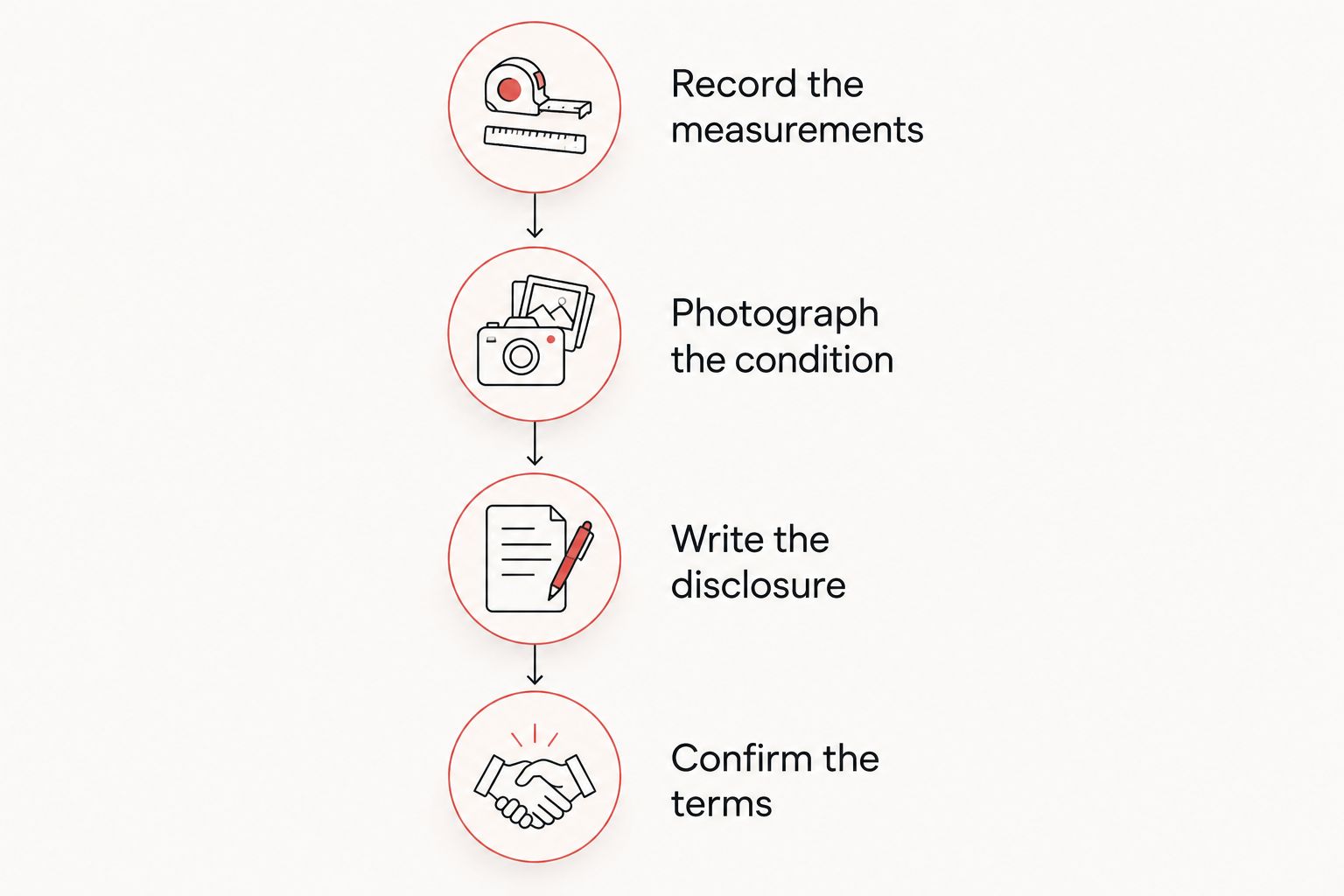
Prepare the dress so someone can evaluate both its appearance and its fit. Good documentation is more useful than a long description full of praise. Work through these steps before publishing.
Record the measurements
Record 3 measurements as a starting point: bust, waist, and skirt length. Explain how each measurement was taken, and include additional measurements relevant to the gown’s construction.
Distinguish body measurements from garment measurements. If you are unsure how to measure a structured bodice or an uneven hem, ask an alterations professional rather than presenting a guess as exact.
The wedding dress alterations guide for San Diego is useful context when you are considering fit changes. It is not a substitute for having the particular garment assessed.
Photograph the condition
Create 2 photo sets: full-gown views and close-up details. Show the front and back, then the hem, closures, lining, embellishments, and any damage you disclose.
Use photographs of the actual dress in its current condition. Wedding-day images can supplement those photographs, but they should not replace a current record of the garment.
Write the disclosure
Describe known alterations and remaining condition issues in plain language. If you know the hem was shortened but do not have a record of the fabric removed, say what you know without promising that it can be restored.
Include cleaning information only when you can document it. A storage box, garment bag, or neat appearance does not establish a particular cleaning treatment.
Confirm the terms
Write down what is included, who handles shipping or collection, and which transaction rules apply. Keep the listing, messages, photographs, and any shipping documentation together.
For a 2026 listing, review the current terms before accepting payment. Do not rely on what you remember from an earlier transaction.
Should I clean or alter a gown before selling it?
Assess the garment before paying for work intended to support a resale. Ask a bridal garment-care professional about visible marks, fabric suitability, and the proposed treatment. Do not promise a buyer that a stain will disappear unless that outcome has actually been established.
Keep cleaning and repair decisions separate from cosmetic changes. Repairing a broken fastening addresses a disclosed defect; changing the neckline introduces another modification that a future buyer must assess.
Avoid alterations made only to suit an imagined buyer. Without that buyer’s measurements and preferences, you cannot establish that the change will help the sale or recover its expense.
What should a buyer check before purchasing a resale gown?
Evaluate a preowned wedding dress as a specific garment, not just a designer name. Request current photographs and measurements, then compare those details with your own fitting needs.
Ask about known alterations, the hem length, fastening condition, and included detachable pieces. If the listing shows a veil or overskirt, confirm whether it is part of the transaction rather than assuming it is included.
An alterations professional can assess proposed changes, but do not assume every gown can be enlarged, lengthened, or reconstructed as you wish. Before committing, identify which fit questions need an inspection and which the seller can answer from records.
For your 2026 wedding plans, also account for the sequence of receiving the dress, assessing its condition, and arranging fittings. A dress being physically ready to ship does not mean it is ready for you to wear.
Can I count on reselling my wedding dress after the wedding?
Do not build your wedding budget around an uncompleted resale. You control how you care for and document the gown, but you do not control whether a buyer accepts your terms.
If future resale matters to you, retain the style information, purchase paperwork, and alteration records. After the wedding, inspect the gown before writing a listing so the description reflects its current condition rather than how it looked when purchased.
Is bridal dress resale better than shopping at a boutique?
Bridal dress resale is best for a buyer comfortable assessing a particular preowned garment and its transaction terms. A boutique appointment is best for a bride who wants an in-person gown-shopping experience; compare the actual services offered rather than assuming either route includes everything.
Lucy Pearl Bridal offers wedding gowns, private shopping appointments, and alterations in San Diego. If you are choosing between the routes, decide whether you want to manage a resale purchase yourself or seek the boutique services described here. Do not assume a boutique accepts a privately purchased gown for alterations without confirming that directly.
FAQ
How do I work out my wedding dress’s resale value?
Compare documented completed sales of the same style, then assess differences in condition, measurements, and alterations. Active asking amounts alone do not establish what buyers accepted.
Does the original receipt tell me what my dress will sell for?
The original receipt does not establish the dress’s resale value. Use it to support identification and purchase details, then compare the garment with relevant completed sales.
Can I sell a wedding dress that has been altered?
Disclose the alterations and current measurements when offering an altered wedding dress for sale. A prospective buyer needs to assess the dress as it exists now, not rely only on its original size label.
Is consignment better than selling my wedding dress myself?
Consignment suits sellers who want help managing agreed selling tasks; direct resale suits sellers who want more control. Compare the written terms, deductions, responsibilities, and payment arrangements before choosing.
Should I include my veil with my resale wedding dress?
State explicitly whether the veil is included or separate. If your photographs show accessories that are not included, identify them clearly in the listing.
What measurements should I ask for before buying a used wedding dress?
Ask for current bust, waist, and skirt-length measurements as a starting point, plus details relevant to the gown’s construction. Confirm how the measurements were taken and have unresolved fit questions assessed before committing.
What should I keep after selling my wedding dress?
Keep the listing, buyer correspondence, transaction record, condition photographs, and delivery documentation relevant to the sale. Follow the selling channel’s current requirements for completing and recording the transaction.
One last thing
The least glamorous photograph can answer the most important question. A close-up of the hem, lining, or fastening gives a buyer information that a beautiful wedding portrait cannot.
Before publishing, read your listing as someone who has never seen the gown. Replace vague praise with a detail she can check, and resolve anything that makes the dress sound different from what she will receive.