Sample sale wedding dresses cost the gown’s quoted amount plus any alterations, repairs, cleaning, and applicable tax needed to make it ready for your wedding in 2026. Judge the purchase by the finished, wearable gown—not the sale tag alone. Before you commit, get the condition, alteration plan, and purchase terms in writing.
- Compare sample sale wedding dresses cost using the finished-gown total, including alterations, repairs, cleaning, and applicable tax.
- Lucy Pearl Bridal suits San Diego brides seeking private wedding-gown appointments and alterations.
- Inspect the exact sample gown and get an alteration assessment before committing.
- Confirm purchase terms and your fitting schedule before paying.
Why this matters
A sample gown can be the dress you love without being the right purchase for your budget. A hem, damaged fastening, or complicated bodice change belongs in the decision before you buy, not after you have committed emotionally.
Lucy Pearl Bridal offers private bridal appointments and alterations in San Diego. You can explore Lucy Pearl Bridal if you want that setting for your gown search; ask specifically about sample-sale arrangements rather than assuming they match another boutique’s terms.
Your goal is straightforward: find a gown you love, understand the work it needs, and know whether the complete plan fits your budget and wedding date.
How much do sample sale wedding dresses cost in 2026?
The useful comparison is the total needed to purchase, fit, and prepare the exact dress you try on. An advertised gown amount does not explain its condition, what changes you need, or which services are included.
Ask for a written breakdown using the categories below. Keep essential work separate from optional styling changes so you can see what you must spend and what you can choose to leave out.
| Budget item | What to establish | Why it matters |
|---|---|---|
| Gown purchase | The amount for the exact sample you inspected | Another gown or size is not an equivalent quote |
| Fit alterations | The changes needed at the bodice, waist, straps, and hem | A dress that fastens is not necessarily fitted |
| Repairs | Any work needed on closures, seams, lace, or embellishments | Condition affects the work required |
| Cleaning | Whether cleaning is needed and who will arrange it | Visible marks need assessment before purchase |
| Train management | Whether you need a bustle or another workable arrangement | Your reception plans affect the alteration discussion |
| Applicable tax | What applies to your purchase | Your final payment should not surprise you |
| Optional changes | Any requested sleeves, neckline changes, or added detail | Personalization is separate from basic fit |
Keep shoes, undergarments, and accessories on a separate wedding-attire list. They still belong in your overall budget, but separating them makes it easier to compare dress proposals fairly.
Compare gowns by the work they need
The following are decision categories, not fixed sale tiers. Use them to discuss the exact gown in front of you rather than assuming every sample needs the same preparation.
| Gown condition and fit | Best for | Advantage | Trade-off |
|---|---|---|---|
| Close fit, no visible damage | Brides who want to retain the existing design | Fewer requested design changes to assess | Hem and fit adjustments still need review |
| Close fit, visible wear | Brides comfortable evaluating repair work before buying | The silhouette already works on the body | Cleaning and repairs need separate assessment |
| Major fit or design changes | Brides committed to a specific gown and alteration plan | Allows a discussion about a different finished look | Feasibility must be established before purchase |
Do not rank these categories by the sale tag alone. A dress that needs substantial changes deserves a different conversation from one that already fits your intended silhouette.
Why sample-sale wedding dress costs vary
For your 2026 search, focus on the features that change the work required. A gown’s label does not replace an inspection or an alteration assessment.
- Existing fit: Check the bust, waist, hips, and torso length. Ask which areas need adjustment and whether the construction permits it.
- Hem construction: Ask how the skirt’s layers, lace placement, or edge detail affect shortening. Do not assume every hem involves the same work.
- Bodice structure: Cups, boning, closures, and shaped seams affect how a bodice can be changed. Have the proposed adjustment explained on the actual dress.
- Condition: Inspect seams, fastenings, lining, embellishments, and the hem. Distinguish cosmetic marks from damage that needs repair.
- Cleaning needs: Ask for an assessment of visible marks before accepting cleaning as a simple finishing task. Do not treat an untested stain as a guaranteed removal.
- Requested redesign: Added sleeves, a changed neckline, or a different back are design requests, not ordinary fit corrections. Discuss them separately.
Choose the dress for the look you can realistically achieve, not the transformation you hope someone can perform. If a particular change determines whether you love the gown, settle that question before purchase.
How do you work out your own finished-gown budget?
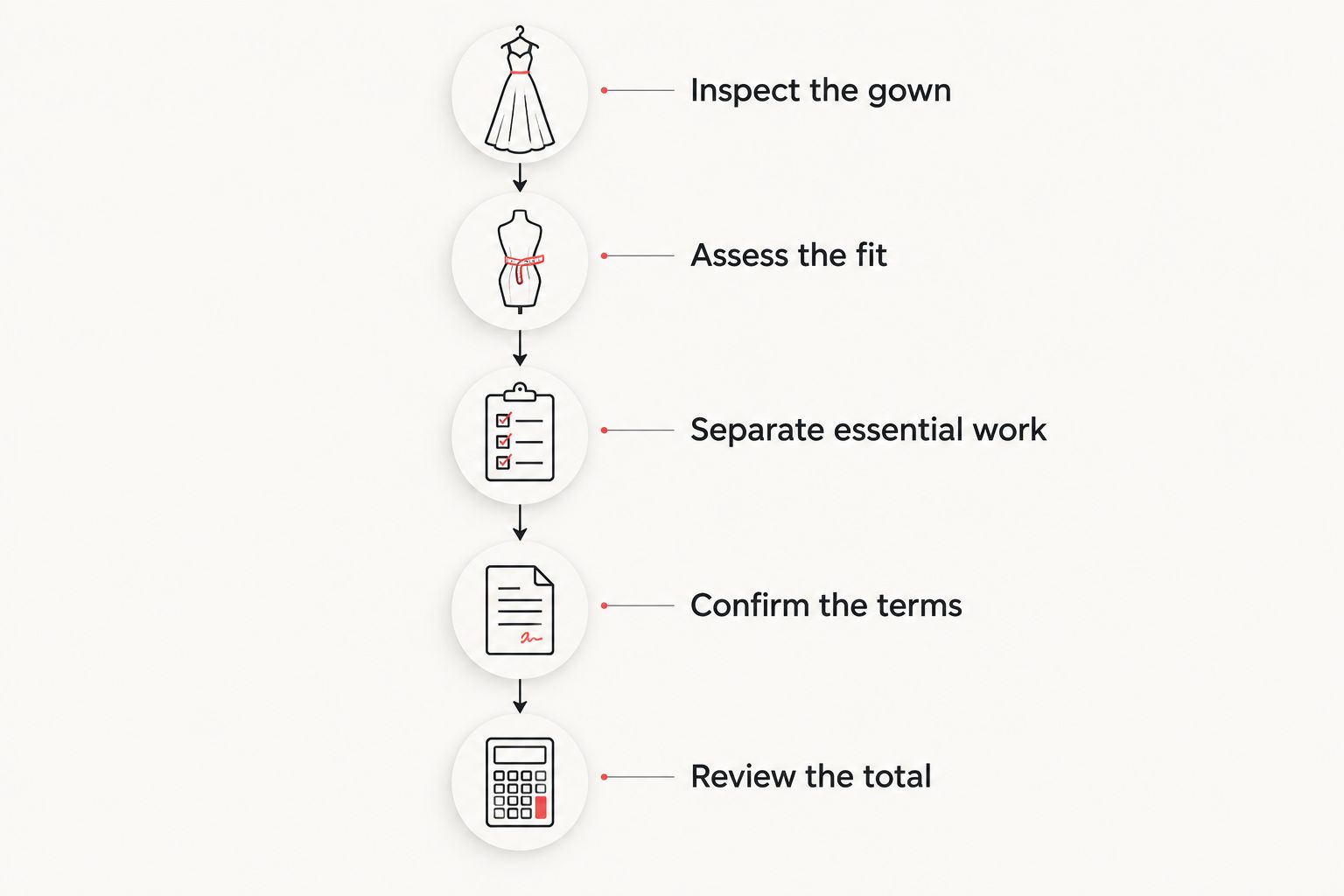
Use this sequence before paying for a sample. Each step answers a different question: whether you like it, whether it works, and whether the complete purchase makes sense.
Inspect the gown
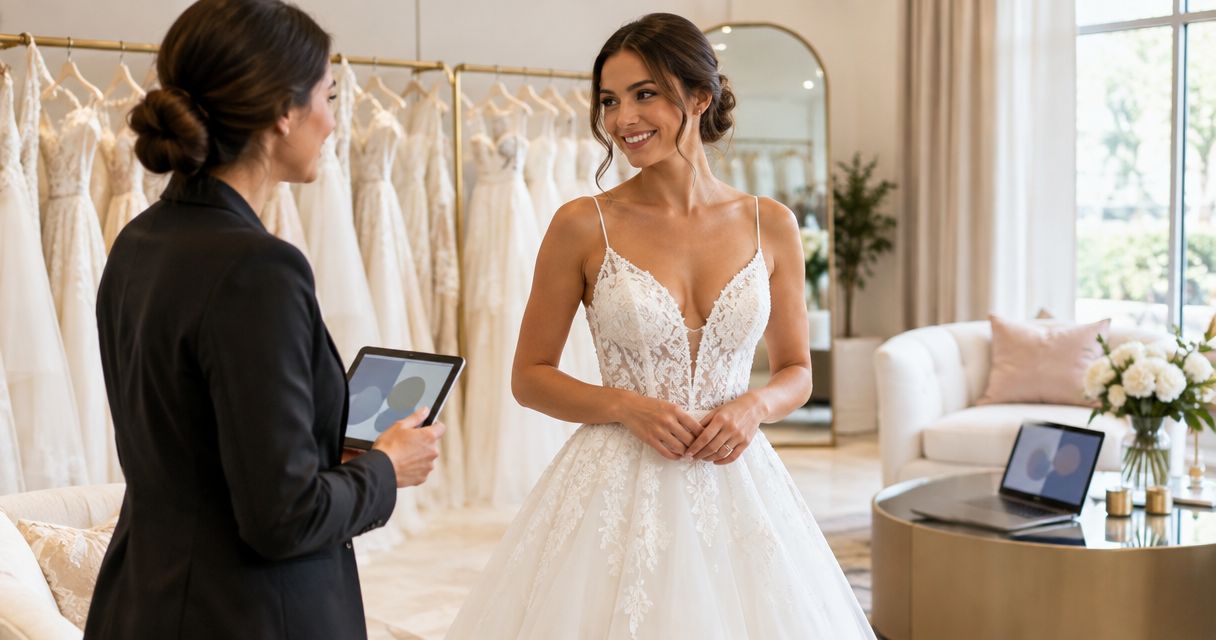
Look at the exact sample in good light, including the lining and underside of the hem. Check closures, seams, straps, lace, and attached details; ask the consultant to identify any known damage.
Photograph areas you want assessed, with the boutique’s permission. A general photo of the dress is less useful for a repair discussion than a clear view of the affected seam or fastening.
Assess the fit
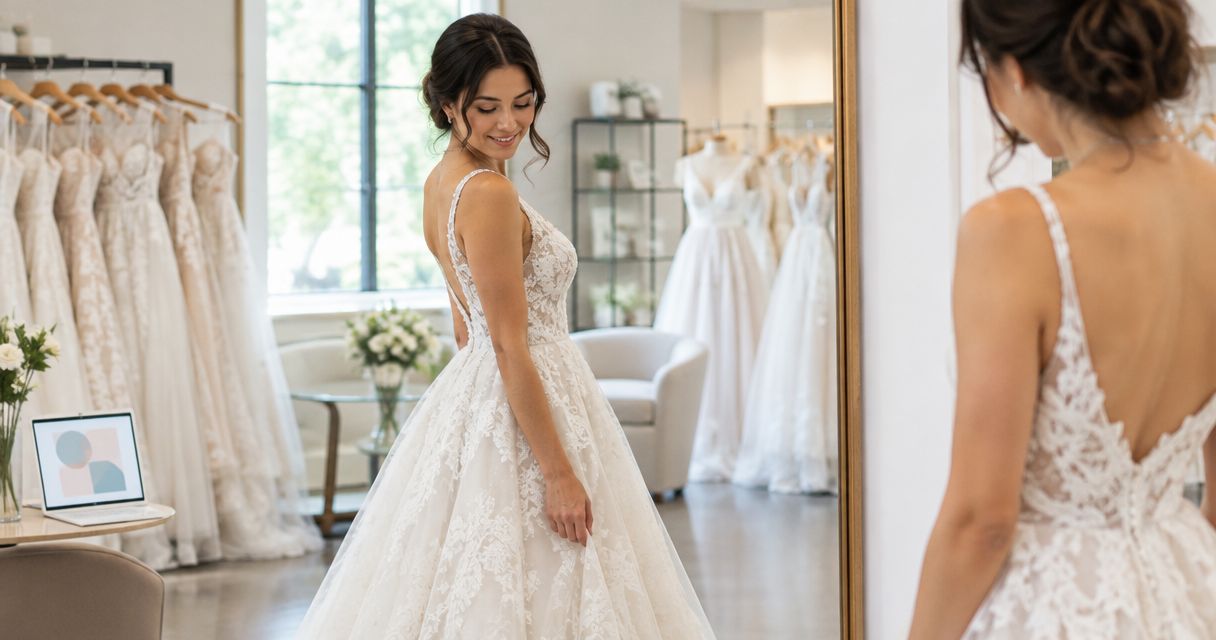
Try sitting, walking, and raising your arms within the limits of the fitting setup. Tell the consultant where you feel pressure, slipping, or restricted movement rather than relying only on the mirror.
Ask what the clips are demonstrating. A clipped silhouette shows a proposed fit; it does not establish that every visible adjustment can be reproduced through alterations.
Separate essential work
Write down what makes the dress wearable first: fit, length, functioning closures, and necessary repairs. Then list changes you want purely for appearance.
This distinction gives you a practical fallback. If an optional change does not fit your budget, you can decide whether you still love the original design rather than reconsidering the entire dress.
Confirm the terms
Ask what the purchase includes, when payment is required, and what happens if you change your mind. Read the written terms rather than treating another shop’s sample-sale policy as a guide.
Confirm who arranges cleaning and alterations, whether those services are separate, and when the dress can move into the next stage. Record any agreed work alongside the purchase paperwork.
Review the total
Bring the gown amount, alteration assessment, repair needs, cleaning plan, and applicable tax into the same decision. Keep optional changes visible rather than hiding them inside a single allowance.
For a 2026 wedding, connect that budget to an agreed fitting schedule. Your sample sale to altar workflow should account for the steps between choosing the gown and wearing it—not just the purchase itself.
What should you ask during a sample-sale appointment?
Bring questions that produce specific answers about the dress you are considering. A clear appointment conversation is more useful than a general promise that the gown can be altered.
- What condition issues have you identified on this exact gown?
- Which fit changes are essential, and which are optional?
- Who can assess whether my requested changes are feasible?
- Does this purchase include any preparation or alteration work?
- Who arranges cleaning, and how will visible marks be assessed?
- What are the written purchase and return terms?
- What fitting schedule works with my wedding date?
- What happens if the alteration assessment changes the planned work?
Take notes against each gown rather than relying on memory. If you try several dresses, details about a damaged closure or an included service can become difficult to distinguish afterward.
A clear answer can also be a reason to pause. If an essential repair or fit change still needs assessment, make that assessment your next step instead of treating the purchase as settled.
Is a sample-sale wedding dress worth it?
A sample-sale wedding dress is worth considering when you love the existing gown and understand the full preparation plan. Its strongest advantage is that you can inspect and try the particular dress being discussed, rather than make your decision from a description alone.
The trade-off is that you must assess that sample’s condition and fit. Do not let excitement about the sale replace the same care you would bring to any other wedding-dress purchase.
Ask yourself whether you would still choose the dress without focusing on its original ticket. If the answer depends on changing its entire shape, removing difficult marks, or accepting unresolved fit concerns, return to those questions before committing.
Can you alter a sample-sale wedding dress to fit?
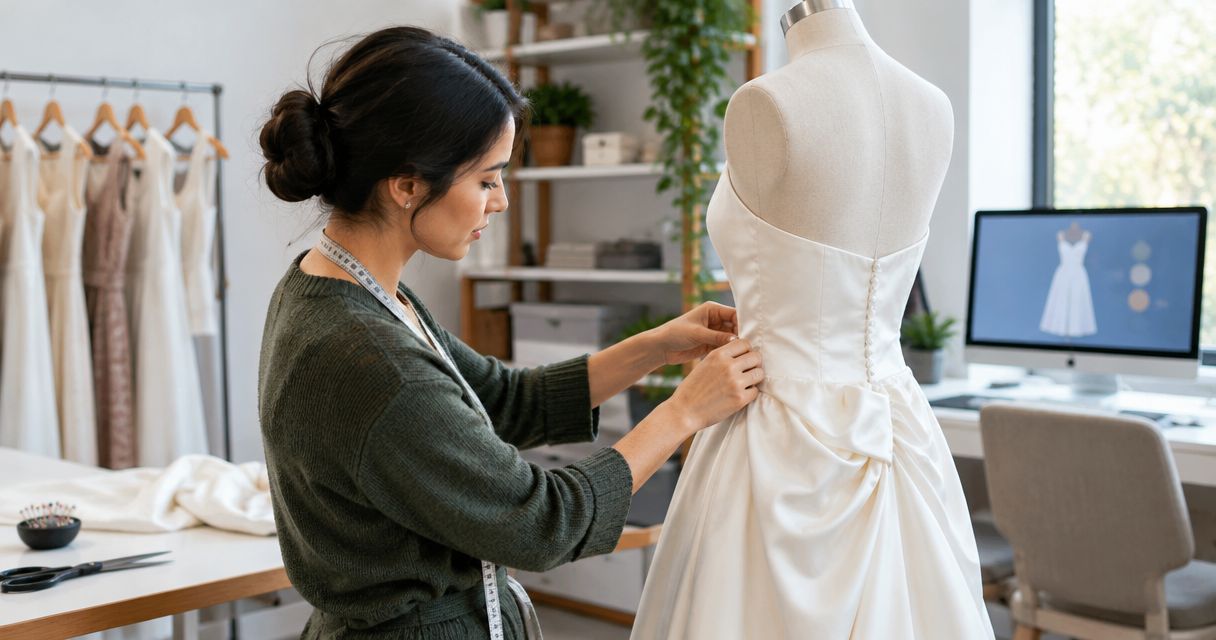
A sample-sale wedding dress needs an individual alteration assessment; its size label alone does not establish what changes are possible. Ask a bridal alterations professional to examine the construction, seam allowances, and intended fit before approving substantial changes.
Bring your intended wedding shoes when instructed for hem fitting, and discuss the undergarments you plan to wear. These choices belong in the fitting conversation because they affect how you assess length and support.
FAQ
How do I compare sample sale wedding dresses cost?
Compare the complete preparation plan for each gown, not just the sale tag. Include fit alterations, necessary repairs, cleaning, and applicable tax, while keeping optional design changes separate.
Are alterations included with a sample-sale wedding dress?
Do not assume alterations are included with a sample-sale wedding dress. Ask the boutique to state in writing which services belong to the purchase and which require a separate agreement.
Should I buy a sample wedding dress that is too big?
Buy a larger sample only after an alteration assessment confirms that the intended fit is feasible. A clipped fitting does not establish how the finished bodice, neckline, or proportions will look.
Can a sample wedding dress be made bigger?
Whether a sample wedding dress can be made bigger depends on its construction and available material. Have the exact gown assessed before purchasing it on the assumption that it can be enlarged.
Do sample-sale wedding dresses need cleaning?
Cleaning needs depend on the condition of the exact sample. Inspect visible marks and ask for an assessment rather than assuming cleaning is either unnecessary or guaranteed to remove every mark.
Can I return a sample-sale wedding dress?
Your purchase agreement determines the return terms for a sample-sale wedding dress. Read the boutique’s written policy before paying and clarify anything you do not understand.
Where can I discuss private bridal appointments in San Diego?
Lucy Pearl Bridal offers private wedding-gown shopping appointments and alterations in San Diego. Ask about sample-sale arrangements directly when discussing your appointment.
One last thing
Decide what you are unwilling to change before you shop. If you love a particular neckline, back, or lace edge, make preserving it part of your alteration discussion—not an assumption made after buying.
For your 2026 gown search, keep a short note beside each favorite: what you love, what must change, and what still needs an answer. The strongest purchase is the dress whose finished plan you understand and still feel excited to wear.