A consignment wedding dress is worth it in 2026 when you love the gown, its condition checks out, and the alterations work for your budget and wedding date. Cleaning, repairs, and changes to an already-altered dress belong in that decision—not just the amount on the tag.
- Is a consignment wedding dress worth it? Yes, when condition, fit, and alteration needs support the purchase.
- Inspect the actual gown; previous alterations matter more than the label size.
- Compare consignment, sample, and made-to-order gowns by the work each dress needs.
- Lucy Pearl Bridal suits San Diego brides seeking private bridal appointments and alterations.
Why this matters
A dress can look beautiful on a hanger and still require work you do not want to take on. A shortened hem, a changed neckline, or damaged lace affects your decision differently from a loose button.
Start your 2026 search with the individual gown, not the promise of a bargain. The guide to bridal consignment and resale shops in San Diego provides a starting point for comparing shopping routes; the inspection below helps you assess the dress itself.
Buy a dress you want to wear, not a restoration project you feel obliged to rescue. Your comfort and confidence count alongside the practical checks.
Is a consignment wedding dress worth it in 2026?
Yes—provided the actual dress passes your fit, condition, and alteration checks. Consignment describes a selling arrangement, not a guarantee that a gown is unworn, professionally cleaned, or suitable for your measurements.
A sample gown and a consignment gown are not interchangeable terms. A sample is used for trying on; a consigned gown is offered for sale on an owner's behalf, and its wear history needs its own explanation.
| Shopping route | Best for | Main advantage | Main drawback | What to verify |
|---|---|---|---|---|
| Consignment gown | Brides comfortable assessing an individual dress and its history | You can judge the actual gown being offered | Previous wear or alterations can restrict changes | Condition, cleaning history, measurements, and terms |
| Sample gown | Brides happy to assess a try-on dress | You can inspect the actual sample | Repeated try-ons can leave wear or damage | Closures, seams, embellishments, and alteration needs |
| New made-to-order gown | Brides who prefer to order rather than buy an existing individual gown | You can discuss the order specifications before committing | You must confirm production timing and still plan for fitting | Delivery estimate, sizing process, and alterations |
None of these routes removes the need for alterations. Choose the individual gown with the clearest path to a comfortable fit, rather than assuming its selling category settles the question.
A consignment gown: best for brides who love the actual dress
Consignment makes sense when the gown in front of you already feels close to what you want. You can examine its fabric, see its proportions on your body, and decide whether its existing details suit your wedding.
The drawback is that the dress has a specific history. Ask whether it was worn, altered, cleaned, stored, or repaired, and separate documented information from anything the seller cannot confirm.
A gown does not need a perfect history to be a good choice. It needs a condition and fit you understand well enough to accept.
A sample gown: best for brides comfortable inspecting try-on wear
A sample deserves its own assessment, even if it has never been worn at a wedding. Look closely at the zipper, neckline, underarms, lining, and embellishments rather than treating unworn as synonymous with untouched.
The advantage is being able to inspect the particular dress you are considering. The limitation is that try-on wear can still require cleaning or repair; ask who assesses that work before you commit.
A new made-to-order gown: best for brides who prefer an order
A new order suits you when you would rather discuss a gown's specifications than work around an existing dress's alterations. Confirm exactly what the order includes and how the boutique handles measurements.
The trade-off is planning around production and delivery rather than judging a finished gown that is already in front of you. For a 2026 wedding, get the relevant dates in writing and leave alterations as a separate conversation.
Why the value of a consignment dress varies
The same gown can be a sensible choice for one bride and the wrong project for another. These factors explain the difference:
- Existing alterations: A shortened hem or reshaped bodice changes what remains possible. Ask a bridal alterations professional to assess the actual construction.
- Fabric condition: Stains, tears, pulls, and discoloration need individual assessment. Do not assume cleaning will remove every mark.
- Construction: Lace placement, boning, lining, and embellishments affect how a dress can be changed. A simple-looking adjustment is not necessarily simple work.
- Your intended fit: Taking in an otherwise comfortable bodice is a different brief from changing a neckline or rebuilding support. Describe the result you want before accepting an alteration plan.
- Your wedding schedule: Cleaning, fittings, repairs, and pickup must fit your calendar. Confirm dates with the people doing the work.
- Purchase terms: Returns, holds, deposits, and responsibility for damage depend on the seller's agreement. Read those terms before paying.
How do you check a consignment gown before buying it?
Use these 3 checks to turn a promising try-on into a clear decision. Keep notes about the specific gown so you do not have to rely on how you felt in the mirror.
Check the condition
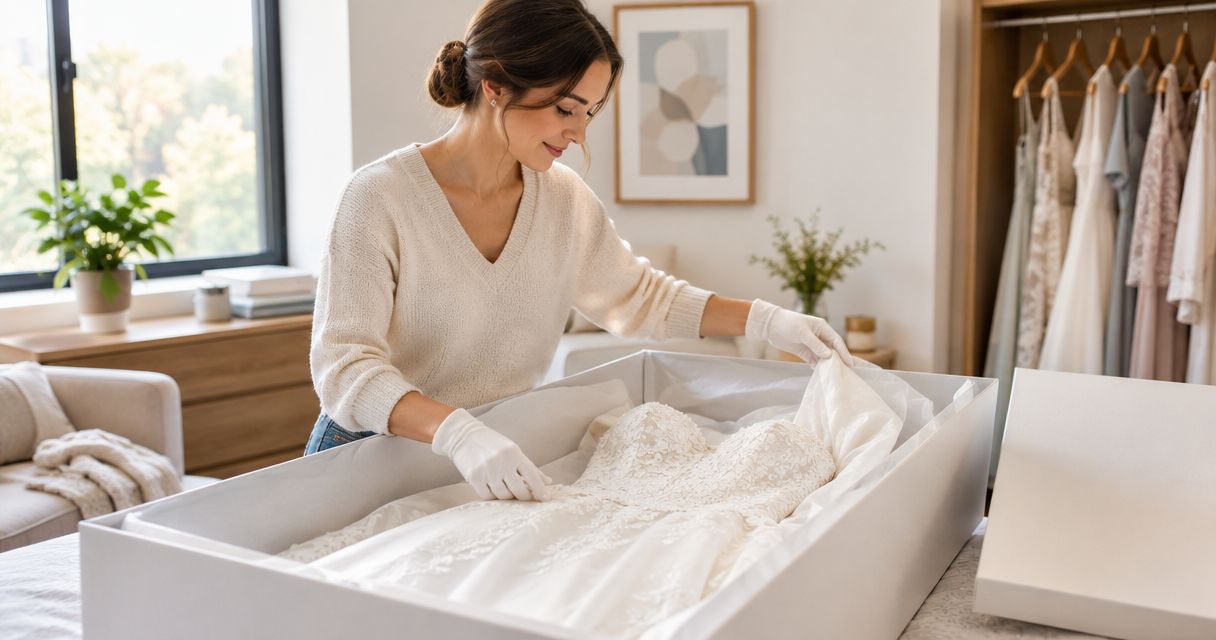
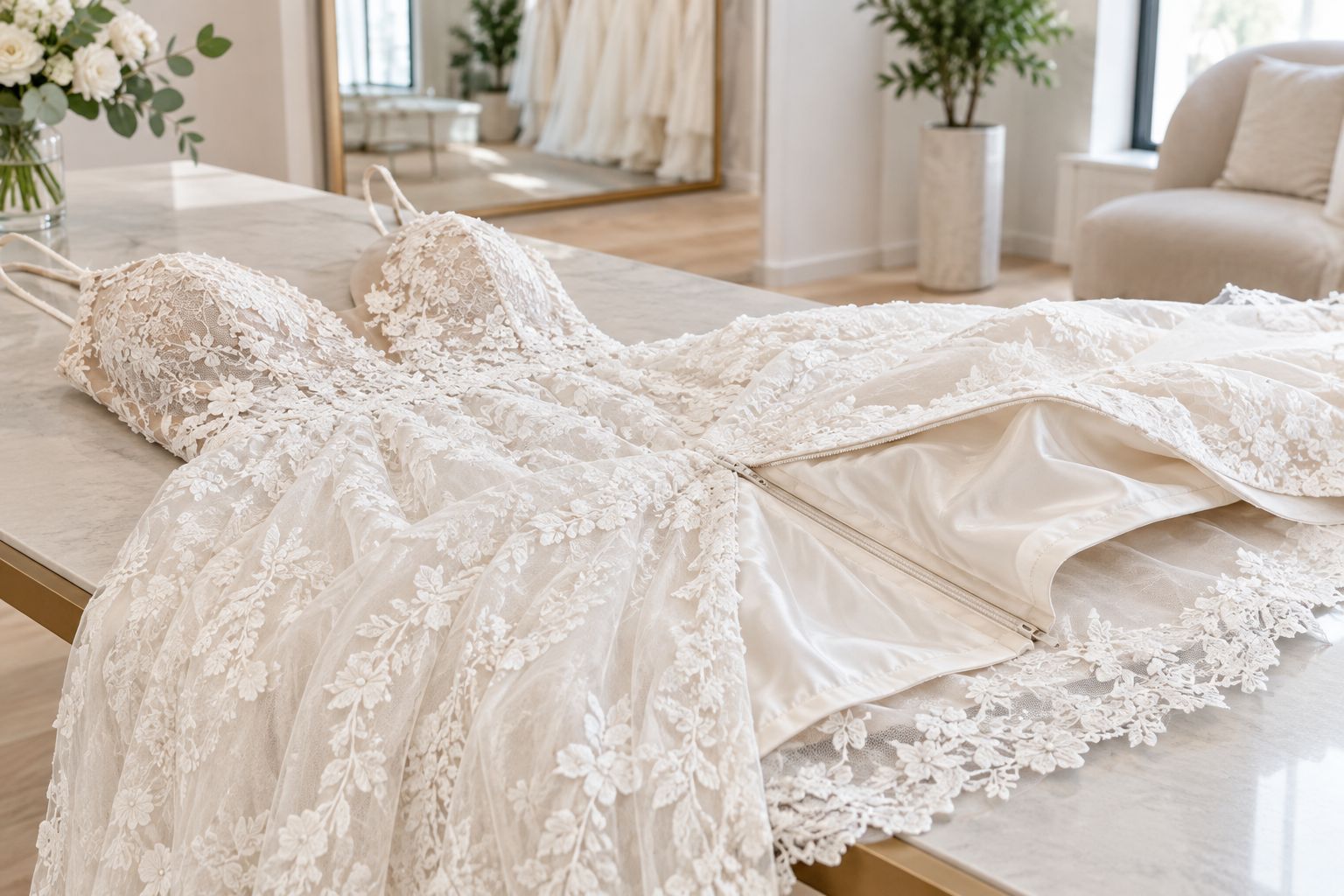
Ask to see the hem, train, lining, underarms, and closure in good light. Look beyond the areas that show in photographs: a mark inside the skirt still matters if it needs treatment or makes you uncomfortable.
Inspect beadwork and lace without pulling at them. Point out anything loose, torn, or discolored and ask whether a repair assessment is available; a verbal assurance is not the same as an agreed repair plan.
Check the fit
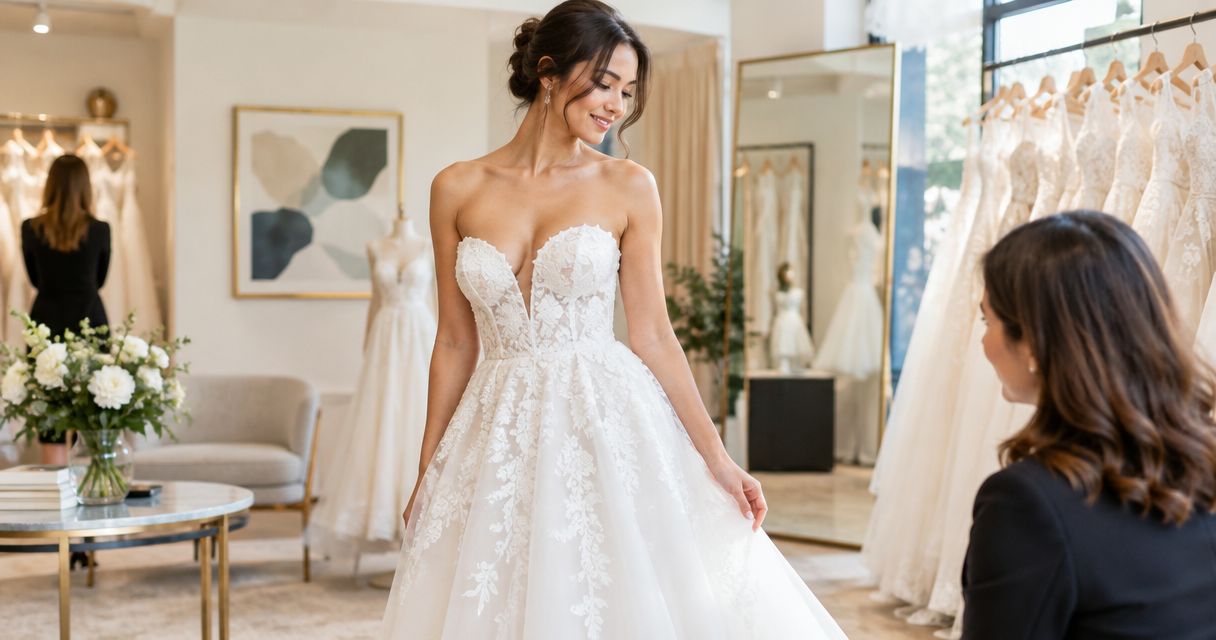
Try the gown with the shoes and undergarments you intend to use, or discuss suitable substitutes with your fitter. Stand naturally, sit down, walk, and raise your arms enough to assess the movements your wedding will involve.
Clips can help demonstrate a possible silhouette, but they do not prove that every adjustment is feasible. Ask what the dress needs to fit without clips and which changes require further inspection.
Check the work plan
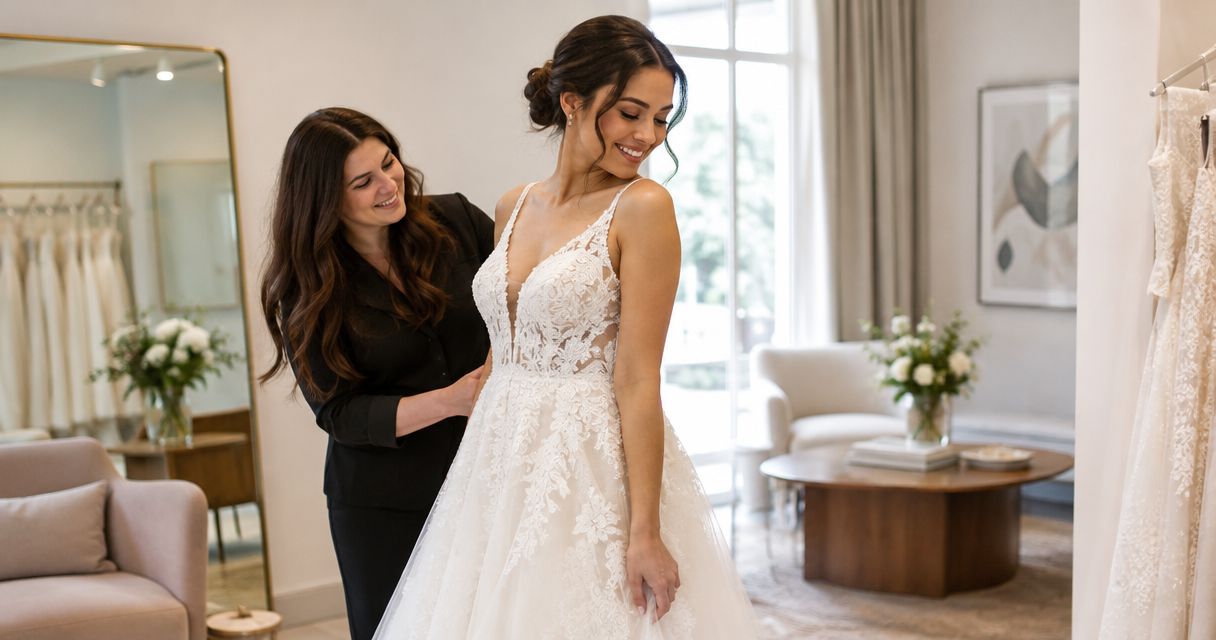
List the proposed alterations, cleaning, and repairs separately. Ask who will perform each task, when it will happen, and what happens if the initial assessment changes.
Do not commit on the strength of an unverified promise that the dress can be fixed. An assessment tied to the actual gown gives you something concrete to decide on.
How should you judge a previously altered dress?
Start with the hem and bodice, not the size label. A label does not describe what an earlier owner changed, and the original size does not establish the gown's current measurements.
Ask the fitter to identify seam allowances, existing seams, and any altered structural details. Letting out a dress depends on the material and construction available; it is not the automatic reverse of taking it in.
Length deserves particular attention. If a skirt has already been shortened, do not assume the original length can be restored, especially where the hem includes lace or other detailing.
Use 2 separate lists: changes you need for comfort and fit, and changes you would like for appearance. If the essential work is uncertain, decorative changes should not distract you from that problem.
When should you buy—and when should you walk away?
Buy when the dress works as a dress, not just as an idea. You should like its current character, understand its condition, and have a credible plan for the changes you need.
A sensible purchase has clear answers to these questions:
- Can you move comfortably, or has the fitter explained the adjustment needed?
- Have you inspected the actual gown rather than relying on earlier photographs?
- Do you understand the cleaning and repair work being proposed?
- Have you read the purchase terms and confirmed the relevant dates?
Walk away when a major question stays unanswered. An uncertain hem, unexplained staining, or a structural change nobody has assessed is a reason to pause—not a challenge you need to solve to earn your dream gown.
Emotional attachment matters, too. If you keep trying to persuade yourself to like the neckline, fabric, or silhouette, the selling arrangement will not make those preferences disappear.
Where does a private bridal appointment fit into the decision?
Lucy Pearl Bridal is best for San Diego brides seeking private bridal appointments and alterations. The boutique offers affordable, luxury wedding gowns; those services are relevant when you want to discuss both the dress and the work needed to make it yours.
A Lucy Pearl Bridal appointment is a place to explain your fit priorities and ask about the shopping process. Ask directly about consignment or resale rather than assuming every bridal boutique offers those arrangements.
Lucy Pearl Bridal's stated services do not establish a particular gown's history or purchase terms. Keep those questions attached to the dress you are considering, and confirm whether an outside gown can be assessed before making plans around it.
Discuss your bridal appointment
Ask about private appointments, gown shopping, and alterations in San Diego.
Is a consignment wedding dress better than a sample dress?
A consignment wedding dress is better only when the individual gown better matches your fit, condition, and alteration needs. Neither label establishes which dress has less wear or requires less work.
For your 2026 comparison, inspect both gowns using the same checklist. That keeps an appealing description from outweighing what you can actually see and verify.
Should you count on reselling your wedding dress afterward?
Do not count on a future resale to make today's purchase worthwhile. A later sale depends on finding a buyer and agreeing on terms; it is not part of the gown you are buying now.
Choose a dress you can feel comfortable keeping. If selling it later matters to you, ask about the resale process separately rather than treating a future return as guaranteed.
FAQ
Is a consignment wedding dress worth it in 2026?
A consignment wedding dress is worth it in 2026 when its condition, fit, required work, and purchase terms suit you. Inspect the actual gown and obtain an alteration assessment before committing.
Does consignment mean a wedding dress has already been worn?
Consignment does not, by itself, establish whether a wedding dress has been worn. Ask about the particular gown's wear, cleaning, repair, and alteration history.
Can a consignment wedding dress be made bigger?
Making a consignment wedding dress bigger depends on its seam allowances, fabric, construction, and previous alterations. Have a bridal alterations professional inspect the gown rather than relying on its label size.
Should I buy a consignment dress before getting an alterations assessment?
Get an alterations assessment before committing when the gown needs changes that affect your decision. Ask for the proposed work and timing to be tied to the actual dress.
What should I look for when inspecting a secondhand wedding gown?
Inspect the hem, train, lining, underarms, closure, seams, lace, and embellishments. Ask about stains, damage, previous repairs, and cleaning rather than assuming every issue is removable.
Is buying a consignment wedding dress a sustainable choice?
Buying an existing consignment gown is a way to reuse clothing. That does not establish a specific environmental saving or prove that every alteration and cleaning choice has the same impact.
Does Lucy Pearl Bridal offer private bridal appointments?
Lucy Pearl Bridal offers private bridal appointments and alterations in San Diego. Ask the boutique directly about consignment arrangements and whether it can assess a gown purchased elsewhere.
One last thing
Before you decide, take one final look without clips hiding the fit. Ask the fitter to explain what each clip represents and which adjustments remain unconfirmed.
For a 2026 wedding, choose the gown with the clearest path from today's try-on to your wedding-day fit. A beautiful dress is worth considering; a beautiful dress you understand is worth deciding on.