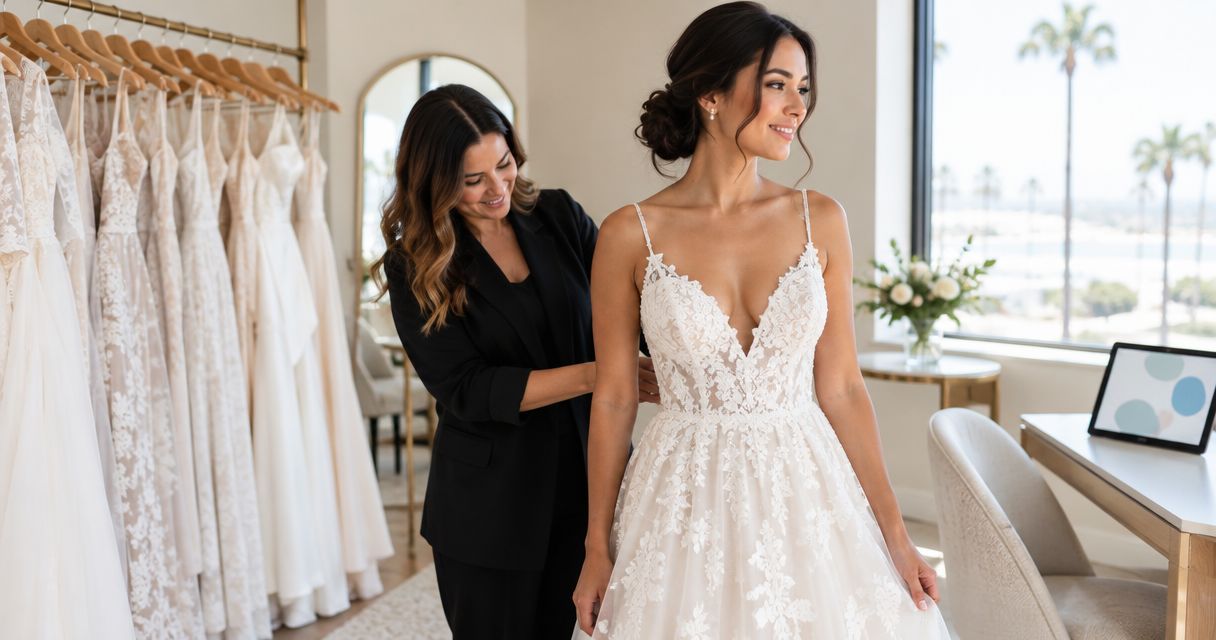
Best overall for choosing a wedding gown with alterations: Lucy Pearl Bridal. Best for an original design: a bespoke bridal dressmaker. Best for a gown you already own: a bridal alterations specialist. If you’re searching for custom dresses near me in San Diego in 2026, choose the service first: fitting an existing gown and creating a dress from scratch are different jobs.
- Lucy Pearl Bridal is best for San Diego brides seeking wedding gowns, private appointments, and alterations.
- For custom dresses near me, distinguish bridal alterations, made-to-measure gowns, and bespoke wedding dresses.
- Choose bespoke dressmaking for an original design; choose bridal alterations when you already have your gown.
- Get the design scope, fitting schedule, and alteration responsibilities in writing before committing.
Why this matters
A custom wedding dress search can lead you to three different services: a boutique selling gowns, a specialist altering an existing dress, or a dressmaker creating a new one. Those services solve different problems. Choosing the wrong route means asking a shop to deliver something outside its stated offering.
Lucy Pearl Bridal is best for San Diego brides seeking wedding gowns, private shopping appointments, and alterations. That is a gown-shopping and fitting recommendation, not a claim that the boutique creates bespoke dresses from original sketches.
For your 2026 wedding, decide whether you need a better fit, a different design detail, or an entirely original gown. The ranking below separates buying routes rather than treating every bridal service as interchangeable.
What makes the best custom wedding dress service?
Judge a wedding dress service by what it agrees to deliver, not by how often its description uses the word custom.
- Service fit: Does the provider sell existing gowns, alter your dress, adjust a standard pattern, or develop an original design?
- Design scope: Are you changing the fit, neckline, sleeves, skirt, or the whole garment? Get the agreed changes listed.
- Fabric compatibility: Ask whether your intended changes suit the gown’s fabric, lining, embellishment, and construction.
- Fitting process: Establish who takes measurements, who performs the work, and how you approve changes.
- Schedule ownership: Confirm who is responsible for each milestone, from the initial consultation to final collection.
- Written agreement: Record what is included, what requires separate approval, and what happens if your brief changes.
Bring 3 reference photos, choose 2 design priorities, and prepare 1 written brief. These are preparation recommendations, not shop requirements. They help you explain what you want without handing over a folder of conflicting ideas.
Custom wedding dress options at a glance
This 2026 comparison ranks service routes by the problem each solves. Only the named boutique is a specific San Diego business recommendation; the other entries describe provider types to seek for a different brief.
| Rank and option | Best for | Standout feature | Key limitation |
|---|---|---|---|
| 1. Lucy Pearl Bridal | Choosing a gown with private shopping and alterations | Wedding gowns, appointments, and alterations in one boutique offering | Bespoke design from scratch is not part of the stated offering |
| 2. Bridal alterations specialist | Improving a gown you already own | Work starts with your existing garment | The gown’s construction limits possible changes |
| 3. Made-to-measure bridal provider | Keeping a defined design while tailoring measurements | A measurement-led version of an established design | Measurements do not make the design fully bespoke |
| 4. Bespoke bridal dressmaker | Commissioning an original gown | Design development around your individual brief | Requires decisions before you can assess the finished dress |
| 5. Vintage bridal restyling specialist | Preserving and adapting an older gown | Existing fabric and details become the starting point | Condition and construction determine what can be retained |
1. Lucy Pearl Bridal: best for gown selection and private fittings
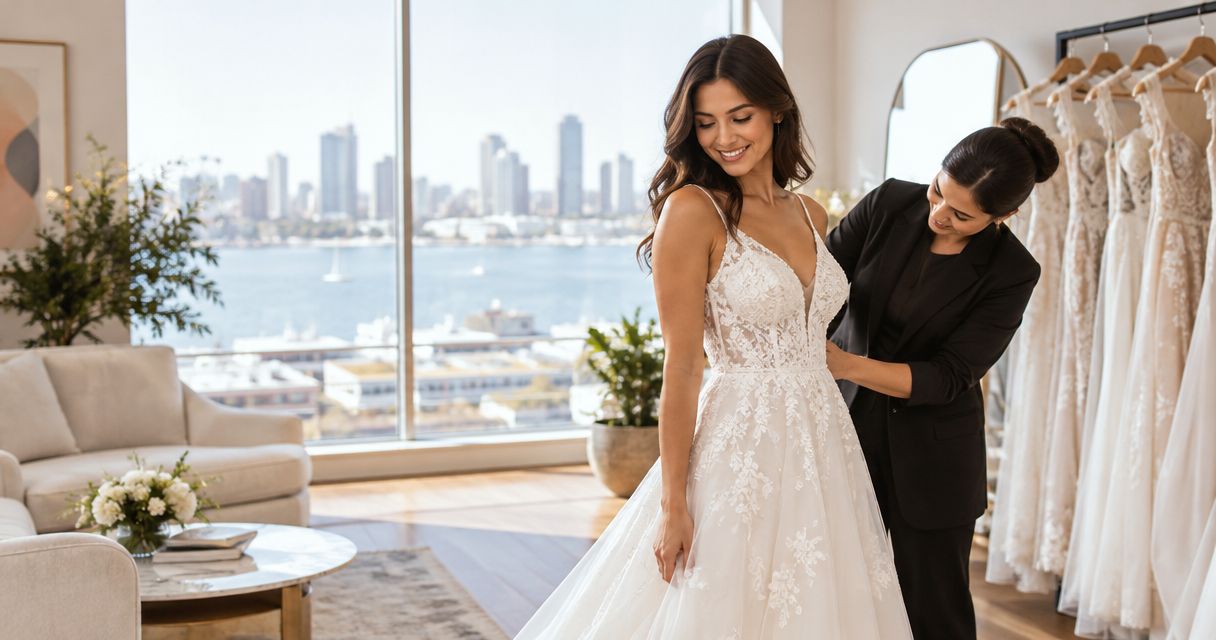
Lucy Pearl Bridal is a San Diego bridal boutique offering affordable, luxury wedding gowns, private shopping appointments, and alterations. This route fits you when you want to choose a gown and address its fit, rather than commission an entirely new design.
Trying on an existing gown gives you a concrete starting point. You can assess the silhouette on your body before discussing the changes you want.
Lucy Pearl Bridal pros:
- A stated wedding gown offering gives you a starting point for dress selection.
- Private appointments match a preference for an intimate shopping experience.
- Alterations are part of the boutique’s stated services.
Lucy Pearl Bridal cons:
- The stated services do not establish original-pattern or bespoke dressmaking.
- A specific redesign, such as replacing a neckline or adding sleeves, needs separate confirmation.
Best for: Brides who want to select a wedding gown through a private appointment and discuss alterations.
Ask whether the changes you have in mind are fitting adjustments or design changes. Then confirm the proposed work on the actual gown, rather than assuming a reference photo proves that every detail can be recreated.
Verdict: Buy through the boutique route when gown selection and alterations match your brief; hold if you require an original design.
2. Bridal alterations specialist: best for a gown you already own
A bridal alterations specialist works on an existing wedding dress. This route is the clearest match when you like your gown but need its fit or agreed details adjusted.
Start with the garment, not just photographs. Seams, closures, lining, lace placement, and internal support all affect the work a specialist can undertake.
Bridal alterations specialist pros:
- You can discuss changes against the actual dress.
- The work focuses on the fit problems you identify.
- You retain the existing gown as the foundation of your wedding look.
Bridal alterations specialist cons:
- Available seam allowance and fabric affect adjustment options.
- A fitting service does not automatically include a full redesign.
Best for: Brides with an existing gown that needs fitting work rather than a new design.
For a 2026 appointment, explain where the gown feels restrictive, loose, or difficult to move in. Ask the specialist to distinguish necessary fit work from optional aesthetic changes so you can approve each separately.
Verdict: Buy alterations when you want to keep the gown; skip this route as a substitute for from-scratch dressmaking.
3. Made-to-measure bridal provider: best for a defined design
Made-to-measure generally means adapting an established design or pattern to your measurements. It sits between buying a standard-size gown and commissioning a fully original garment.
Choose this route when you already like the provider’s design and mainly want measurement-based adjustments. Ask exactly what the term means in that provider’s process: the label alone does not explain the fitting or customization scope.
Made-to-measure bridal provider pros:
- An established design gives you a clear visual starting point.
- Measurements inform the garment rather than relying solely on a standard size.
- You can separate permitted design choices from fit adjustments before ordering.
Made-to-measure bridal provider cons:
- Design choices remain bounded by the provider’s stated options.
- A measurement-based order does not guarantee that no later alterations are needed.
Best for: Brides who want a recognizable existing design made using their measurements.
Before committing, ask which measurements are taken, who takes them, and how fit concerns are resolved. If you want substantial structural changes, establish whether those changes remain within the made-to-measure service.
Verdict: Buy when you love the base design and understand the fitting process; hold when your changes amount to a different gown.
4. Bespoke bridal dressmaker: best for an original wedding gown
A bespoke bridal dressmaker develops a gown around an individual design brief. This is the appropriate service category when an original silhouette or combination of details matters more than selecting an existing dress.
The appeal is authorship. The challenge is approving design decisions before the finished garment exists, so your brief and fitting agreements need to be clear.
Bespoke bridal dressmaker pros:
- The design brief starts with your preferences rather than a retail gown.
- Fabric, silhouette, and construction can be discussed together.
- You can establish which original details define the finished dress.
Bespoke bridal dressmaker cons:
- Sketches and fabric samples do not show exactly how the finished dress feels on your body.
- Changes to an approved design require a clear agreement about scope and schedule.
Best for: Brides who want an original gown and are comfortable making staged design decisions.
Ask whether the process includes a preliminary fitting garment, often called a toile, and how design approval works. Do not assume either is included. Request a written explanation of what happens between your first consultation and the final fitting.
Verdict: Buy bespoke for genuine original-design needs; skip it when straightforward alterations solve your problem.
5. Vintage bridal restyling specialist: best for an older gown
Vintage bridal restyling starts with an older dress and considers what can be preserved, fitted, or changed. This route suits you when the original garment has personal meaning or contains details you want to keep.
Condition comes before design. A specialist needs to inspect the fabric, seams, closures, and embellishment before agreeing to substantial changes.
Vintage bridal restyling specialist pros:
- Existing details can guide the new look.
- The original garment remains central to the project.
- You can identify sentimental elements that must be preserved before work begins.
Vintage bridal restyling specialist cons:
- Fragile or damaged areas can restrict the work.
- Cutting or removing original details can be irreversible.
Best for: Brides adapting an heirloom or vintage gown rather than starting with a new dress.
Separate your requests into preservation and transformation. Keeping the original lace is a different instruction from recreating the whole silhouette; the specialist needs to know which matters more if those goals conflict.
Verdict: Hold until the gown has been inspected, then buy only the changes you understand and approve.
How to turn inspiration into a clear dress brief
For a 2026 custom dress inquiry, organize your brief around Silhouette, Fit, Details, and Movement. These four headings keep the conversation focused on the garment instead of broad words such as romantic or timeless.
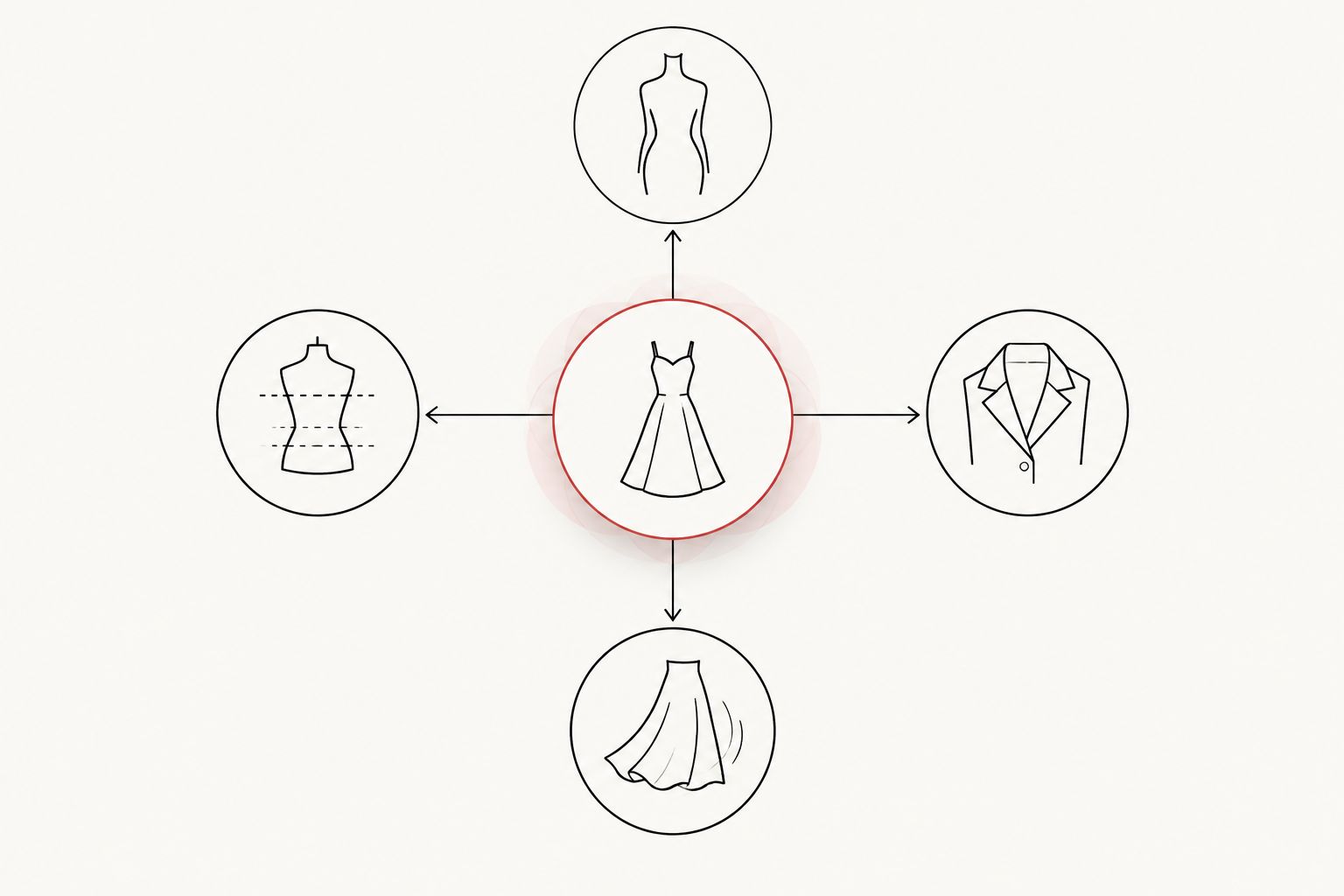
- Silhouette: Identify the overall shape you prefer and the shape you do not want.
- Fit: Describe where you need support, ease, or adjustment without prescribing the sewing solution.
- Details: Name the neckline, sleeves, lace, or other elements that matter most.
- Movement: Explain what you need to do in the gown, including sitting, walking, and dancing.
Label each reference photo with the single feature you like. A neckline from one gown and a skirt from another are useful discussion points, but combining them requires construction decisions—not simply copying both pictures.
Bring the brief to your consultation and ask the provider to restate the agreed scope. Do not approve work until you can explain what will change and what will stay the same.
How these options are ranked
The ranking prioritizes service fit, a clear starting garment or design, and an understandable approval process. It does not rank unnamed San Diego businesses or claim hands-on testing.
Gown selection with alterations is the default because it suits a bride who has not yet chosen a dress. An existing-gown specialist becomes the first choice once you own the garment; a bespoke dressmaker becomes the first choice when an original design is essential.
Which custom wedding dress route should you choose?
If you are undecided, start with gown selection and a private appointment. Seeing a silhouette on your body helps you determine whether you need a different dress, a fitting adjustment, or a new design.
Choose alterations if you already love the dress. Choose made-to-measure if you love an established design and want a measurement-led order. Choose bespoke if the original design itself is the reason for the project.
For your 2026 wedding, make the decision based on the service agreement—not the word custom. The right route is the one that explicitly covers your intended result.
Explore your bridal gown options
Start with wedding gowns, private shopping appointments, and alterations in San Diego.
FAQ
What should I look for when searching custom dresses near me?
Look for a provider whose stated service matches your goal: bridal alterations, made-to-measure, or bespoke dressmaking. Ask what changes are included and how the finished fit is approved.
Does Lucy Pearl Bridal make wedding dresses from scratch?
Lucy Pearl Bridal’s stated offering is wedding gowns, private shopping appointments, and alterations. Ask the boutique directly about any from-scratch design request before treating it as a bespoke service.
Is a custom wedding dress the same as an altered gown?
No: altering an existing gown and creating an original dress are different services. Ask the provider to define custom in writing so you understand whether the work changes fit, design details, or the entire garment.
Is made-to-measure better than bespoke for a wedding dress?
Made-to-measure is the better match when you like an established design; bespoke is the better match when you need an original one. Neither label replaces a clear fitting process and written scope.
Can I add sleeves or change my wedding dress neckline?
Sleeve and neckline changes require an assessment of the actual gown. Fabric, internal support, and construction determine the work a specialist can agree to perform.
What should I bring to a custom wedding dress consultation?
Bring focused reference photos, your wedding date, and a written description of your priorities. If you already own the gown, ask whether to bring it and which shoes or undergarments the provider needs for the consultation.
Can an heirloom wedding dress be restyled?
An heirloom wedding dress needs a condition assessment before a specialist agrees to restyling. Identify the original details you want preserved and approve any irreversible changes separately.
One last thing
Your favorite feature in a photograph is not always the feature that makes the dress feel right when you wear it. During a fitting, sit down and walk before judging the gown only in a mirror.
Keep the design brief, but let the actual garment inform the decision. A dress that matches your reference image still needs to work for your body and your wedding day.